Paul Musgrave concludes the “Lab Leaks” symposium by engaging with his interlocutors and reflecting on the challenges faced by political science in an era of public-facing scholarship.
We knew it was coming and here it is. An open source spreadsheet designed by The Professor Is In blog's Karen L. Kelsky for the purpose of collecting up stories of sexual harassment, abuse, and...
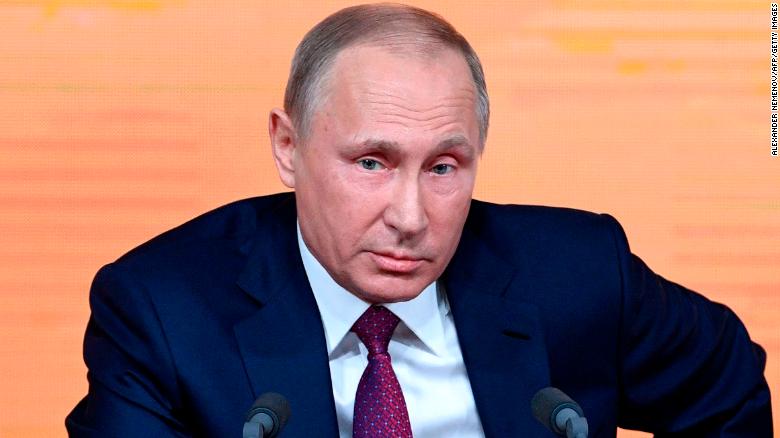
For Russia watchers Christmas always comes early (or Hanukkah comes right on time!) when Putin gives his annual presser in mid-December to the journalists from Russia and around the world. This year...
A guest post by Thomas Pepinsky, is Associate Professor of Government at Cornell University and Stefanie Walter, Full Professor for International Relations and Political Economy at the Department...
[Please note: this is a guest post by Alison Howell, Rutgers University- Newark] The recent WHO designation of polio as a ‘global public health emergency’ has reignited debate as to whether the spread of polio is the result of reduced vaccine trust due to the CIA vaccination ruse in Pakistan. The vaccination ruse in Pakistan was part of the CIA's apparent aim to get Osama bin Laden’s family DNA. In 2011 the Guardian first reported on the ruse and global health experts began to express concern that this would lead to vaccine refusals in Pakistan. There, major efforts were underway as part of...
One of the more depressing elements in the narrative at the CCWUN Experts' Meeting this week has been the argument, repeated by a number of autonomous weapons proponents both in plenary and discussion, that an advantage of such weapons is the following: unlike human soldiers, they would never commit rape. This is but a new twist on a broader argument most prominently made by Georgia Tech Professor Ronald Arkin in his book Governing Lethal Behavior in Autonomous Robots, but shared by many AWS proponents. The argument is that autonomous weapons might not just be good for national security,...
A common refrain from critics of the campaign to ban autonomous weapons is that these weapons are "inevitable." If that's true, then efforts to mitigate or pre-empt their use are not just a waste of time but a dangerous distraction from the real issue: staying ahead in an impending robot arms race or, at least, making sure that the weapons (which will definitely be built and deployed) have the best "humanitarian" programming possible. My colleague Michael Horowitz made the former argument recently in Foreign Policy. Kenneth Anderson and Matthew Waxman (Waxman is slated to speak tomorrow at...
I really don't want to write this post. I hate being a feminist or critical killjoy- especially when it comes to issues that seem to unite, motivate, and inspire large groups of people. We all need to feel inspired- like we are doing something good for the world. On Sunday I saw a small group of teenage girls wearing red and holding signs that read #BringBackOurGirls. It was sort of sweet to see them so clearly excited to be part of something- to be DOING SOMETHING. Activism is supposed to be political activity aimed at changing or influencing events. But what are the politics of...
I am in Geneva this week to participate in the Convention on Conventional Weapons' Experts' Meeting on Lethal Autonomous Weapons Systems. There, I'll present survey data I collected on US public sentiment around autonomous weapons, joining global civil society in reminding world governments of the Marten's Clause in the preamble to the Hague Convention. This clause, originally inserted to protect irregular non-combatants in guerilla wars, enjoins states to consider the "dictates of the public conscience" in determining the lawfulness of means and methods of war not openly prohibited by...
As a junior faculty member, I am not in a position to turn down advice. Fortunately, I receive good advice from mentors, colleagues, and friends. I am very thankful. Lately, I have also been getting advice from a few organizations for faculty development. They provide free tips on writing and productivity, navigating the job market, and balancing responsibilities as well as seek to debunk some of the myths about success in the academia. On average, their advice has been fairly useful (I have not signed up for paid services, and I certainly do not have a representative sample here). But...
CALL FOR PROPOSALS: "Game of Thrones and International Relations: Empirical Investigations" Deadline: May 26, 2014 Dan Drezner and I seek paper abstracts for an International Studies Association 2015 Conference panel proposal examining the relationship between the A Song of Ice and Fire book series and/or HBO hit series Game of Thrones and global political phenomena (or "first-order" representations of those phenomena). In other words, this panel focuses specifically on empirical investigations of the circulation of pop culture ideas in "real-world" foreign policy / global processes.* As...
Dan Nexon has instituted a new Ask the Editors feature on his editor's blog on the newly revamped ISQ website. If you haven't seen it yet, PTJ has done a great job developing the site and Dan hasn't missed a step in the transition from his great blogging here at Duck to his new role at ISQ. In the first installment of Ask the Editors Dan responds to a reader's question on what information should be conveyed in the dreaded cover letter included with an article submission. The reader referred to the cover letter as that "mystical piece of the peer review process." Dan's response is insightful...