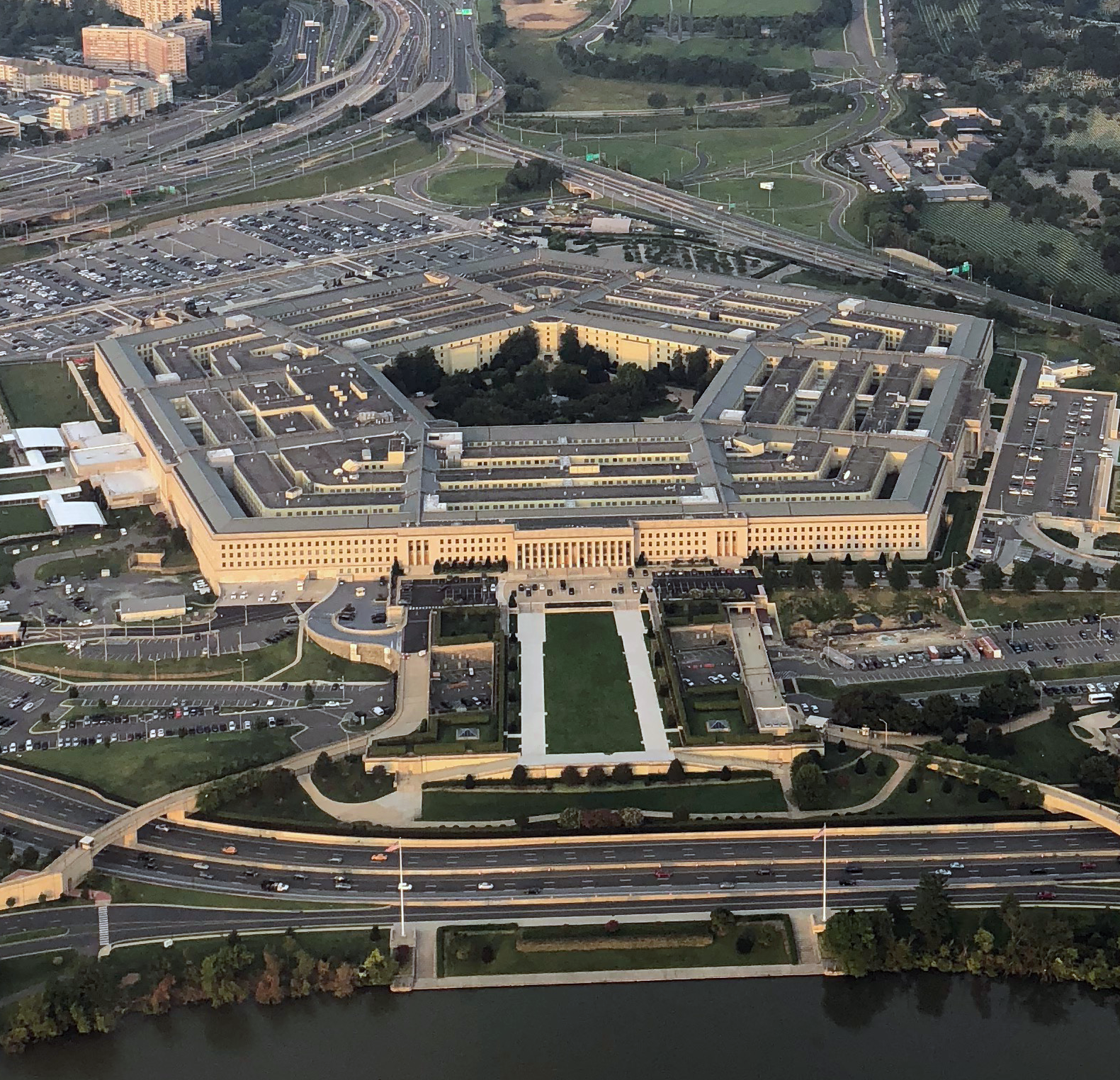
There is more continuity in the history of U.S. military basing policy than is typically assumed.
Klimentyev, RIA Novosti. Sing it with me: It’s the most Putinist time of the year! For the 16th time the Dear Leader addressed the nation and the world from through their TV screens during a...
Voices calling for restraint in US foreign policy are getting louder. A bipartisan community has grown tired of the tired consensus on America's role in the world and--thanks partly to the excesses...
This is a guest post from Manuel Reinert, a PhD candidate in international relations at American University and consultant with the World Bank. As the COVID-19 crisis illustrates, international...
In my last post, I lamented that Donald Trump is the presumptive GOP nominee, despite his outrageous series of slurs against different groups, his lies, and unscrupulous business practices. Before exploring what arguments might persuade Republicans and undecideds to vote against Trump, what other substantive objections are there to Trump? Trump has policy stances and utterances, based on some gut check about what outrageous thing might rile a receptive audience and keep him in the news so that he doesn't have to pay for TV ads. His style is based on improvisation and pandering, so he...
The common understanding in military circles is that the more data one has, the more information one possess. More information leads to better intelligence, and better intelligence produces greater situational awareness. Sun Tzu rightly understood this cycle two millennia ago: “Intelligence is the essence in warfare—it is what the armies depend upon in their every move.” Of course, for him, intelligence could only come from people, not from various types of sensor data, such as radar signatures or ship’s pings. Pursuing the data-information-intelligence chain is the intuition behind the...
With each passing week, Donald Trump, the presumptive Republican nominee, makes statements that challenge the basic operating assumptions of U.S. foreign policy, whether it be through his nonchalance about a trade war with China, repudiation of alliance commitments to NATO and Japan, or honoring the countries' debts. The question that emerges from this: does the American electorate care? While presidential candidates have to pass some semblance of a commander in chief test of credibility with the electorate, the conventional wisdom is that foreign policy rarely matters much in U.S....
As many who read this blog will note, I am often concerned with the impact of weapons development on international security, human rights and international law. I’ve spent much time considering whether autonomous weapons violate international law, or will run us head long into arms races, or will give some incentives to oppress their peoples. Recently, however, I’ve started to think a bit less about future (autonomous) weapons and a bit more about new configurations of existing (semi-autonomous) weapons, and what those new configurations may portend. One article that came out...
Some weeks ago, Stephen Walt lamented the absence of realist commentators in the American media space. What was striking to me at the time was Walt’s claim that realism is a ‘well-known approach to foreign policy.’ That claim—that realism is a foreign policy approach—makes sense in the context of Walt’s dirge, which focuses on the role of policy makers and media in shaping state behavior. But putting realism into a foreign policy context does not come without theoretical costs. Indeed, the grandee of modern realism in IR Kenneth Waltz rejected the idea that realism was a foreign policy...
At War on the Rocks, Mieke Eoyong intervenes in the Sanders-Clinton foreign-policy debate. Although the case made for Sanders' foreign policy by those she critiques—including Sean Kay—is much broader, she focuses on three arguments: that "Sanders has superior judgment because he opposed the Iraq War and Clinton didn’t; Sanders would exercise restraint in intervention, where Clinton is on record supporting U.S. intervention in a number of cases; [and] Sanders would restrain defense spending." I'm going to respond to the first two. I do so as a recovering liberal hawk. In the 1990s, my views...
This is a guest post from Eric Van Rythoven and Ty Solomon. Eric Van Rythoven is a PhD candidate at Carleton University studying emotion, world politics, and securitization. His work is published in Security Dialogue and European Journal of International Relations. Ty Solomon is a Lecturer (Assistant Professor) in the School of Social and Political Sciences at the University of Glasgow. He is the author of The Politics of Subjectivity in American Foreign Policy Discourses (2015, University of Michigan Press), and articles in International Studies Quarterly, European Journal of International...
In early September, the circulation of the now iconic picture of Alan Kurdi, the little Syrian Kurdish boy who drowned along with his mother and brother in the attempt to cross the Aegean Sea, prompted me to write a post reflecting on what 'we' as academics might do. I argued that we could, possibly, use "our knowledge of global affairs to connect the dots and lay bare how Alan's story" is emblematic of so many themes we touch upon in our research - and indeed, the moment created by the (ethically difficult) circulation of the picture became an opening to provide depth and nuance for those...