Is Constructivism best understood as a scholarly disposition, a body of theory, or an intellectua…
Episode 21: Constructivists All the Way Down
read more
Is Constructivism best understood as a scholarly disposition, a body of theory, or an intellectua…
Sorry, clickbait! But admit, it, after an apology of race science in Quillette or “The Case for Colonialism” in TWQ you probably rage-clicked on the thumbnail to let me have it. Periodic IR Twitter...
Alex Montgomery I have a new post up at Foreign Policy arguing that "The Bells" - and audience reactions to it - tell us something about American attitudes toward just war theory. A relevant topic...
Much ink has been spilled since last Sunday about the massacre at King’s Landing. Why did Dany carpet-bomb a civilian population after a city had surrendered? Was this a sign of her growing madness?...
This is a guest post by Wendy Wong, Associate Professor of Political Science at University of Toronto, Director of the Trudeau Center for Peace, Conflict and Justice, and author of Internal Affairs: How the Structure of NGOs Transforms Human Rights. When the great fall from grace (especially those who have built their reputations on being high-minded and altruistic), it makes a great story. And that’s exactly the view of the expose written by NPR and ProPublica that hits us with the punchline: the American Red Cross (ARC) is mismanaged, somewhat incompetent at its job, and misguided in its...
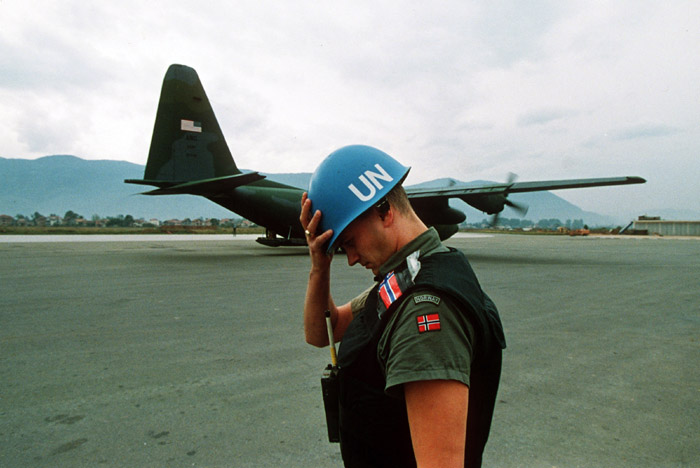
Last week I had the opportunity to partake in a workshop on the Responsibility to Protect (R2P) at The Hague Institute of Global Justice (the Institute). The Institute is preparing to launch a project on R2P, seeking to bring academics, civil society and government/policy makers together to formulate insightful and policy relevant findings on R2P. As the workshop was governed by Chatham House rules, I will only here note a few of my insights from the workshop, primarily insights about the connections between political will to uphold R2P and the theoretical and practical realities of...
The Turkish government’s unwillingness to intervene in Kobani has led to renewed violence across the country, claiming more than 30 lives. Turkey’s own Kurds demanded action, Ankara bulked, people died. The peace process between Ankara and the Kurds might now be in jeopardy. And the government is drafting a suspicious bill that, if passed, can restrict the civil rights and liberties of Turkish citizens and violate their fundamental human rights. I was working on a post on the UN climate change summit (next post, promise) but the violence that erupted in Turkey hit home. Growing up in Turkey...

As I mentioned in my previous post on climate and security, I went to Colorado College last week for two talks that Andrew Price-Smith organized. The second talk covered the theme of global climate governance (slides here). Last month, both Jennifer Hadden and I wrote about the People’s Climate March and the renewed optimism about possible international progress on climate change that accompanied the UN leaders meeting in New York. I wanted to expand on the theme, not simply because of the talk in Colorado. The strategy for next year’s climate negotiations has been in the news of late. Just...

This week, courtesy of my colleague Adam Stulberg and the Center for International Strategy, Technology, and Policy, our department hosted Matthew Kroenig. When I first learned of Kroenig’s visit, my initial thought was that it would be a great opportunity to do (yet another) take on his arguments regarding the possible use of force against Iran. But I think there is little value added to such an exercise. It has been done, not only here on the Duck but in other venues as well. What I think might be a more fruitful way to take advantage of Kroenig’s visit is to think about some of the...

Yesterday, a student asked me about the recent news reports indicating that Iraq did, in fact, have "weapons of mass destruction" back in 2002 and 2003 when the U.S. was attempting to justify a "preemptive" war. The New York Times reported that American soldiers were injured in the past decade by chemically-armed munitions found in Iraq. Already, a slew of articles in the media have debunked the claim that this vindicates George W. Bush and his Iraq misadventure. This Washington Post piece is perhaps the best since it primarily quotes Bush administration claims from the pre-war period. The...
This is a guest post from Kathleen Gallagher Cunningham, an associate professor of government and politics at the University of Maryland. She is the author of Inside the Politics of Self-determination (Oxford University Press, 2014). I was recently at a relatively small academic conference, one that I’ve been attending for years whenever I can. The size of the meeting encourages engagement between big names and small names, grad students and professors, and across genders. It is a classic academic mixer, filled with slightly awkward people, many of whom are slightly disheveled, talking...
The boon and bane of our academic enterprise is that we get feedback all the time on our work. Our work is better for it--that the hack-iest stuff I read is always stuff that is not submitted to any kind of refereeing process and relies instead on editors who seem to be blind to the hack-ness. The bane is that, well, rejection and criticism can not only delay publication but also hurt feelings. When well done, reviews further the enterprise. However, sometimes, reviews seem to make the authors dance in relatively unproductive ways. There have been lots of tweets and posts complaining...