This is part II of the first instalment of a new series of interviews on Duck of Minerva entitled Quack-and-Forths.
Yes, you have heard a lot about it. A German version of the ISA just featured a roundtable entitled: ‘Reclaiming the facts: analysis of international politics in the age of fake news and...
This is a guest post by Hanna Kleider, an assistant professor in the Department of International Affairs at the University of Georgia. She is currently on a research leave at the European University...
Last Sunday, I was having a walk around the city centre of Cambridge when I saw a demonstration of around 50 people rallying for their right to vote in a referendum for independence from Spain. They...
Building on Dan's observation this past week, Theo McLauchlin is a PhD student at McGill University offers us some insights on the role of the military in the various Arab revolutions we're witnessing. He works in the area of military defections and civil wars.Which Middle Eastern regimes seem liable to fall? That's a popular question these days, and an important answer, as Dan Nexon points out, is that it depends on each country's armed forces. But what they are likely to do is something most people don't seem inclined to speculate about. That caution is warranted, as I'll argue below. But...
Suspected Mercenaries in LibyaI really do more things than tweeting, but this morning I got up to find that the ICRC had sent out a message that simply stated the title of the Convention of the OAU for the Elimination of Mercenarism in Africa. Libreville, 3rd July 1977 and a link to the treaty. I can only assume they're doing it in response to the situation in Libya where it has been alleged that Gaddafi has been using mercenaries (from Chad? Nigeria? - They seem to deny it, claim to be ordinary African migrant workers) to back up his regime. I find this interesting for a few reasons. The...
[podcasts of ProfPTJ and DHN's contributions to the afternoon sessions are now up:PTJ: https://kittenboo.com/blog/2011/02/21/science-fiction-and-international-orders-ptj/DHN: https://kittenboo.com/blog/2011/02/21/science-fiction-and-international-orders-dhn/Also: the sci-fi author part of the session is available to listen to here.]Okay things are getting underway here at the LSE. I have never live-blogged before, but I'm told there is a first time for everything. Professor Chris Brown is just starting the introduction.Please note that I am trying to be as accurate as possible. I think there...
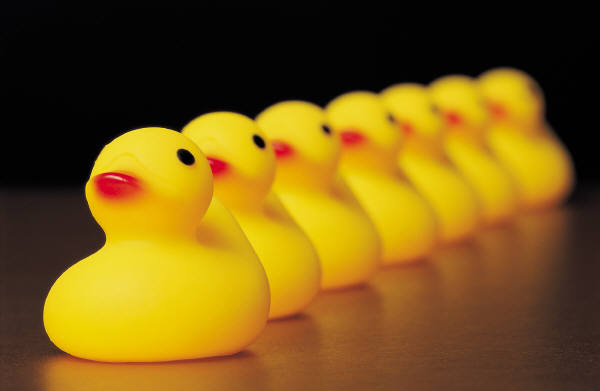
Today at the LSE there are two fabulous (read: fabulously nerdy) events on Science Fiction and IR. Even better, it's full of ducks! The event was organized by Chris Brown and features Dan Nexon and Prof PTJ. The first event, chaired by Chris Brown, features three prominent Science Fiction authors: Jon Courtenay Grimwood, Paul McAuley, Ken McLeod. The second event features several prominent academics who will be discussing the implications for IR. Chaired by Barry Buzan, it features our two ducks and Iver Neumann.My only regret is a lack of female voices. So, in an attempt to rectify this, I...
This is not my usual forte – Charli is much better on NGOs, networks and social things. (I just like tweeting.) However, last night when I checked my twitter, a fairly odd message came up from the American Red Cross:Slightly different from their usual “please donate blood” or “how are you preparing for the blizzard?” kind of emails.Within an hour, the tweet was withdrawn and replaced with this:Colour me impressed. A 130 year old humanitarian agency with a sense of humour.However, I’m drawing attention to the story because yesterday was also the day the ARC released research it has done (in...
In his Introduction to the recent New York Times collection of materials on Wikileaks, Open Secrets Bill Keller comments on the way in which the newspapers involved shaped the leaks in accordance with their own agendas. Thus, the Guardian gave extensive coverage to leaked US army accounts of civilian casualties in Afghanistan, reflecting their scepticism about the war; the NYT, on the other hand, took the view that they had already given front page coverage to all the major incidents and so gave this matter much less emphasis. There is no doubt that the Guardian’s perspective was much more...
Routledge has published Radicalisation and Media: Connectivity and Terrorism in the New Media Ecology, co-authored by Akil Awan, Andrew Hoskins and Ben O’Loughlin. The book presents results from our two-year ESRC-funded project on Radicalisation & Violence, which was awarded the maximum ‘Outstanding’ grade by the Economic and Social Research Council in 2010.Our chief finding, in a nutshell, is that despite the potential connectivity between radicalising networks like Al-Qaeda and ‘vulnerable’ youth and ‘terrorised’ publics, there is in fact a profound and structural disconnection. Security...