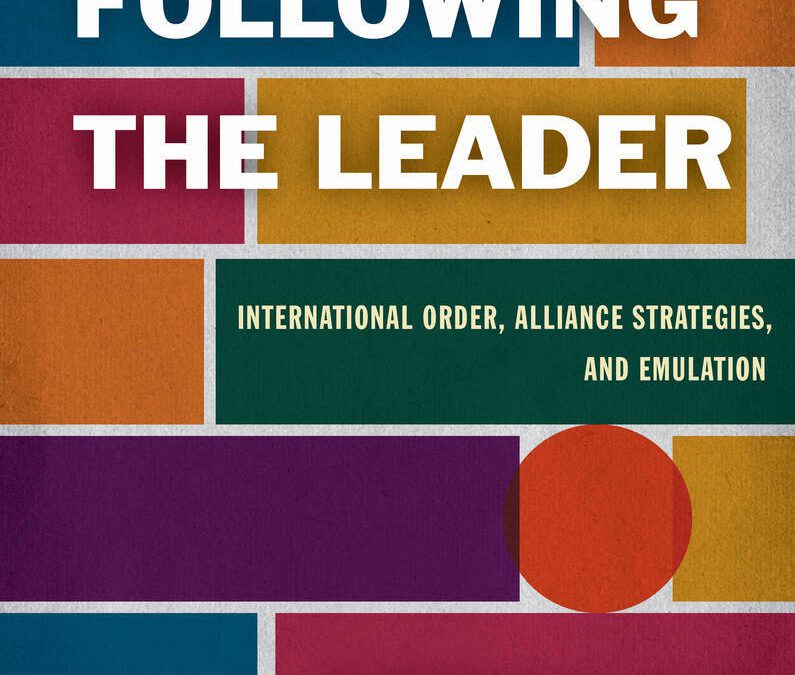
126 countries now publish a national security strategy or defense document, and 45 of these feature
a leaders’ preambles. How these talk about the world, or not, is surprisingly revealing of historical
global strategic hierarchies.
126 countries now publish a national security strategy or defense document, and 45 of these feature
a leaders’ preambles. How these talk about the world, or not, is surprisingly revealing of historical
global strategic hierarchies.
What is the name of the book and what are its coordinates? Michael A. Allen, Michael E. Flynn, Carla Martinez Machain, and Andrew Stravers. 2022. Beyond the Wire: U.S. Military Deployments and Host...
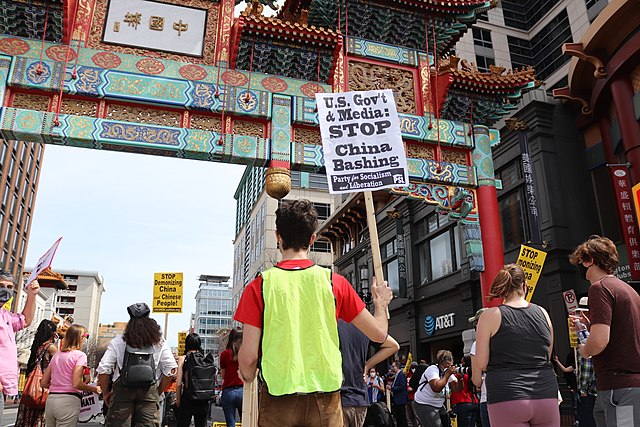
What follows is my general philosophy on China issues, by way of answering the hardest of hard defense framing questions regarding China. After my most recent piece in Foreign Affairs, I...
My most recent Foreign Affairs article, co-authored with Justin Casey, landed yesterday. The article started out as an argument about how the normalization of the far...
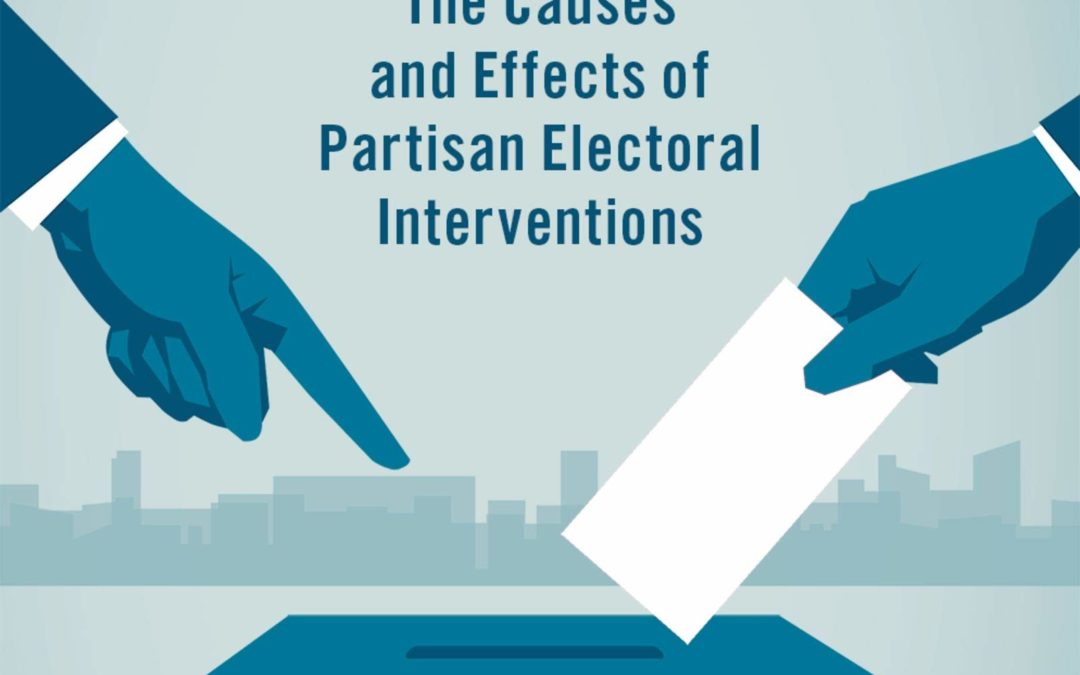
Dov Levin answers 6 (+1) questions about 2020 book on foreign electoral interference. When do great powers back a specific party or candidate in another country? Can they change the electoral outcome? Find out.
The counterfactual analysis used in debates about NATO expansion is far too limited. It makes the untenable assumption that the world would like mostly the same. This piece offers an alternative.
What if how presidents talk about ending wars contributes to the cycle of U.S. military intervention? Stephen J. Heidt answers 6+1 questions about his new book.
I just published a piece in Foreign Affairs, which draws on my new book, Bullets Not Ballots: Success in Counterinsurgency Warfare. After two decades, the United States is finally leaving Afghanistan, and only 2,500 U.S. troops remain in Iraq. In both countries, the insurgencies continue. It wasn’t supposed to end this way. In both wars, Washington hoped that imposing democratic reforms could protect the population, win hearts and minds, and defeat the insurgency. The approach didn't fail, I argue, because civilian and government officials botched its implementation. It was inherently...
While campaigning for the White House, U.S. President Joe Biden promised Americans that he would reenter the nuclear deal with Iran, officially known as the Joint Comprehensive Plan of Action (JCPOA), so long as Tehran returned to compliance with the agreement’s original terms. Recent polling indicates that this would be a popular move: a majority of the American (and even Iranian!) public would support a joint return to the JCPOA, suggesting that Biden has a solid popular mandate to renew the pact. Yet nearly five months into Biden’s presidency, and after...
This is a guest post from Morgan D. Bazilian, Director of the Payne Institute, Colorado School of Mines; Andreas Goldthau, Franz Haniel Professor at the Willy Brandt School of Public Policy, and Research Group Leader at the Institute for Advanced Sustainability Studies; and Kirsten Westphal, a Senior Analyst at the German Institute for International and Security Affairs. They tweet at @mbazilian, @goldthau and @kirstenwestpha1. The age of actorless threats has arrived. Democracies need to re-imagine and re-tool their responses. This is an age of the “actorless threats”. As Bazilian and...
US President Donald Trump gestures as he arrives to a "Make America Great Again" campaign rally in Cincinnati, Ohio, on August 1, 2019. (Photo by SAUL LOEB / AFP) (Photo credit should read SAUL LOEB/AFP/Getty Images) This is a guest post by Emily Holland, an Assistant Professor in the Russia Maritime Studies Institute at the US Naval War College & Hadas Aron, a Faculty Fellow at the Center for European and Mediterranean Studies at NYU. This week’s violent takeover of the Capitol Building has fueled the ongoing debate on the future of American democracy. For several years analysts have...
On Monday, Iran began enriching uranium to the 20% threshold for the first time since before its 2015 nuclear deal, the Joint Comprehensive Plan of Action (JCPOA). Iran appears to be trying to maximize its leverage with the incoming Biden administration in the hope that the US will agree to re-enter, rather than attempt to re-negotiate, the JCPOA. The President-elect has indicated in interviews that upon taking office in two weeks he intends to open negotiations about restoring the deal that the Trump administration walked away from in 2018. Iran’s announcement that it is resuming...