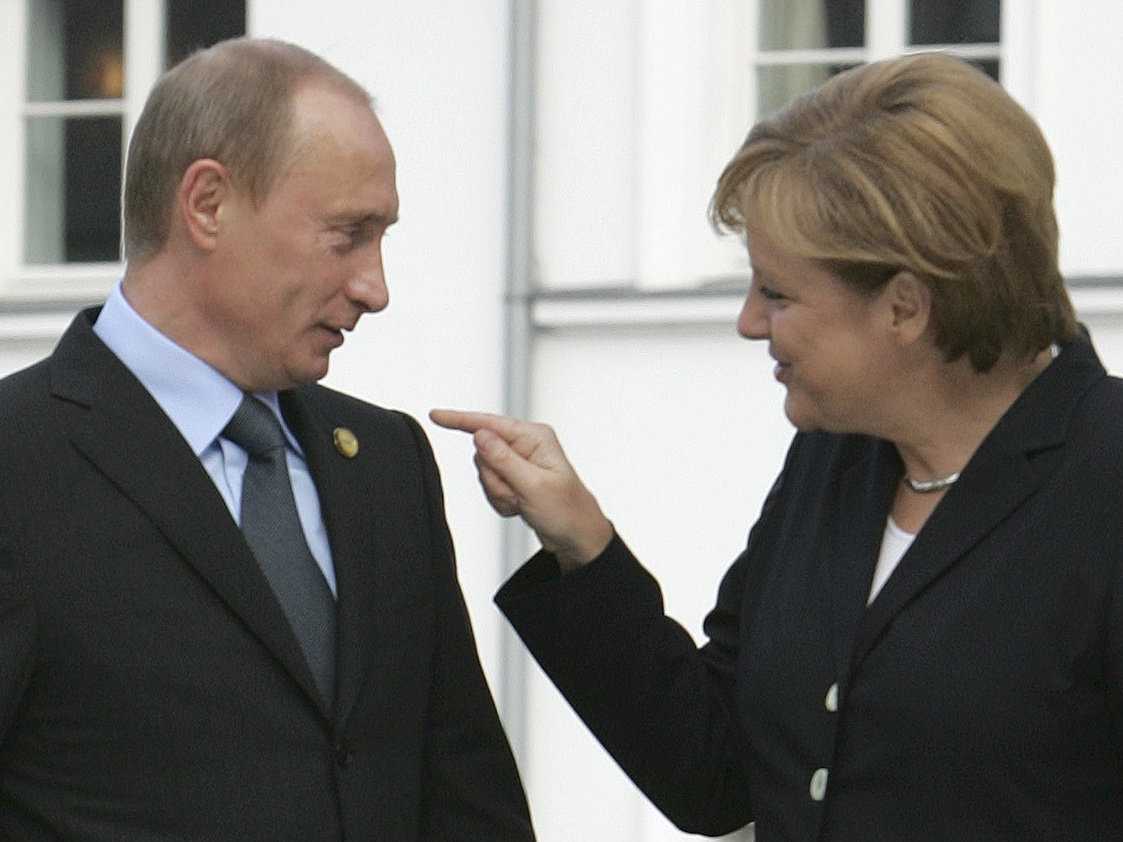
The Convention Concerning the Protection of World Cultural and Natural Heritage (“The World Heritage Convention”) entered into force in 1975. The world heritage regime, in effect, produces the shared heritage of humanity. States use their right,...
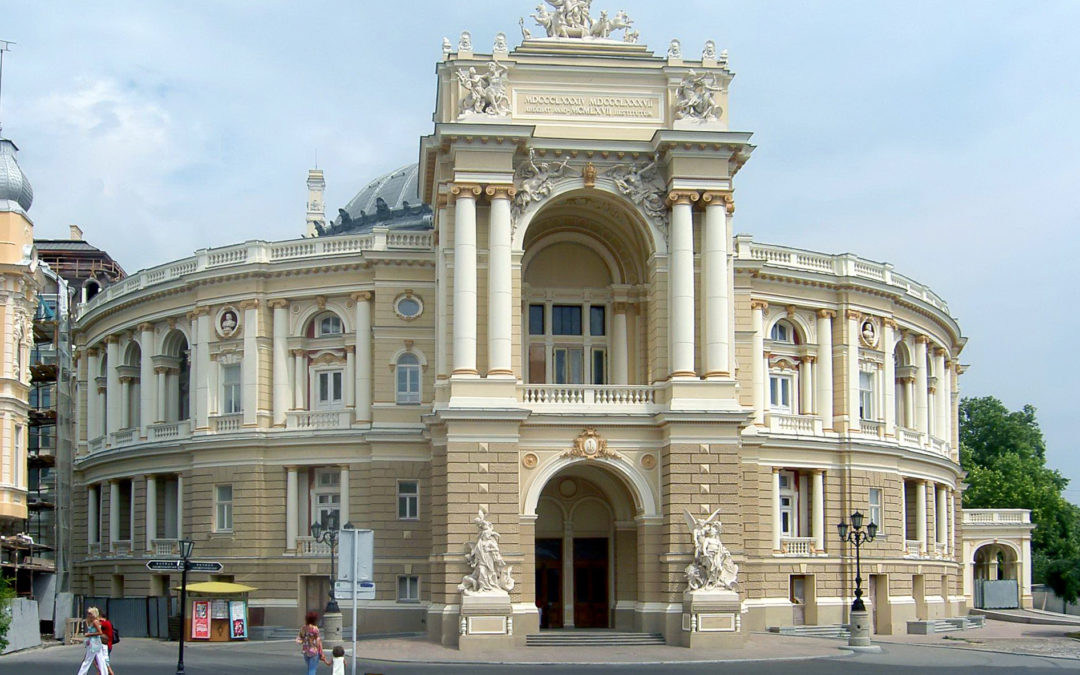
In an attempt to distract myself from the thought that today my small university town will be overrun by 900 frat boys who went to Northern Italy on a skiing vacation despite the Dutch government’s...
Sting said it best What kind of questions do you usually expect from a Town Hall meeting in the US? Healthcare? Climate change? Pensions? Schools? Roads? You would be surprised, but these are also...
Warning! According to the law that the Russian parliament passed yesterday, this post might need to be prefaced with a disclaimer that the following text has been compiled by a foreign agent. An...
...has escalated. First, Jeff took his argument to Foreign Affairs. Now I've retaliated—and brought in Alex Cooley in an attempt at establishing escalation dominance. These interpretations dangerously misread contemporary geopolitics, however. Putin’s appearance of strength is, in reality, a function of Russia’s relatively weak international position. Russia lacks a global network of allies and partners and denounces the United States’ leadership. But Moscow cannot decisively influence the rules, institutions, and norms of the international order. By contrast, what many diagnose as U.S....
Jeff Stacey has a new piece at Foreign Affairs that is basically a re-skinned version of his post at the Duck of Minerva. It should come as little surprise that I don't find either piece particularly persuasive. Overall, I agree with Jeff's basic assessment of Russian moves as destabilizing. In Syria, where Moscow seeks to save the Assad regime, Russian intervention in a country that the US and its allies are already mounting military operations carries with it significant risks. Also, as Jeff writes: Indeed, Russia has been playing a dangerous cat-and-mouse game with allied planes and ships...
The Russian Federation covers more territory than any other country. It has a large nuclear arsenal, skilled weapons designers, and the world's fourth largest military budget—after the United States, China, and Saudi Arabia. But it maintains that budget—which comes it at roughly 12% of US military expenditures—by spending a larger percentage of its GDP on defense than does the United States, China, Britain, France, Japan, or Germany. Indeed, if the major European economies boosted defense spending to 3% of GDP—still short of Russia—they would each have larger military budgets. Of course,...
Russia has begun conducting air strikes in Syria, much to consternation of many. But there seems to be some in the Obama Administration who can barely contain their glee at the thought of Putin and Russia getting bogged down in the Syria quagmire: “If he wants to jump into that mess, good luck,” one official said, noting that Russia had become bogged down in Afghanistan a generation ago in a fight against Islamic radicals. Deputy National Security Adviser Tony Blinken told reporters that the Russians may be “making a terrible strategic mistake” by deepening their military involvement in...
The ominous Russian military buildup in Syria represents the most significant projection of force beyond the territory of the former Soviet Union since the old Cold War. It will allow Russia to keep the brutal regime of Bashar al-Assad in power in Syria, effectively negating the new diplomatic path toward resolution of the regional sectarian war that has been opened up by the Iran nuclear deal. In addition it will further enable Russia to build and retain a major forward operating base for Russian military forces. At first it will be used to keep Assad in power. Then, as a cover, Russia...
A long, long time ago, before I became a professor and even before I went to graduate school for my doctorate, I worked for a few years in the defense community. I was a Defense Analyst for the Strategic Assessment Center of Science Applications International Corporation (unfortunately, the SAC no longer exists), which was a small organization that dealt with issues of future war. We did much of our work for the Office of Net Assessment of the Defense Department under recently-retired Andrew Marshall. Our job, simply said, was to help DoD think about what war would look like 25 years or so...
Recently, Suzanne Nossel published a piece critical of US and EU sanctions against Russia. A number of her points make sense. For US-EU sanctions to really isolate Russia and thus have a chance to change Russian behavior in the short term, they need to have the participation of other major states in the system like China and India. Without those states, the isolation effort is doomed to fail. Moreover, the effect of US-EU sanctions will fade over time as Russia deepens economic interaction with non-participating states. The marquee example is the May 2014 deal for Russia to provide $400...
A recent Pew poll says that they are. According to Pew, "at least half of Germans, French and Italians say their country should not use military force to defend a NATO ally if attacked by Russia." Indeed, the news is grim. The public release informs us that, "Americans and Canadians are the only publics where more than half think their country should use military action if Russia attacks a fellow NATO member (56% and 53%, respectively). Germans (58%) are the most likely to say their country should not." Clearly, Pew thinks this is a big deal. How do we know? They provided a one-click...