Initial speculation about Nord Stream reveals both the strengths and limitations of using international-relations models to make sense of unfolding events
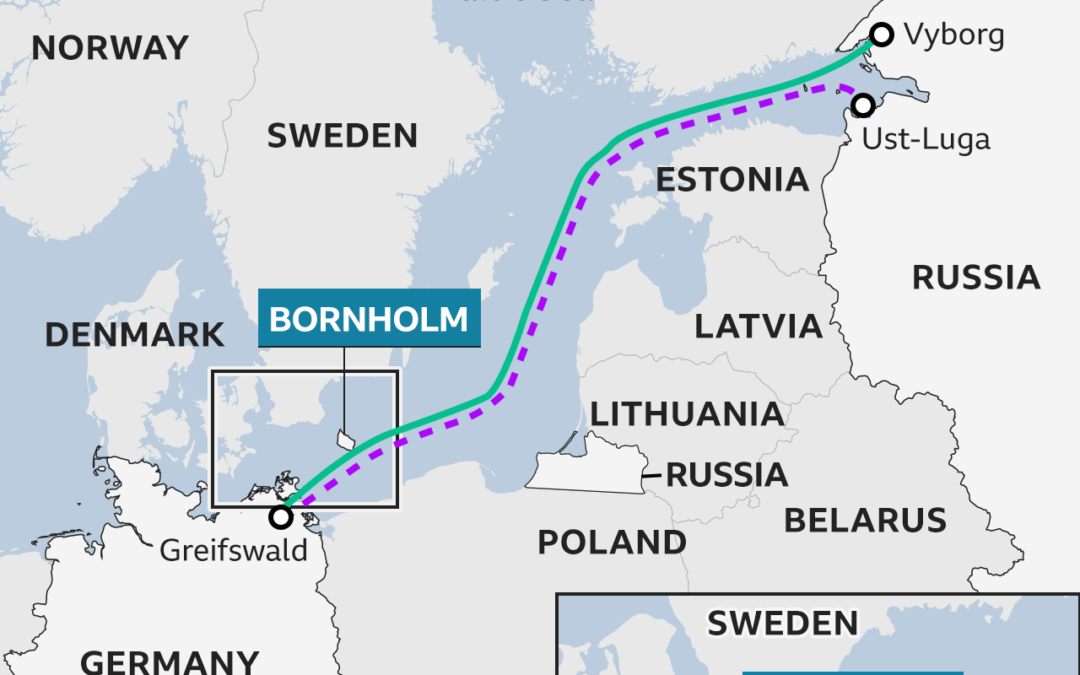
Why Would Putin Sabotage Nord Stream?
read more
Initial speculation about Nord Stream reveals both the strengths and limitations of using international-relations models to make sense of unfolding events
While in the US children are being separated from their parents seeking political asylum and taken to a Walmart prison, some Russian lawmakers are concerned that illegal aliens can enter the country...
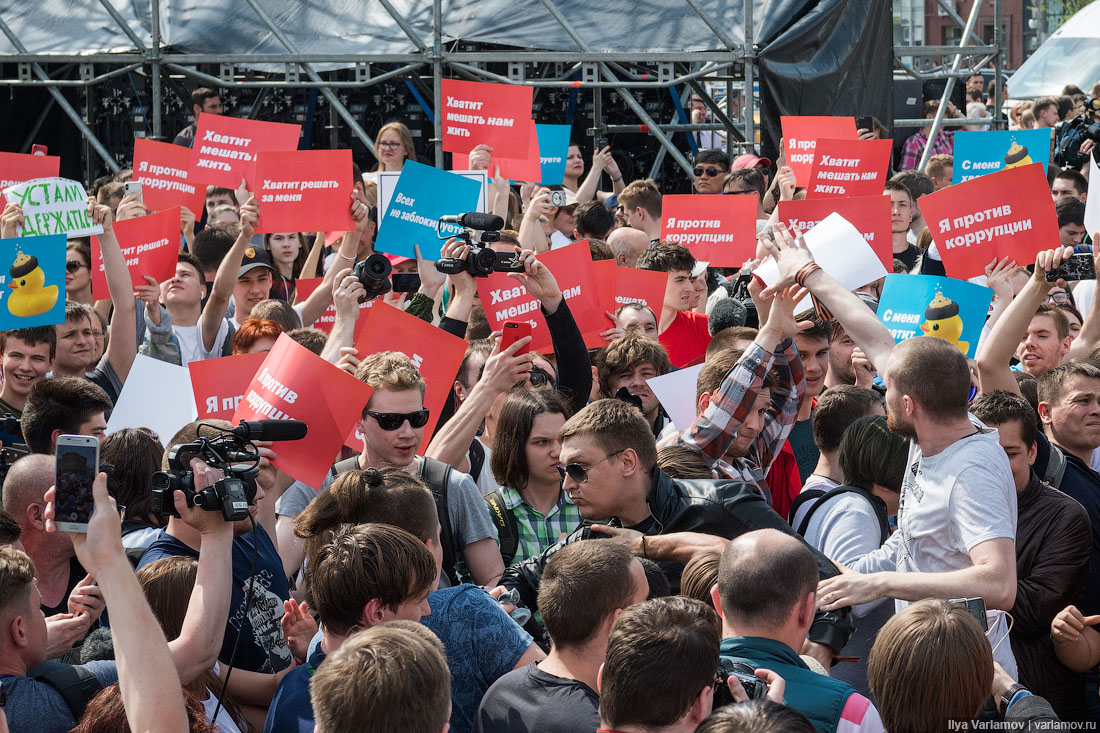
Today is President Putin’s inauguration day and even Avengers couldn’t stop it, as evidenced by the arrested raccoon in the center of Moscow on Saturday during the unsanctioned rally ““He's No Tsar...
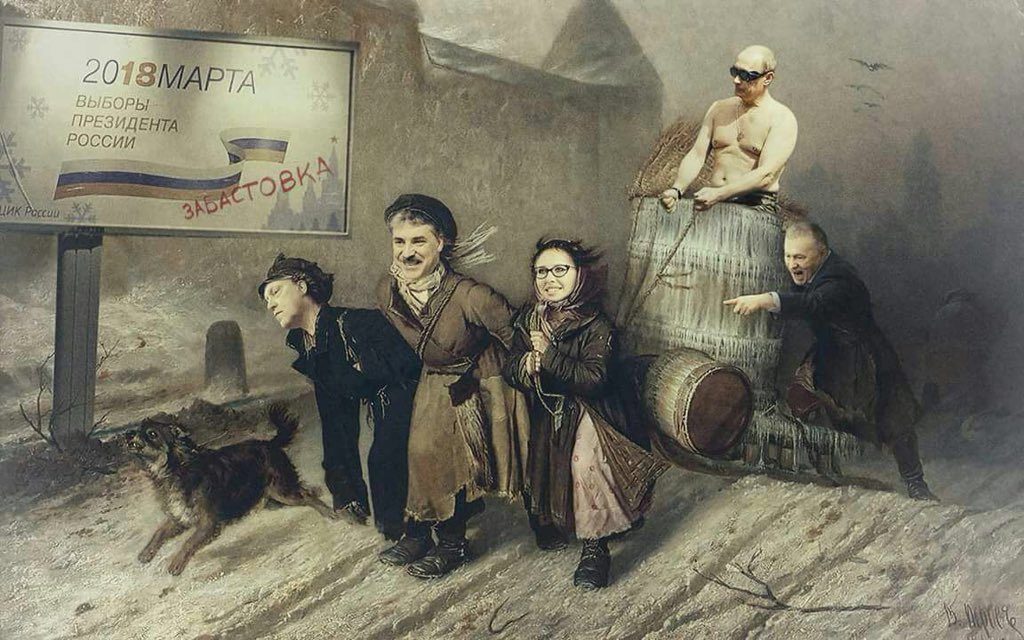
One of the most predictable elections is just around the corner: even Google has already proclaimed Putin the winner of the presidential race of March 18th 2018 in Russia. The only marginal hiccup...
Lots of folks are speculating about what Ukraine/Crimea/Russia is like, including not Abkhazia. Right now, the analogies that come to mind for me are: coups d'etat and poker. Coup? Yes, because in a coup, the anti-incumbents (for want of a better term), move first, trying to create facts on the ground that are hard to reverse. If this fait accompli is successful, the incumbents are then put in a position where they are the ones with the pressure to use force. The onus is on them. Which is why Putin would be smart to stick to Crimea. Other deployments in Ukraine might mean trying to...
Over at the Monkey Cage, Henry Farrell suggests that President Obama is using the OSCE to give Putin an exit strategy. Farrell writes: Obama’s “phone call with Putin on Saturday suggests that the United States wants to invoke the old-style OSCE. It notes that Russia’s armed intervention is inconsistent with Russia’s commitments under the Helsinki Final Act (the agreement that established the OSCE), calls for “the dispatch of international observers under the auspices of the United Nations Security Council or the Organization for Security and Cooperation in Europe (OSCE)... If Putin wants an...
This is a guest post by former Duck of Minerva blogger Dan Nexon. It is cross-posted at his personal blog, Hylaean Flow. One of the ongoing rationales for The Monkey Cage is that journalists do a poor job of covering US electoral politics. They focus on personality and style. They downplay the role of fundamentals, such as economic forces and the nature of the electoral system. The same is too often true in foreign-affairs reporting. Consider a recent piece by multi-award-winning reporter, Scott Wilson: "Ukraine crisis tests Obama’s foreign policy focus on diplomacy over military force."...
*this is a guest post by Konstantinos Travlos, currently a Visiting Assistant at Georgia Southern, who writes on international conflict and history. The arguments presented below are based on past research. Russian policy towards Ukraine is partly driven by short term political reasons such as protecting an investment in the form of Yanukovych, the Russian view of Ukraine as a “little brother”, a legitimate worry over the future of the Russian minority in Ukraine, and a very real opposition to what is seen by the Kremlin elite as the meddling of Western powers in its Near Abroad. However, I...
The diplomatic dustup over Syria brought Russia in from the cold but simultaneously froze any notion that western allies were getting their strategic act together. Nonetheless, although the mistakes in the U.S. and UK’s approach to building support at home and abroad for an intervention in Syria confused leaders and citizens alike, these mistakes should not be interpreted as an abrupt turn-around in their and their allies' strategic thinking. In fact the Europeans, even under a prolonged condition of austerity, are making progress filling in the capability gaps made clear in the course of...
That's essentially the question Steve Saideman asked here (and which he more explicitly asked on Twitter). His answer, which I find problematic, is But here is the big problem in all of this: perhaps much of IR is not about bargaining and persuasion about commitment and resolve. Perhaps much of IR is a conflict of interests, and that countries engage in conflict when their various interests cannot be resolved. He goes on to say The amateur game theorist might want to argue that this then is not chicken or prisoner's dilemma but deadlock. And they would probably be right--that much of what...
There is an ongoing debate questioning if and how reputation matters in International Relations. The question is important right now in relation to the red line the United States setup regarding the use of chemical weapons in Syria. I am not sure how reputation can matter if Russia is being held up as the mediator in striking a deal with Syria, Russia, and the West. If Russia is the mediator, the source of guarantees about respect for international law and the chemical weapons convention, reputation clearly does not matter because Russia has very little standing in terms of respecting...
A full-scale US military intervention in Syria is off the table, as is a no-fly zone. The US decision to provide arms to Syrian opposition forces is nonetheless intended to shift the military initiative away from Assad regime. But the opposition is splintered, which has allowed the Hezbollah-backed government forces to level the playing field. Although the outcome remains unclear, it may be time for Western governments to begin serious planning for potential post-conflict stabilization operations. At this stage it appears the Assad regime has the momentum, aided in particular by Hezbollah...