126 countries now publish a national security strategy or defense document, and 45 of these feature
a leaders’ preambles. How these talk about the world, or not, is surprisingly revealing of historical
global strategic hierarchies.
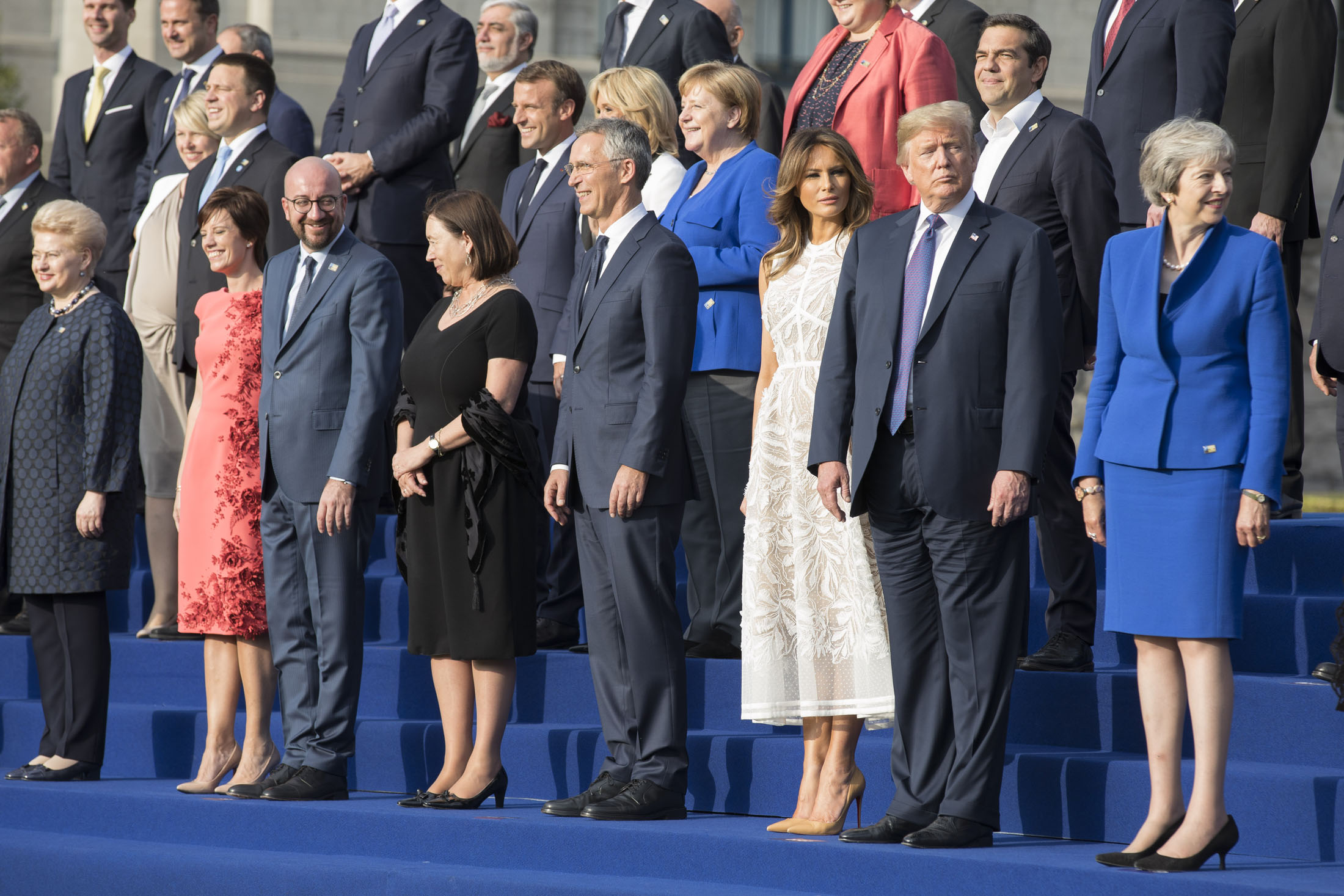
126 countries now publish a national security strategy or defense document, and 45 of these feature
a leaders’ preambles. How these talk about the world, or not, is surprisingly revealing of historical
global strategic hierarchies.
I got an alert from the Foreign Policy app on my phone the other day: Tunisia had fired its UN ambassador after he opposed Trump's Israel-Palestine "peace plan." Tunisian foreign policy doesn't...
Restraint in US foreign policy is having a moment. That's a good thing. But I worry it's unclear whether restraint is a means or an end, and what that end would be. Without resolving...
One of the (many) concerns about the Trump Administration's foreign policy is the impact it will have on US influence around the world. Will Trump's rhetoric and actions restore US dominance in the...

Professor Anne-Marie Slaughter’s talk in Parliament in London this week offered useful insights into how the Obama administration and foreign policy analysts around it are thinking about shaping international order. As Director of Policy Planning in that administration from 2009-11 she spoke from experience about the mechanisms being used to implement international change. While she touched on Syria, drone strikes and other newsworthy issues, her wide-ranging discussion was more important for the glimpses it gave of the theoretical assumptions underlying how US policymakers understand...
[This is a cross-posting from Dart-Throwing Chimp.] I've just finished reading John Lewis Gaddis's terrific biography of George Frost Kennan, a towering figure in American foreign policy after World War II whom Henry Kissinger described as "one of the most important, complex, moving, challenging and exasperating American public servants." Apart from recommending to the book, which I do without hesitation to anyone with an interest in world affairs, I wanted to talk about how Gaddis' distillation of Kennan's ideas helped me clarify some of my own thinking on the conduct of foreign...
Dan Drezner has issued a call to arms!... or to your library card:"I therefore call upon the readers of this blog to proffer up their suggestions -- if you had to pick three books for an ambitious U.S. politician to read in order to bone up on foreign affairs, what would they be?"I have a gut feeling that all of the answers are going to be grand strategy, grand strategy and some war on terror/Afghanistan. (Although, maybe I’m not being generous enough... but looking at the comments on Drezner's post, I don't think so.) So I’m going to suggest three books that touch on issues presented by...
Alex Cooley and I have just published an article at Foreign Affairs Online on Bahrain and the politics of the US overseas basing network. An excerpt:U.S. policymakers have long struggled to reconcile their support for friendly authoritarian regimes with their preference for political liberalization abroad. The ongoing upheavals in the Middle East, like so many developments before them, shine a bright light on this inconsistency. In Egypt, the Obama administration struggled to calibrate its message on the protests that toppled longtime ally Hosni Mubarak; in Libya, it leads a multinational...
-- Sir Thursday, Garth NixI'm tired of demands for an articulated "Obama Doctrine."Don't misunderstand me. I think it would be nice if the Obama Administration had an overarching vision for US foreign policy. It might even be a good thing if it could produce something resembling a coherent document on the subject instead of the stream-of-consciousness bureaucratic filler it tends to publish.What I emphatically reject is the idea that Obama ought to, in effect, retcon Libya by articulating an ex post facto grand strategy that makes sense of his decision to intervene.Why did we intervene in...
Do we?Tomorrow is slated to be a showdown between the US backed Mubarak regime and masses of Egyptian protesters. It is a critical moment for Egypt, and also for the Arab nation. What strikes me about these events, is the general way in which the discourse of "reform" continues to be the official American mantra (at least where there is not out right denial of the authoritarian nature of the regime in Egypt). After decades of supporting a dictatorship, the US government continues to claim that the Mubarak regime needs only to reform to retain power and address the legitimate anger of the...