My most recent Foreign Affairs article, co-authored with Justin Casey, landed yesterday. The article started out as an argument about how the normalization of the far right might affect national and international security. Those issues...
In September, the UAE and Israel signed "the Abraham Accords," normalizing relations between the UAE and Israel. The Trump Administration presented this as if it was equivalent to the Camp David...
This is a guest post by Jeffrey C. Isaac, James H. Rudy Professor of Political Science at Indiana University, Bloomington. You can follow him at his blog at Democracy in Dark Times. Democracy is a...
This is a guest post from Jennifer Mustapha and Eric Van Rythoven. Mustapha is an Assistant Professor at Huron University College in London, Ontario and studies the politics of the War on Terror,...
Some weeks ago, Stephen Walt lamented the absence of realist commentators in the American media space. What was striking to me at the time was Walt’s claim that realism is a ‘well-known approach to foreign policy.’ That claim—that realism is a foreign policy approach—makes sense in the context of Walt’s dirge, which focuses on the role of policy makers and media in shaping state behavior. But putting realism into a foreign policy context does not come without theoretical costs. Indeed, the grandee of modern realism in IR Kenneth Waltz rejected the idea that realism was a foreign policy...
At War on the Rocks, Mieke Eoyong intervenes in the Sanders-Clinton foreign-policy debate. Although the case made for Sanders' foreign policy by those she critiques—including Sean Kay—is much broader, she focuses on three arguments: that "Sanders has superior judgment because he opposed the Iraq War and Clinton didn’t; Sanders would exercise restraint in intervention, where Clinton is on record supporting U.S. intervention in a number of cases; [and] Sanders would restrain defense spending." I'm going to respond to the first two. I do so as a recovering liberal hawk. In the 1990s, my views...
This is a guest post from Eric Van Rythoven and Ty Solomon. Eric Van Rythoven is a PhD candidate at Carleton University studying emotion, world politics, and securitization. His work is published in Security Dialogue and European Journal of International Relations. Ty Solomon is a Lecturer (Assistant Professor) in the School of Social and Political Sciences at the University of Glasgow. He is the author of The Politics of Subjectivity in American Foreign Policy Discourses (2015, University of Michigan Press), and articles in International Studies Quarterly, European Journal of International...
In early September, the circulation of the now iconic picture of Alan Kurdi, the little Syrian Kurdish boy who drowned along with his mother and brother in the attempt to cross the Aegean Sea, prompted me to write a post reflecting on what 'we' as academics might do. I argued that we could, possibly, use "our knowledge of global affairs to connect the dots and lay bare how Alan's story" is emblematic of so many themes we touch upon in our research - and indeed, the moment created by the (ethically difficult) circulation of the picture became an opening to provide depth and nuance for those...
In fall of 2014, former Defense Secretary Chuck Hagel announced his plan to maintain US superiority against rising powers (i.e. Russia and China). His claim was that the US cannot lose its technological edge – and thus superiority – against a modernizing Russia and a rapidly militarizing China. To ensure this edge, he called for the “third Offset Strategy.” The previous two offset strategies were premised on Cold War rivalry and the belief that one can outspend the other through arms races. The first offset desired to gain dominance over Soviet Russia’s feared advantage in manpower...
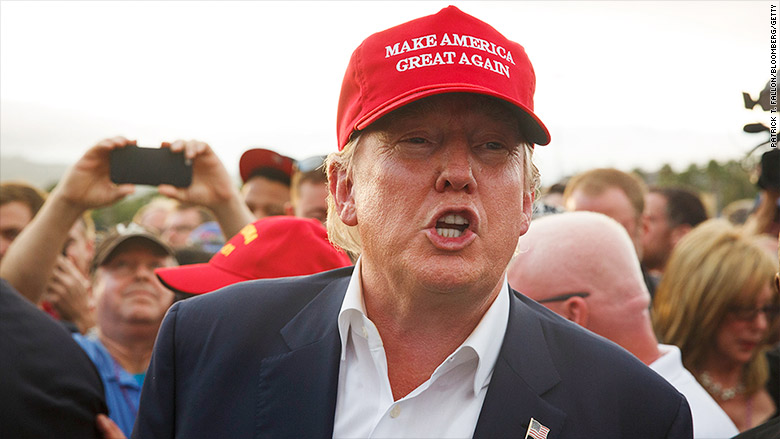
In the wake of the San Bernardino shooting and President Obama's address to the nation, Donald Trump has called for banning Muslims from entering the United States. This is counterproductive racist and awful. We need a credible candidate from the Republicans in 2016, not a reality television star who is a disgrace to the nation and its founding principles. Let's leave aside the morality here, which on its face is terrible, but recall what ISIS wants us to do which is turn this a religious war between the West and Muslims. ISIS wants us in our response to their provocations to eliminate the...
[I've been debating whether to post this...it's a "transcript" of a talk I gave yesterday here at the University of Puget Sound. It's a bit basic as it was intended for a general audience of, primarily, undergraduate students. I wrote this up for friends who wanted to hear the talk but were unable to attend. It's a bit disorganized too. So be warned it's kind of ramble-y and general. Also, I haven't provided source information or links. If you want any, please ask!] It’s been a few days since the Paris bombings, and we have some more information about what happened, which has prompted me to...
So, I started yesterday with news that Republican governors, including my own here in Texas, were seeking to deny Syrian refugees in to the state. By the end of the day, more than 25 governors, including one Democrat, had joined in the hysteria. I think a lot of us see this as a betrayal of American values and completely idiotic from the perspective of grand strategy. We are basically telling millions of refugees, most of them Muslim, that we don't care about them. ISIS thanks us for that recruitment message. If only we were Scotland and showed the Syrian refugees that we could be...