I replicated the go-to method for using ChatGPT to “cheat” on college essays. Here are my takeaways.
This is the fifth in our series of remembrances on the life of Sean Kay. This post is from 15 of his former students. May way we all have the good fortune to shape the lives of students in the way...
https://www.youtube.com/watch?v=RoTOvR4uofY This is a guest post from Randall Schweller, Professor of Political Science at The Ohio State University and author of Maxwell’s Demon and the Golden...
This is a guest post from Sahar Khan, an editor at Inkstick and adjunct fellow of Defense and Foreign Policy at the Cato Institute. She tweets at @khansahar1. This is the third post in our...
This a guest post from Robert M. Eisinger, a political science professor at Roger Williams University. He is the author of The Evolution of Presidential Polling (Cambridge University Press). Many of us recall reading the website 538 just prior to election day, and noted that there was a 71.4% probability that Hillary Clinton would garner more than 270 Electoral College votes than Donald Trump. Despite Secretary Clinton’s amassing 2.9 million more popular votes, Mr. Trump won the Electoral College and the presidency. The liberals and progressives’ zeitgeist had been disrupted and dislocated....
This is a guest post from Anjali K. Dayal (Assistant Professor, Fordham University), Madison V. Schramm (PhD Candidate, Georgetown University), Alexandra M. Stark (PhD Candidate, Georgetown University) The gender citation gap in international relations is an important part of today’s disciplinary conversations about diversity: research indicates that scholarship by women is less cited in academic articles; less likely to be cited by men; less likely to appear on graduate course syllabi, especially in courses with male instructors; and less likely to appear in media reports about politics....
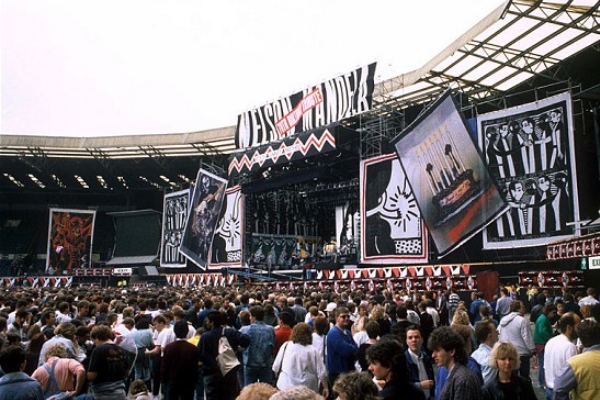
This is a guest post from Sean Kay, Robson Professor of Politics and Government, and Director of International Studies, at Ohio Wesleyan University. The interview quotes appear in his new book Rockin’ the Free World! How the Rock & Roll Revolution Changed America and the World (2017). There is power in rock and roll – an art form that has modernized American values and helped them to ripple around the world – advancing freedom, equality, human rights, and peace. Over the last several years I was fortunate to interview about sixty major rock and roll artists, songwriters, producers,...
This is a guest post from Brendan Szendro, a PhD Student in Political Science, Binghamton University and follows a previous post on the topic of autism On April 19, William H. Moore, a Political Science professor with what he termed “borderline Autism,” committed suicide after writing a lengthy note on his blog. In it, he detailed his frustrations with his perennial outsider status, his inability to communicate his talents professionally, accusations of arrogance by those around him and the fact that he had a strong desire to produce more than he consumed, but no longer found joy in...
This is a guest post by Amelia Hoover Green, Assistant Professor in the Department of History and Politics at Drexel University. Will Moore's death was a tragedy. To state the hopefully obvious: Will's ferocious productivity makes his death no more or less tragic. Public tributes to Will focus, rightly, on his forthrightness, his heart for justice, his mentorship, his kindness. But productivity—as a value, as a compulsion, or both—shows up too. In his final post, Will wrote that he enjoyed his avocations, but “[t]o feel good about myself—to be able to look myself in the mirror—I needed to...
This is a guest post by Lee Ann Fujii, Associate Professor at the University of Toronto, and currently a Member Scholar of the Institute for Advanced Study. This post is based on the keynote address she gave at ISA-NE in November 2016 in Baltimore, Maryland. These days most political science department are discussing the need for greater diversity in their ranks. These conversations tend to follow a well-worn path. They never start at Step 1—as in “what do I need to learn to understand this problem?”—but with Step Minus 5, that is, the rash of myths that people assert as fact or common...
This is a guest post by Christian Davenport, a Professor of Political Science at the University of Michigan, Ann Arbor. Will Moore was a close friend of, and collaborator with, Professor Davenport. There have several themes emerging out of the loss of our dear colleague that have emerged: how wonderful Will H. Moore (hereafter Will) was as a colleague, teacher and friend as well as a detailed and long-overdue discussion about mental health/care in the profession as well as individual cases. I do not want to detract from that conversation but I do wish to suggest two things. First, just...
The following is a guest post by Rachel Harmon, a PhD student in Political Science at Emory University. Recent events have prompted necessary discussions about mental health in academia, but a topic that remains underdiscussed are the challenges faced by individuals with Autism Spectrum Disorder (ASD). As an adult diagnosed with ASD and current PhD student, I have personally experienced how ASD can be a strength or a struggle, conditional on the surrounding environment. ASD is a spectrum and effects each person differently, but for me, being autistic shapes every moment of every day of my...