The security dilemma plays a central role in Walt and Mearsheimer’s reading of Russia’s invasion of Ukraine. But what if they get the security dilemma wrong?
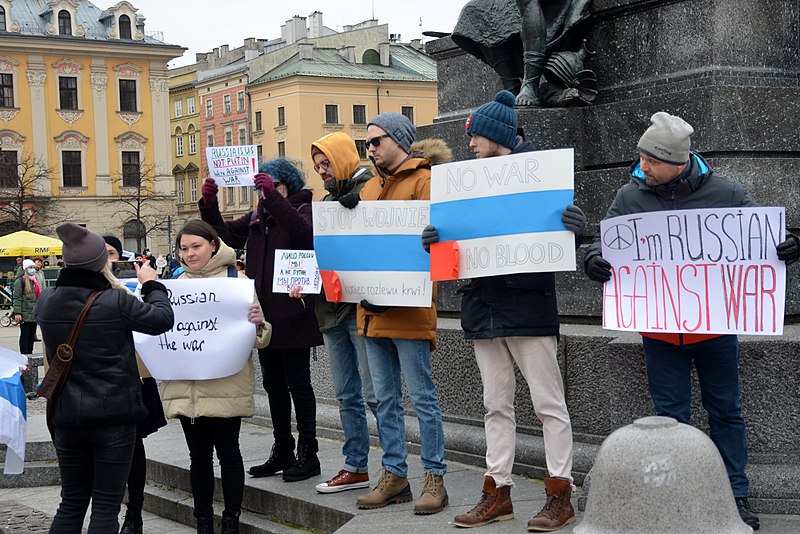
What Walt and Mearsheimer Get Wrong About the Security Dilemma
read more
The security dilemma plays a central role in Walt and Mearsheimer’s reading of Russia’s invasion of Ukraine. But what if they get the security dilemma wrong?

The following is a post by ISA journal editors Krista Wiegand (International Studies Quarterly), Debbie Lisle (International Political Sociology), Amanda Murdie (International Studies Review), and...
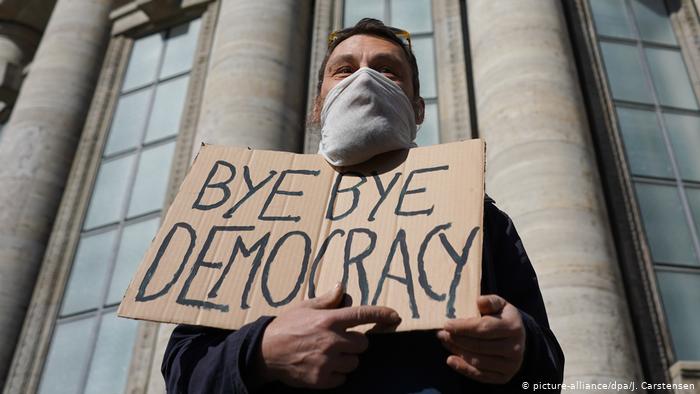
This is a guest post by Jeffrey C. Isaac, James H. Rudy Professor of Political Science at Indiana University, Bloomington. You can follow him at his blog at Democracy in Dark Times. The coronavirus...
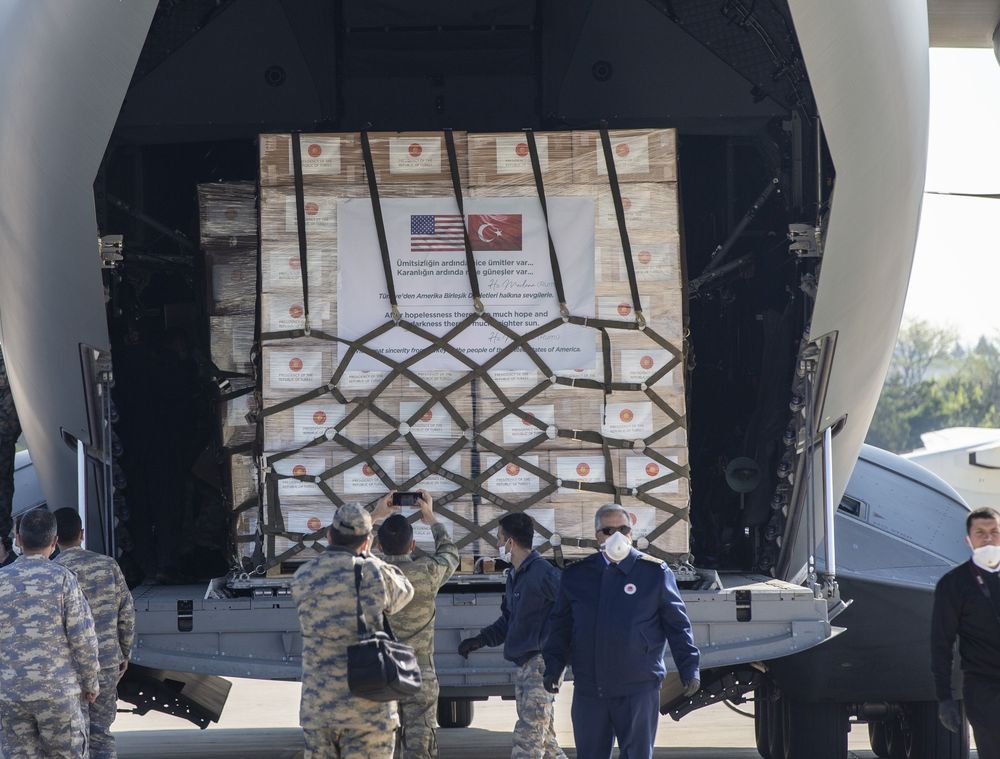
Like so much else in international relations, the answer to this question seems "obvious." But, like so much else, it gets trickier when we really investigate the situation, and it reveals nuances...
I try to save paper these days by reviewing manuscripts via PDFs on my computer or my tablet. It also makes it easier to read stuff while traveling--both to read on a plane and to carry less paper around. The biggest challenge in doing this is the habit/standard of people putting their tables/figures at the back of the document and having endnotes and not footnotes. I know most of the blame for this goes to journals which require such formatting, although that is changing (thanks Dan at ISQ). To be clear, the requirement is for submission of the final draft for many journals and not for...
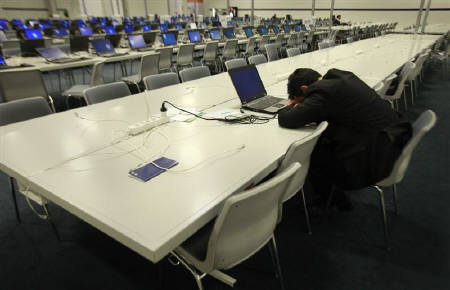
Amanda in her inimitable style has written some very persuasive guidance about the job market. Let me add a few thoughts about what else you can do to prepare. If you've already been socialized to want an academic job, then you better be ready for a rough slog. Unless you happen to be among the handful of students who get all the attention and plum interviews this job market season, you are likely to get a couple of interviews and at worst none at all. As Amanda said, most of this is out of your control. The job market sucks. There are thousands of people chasing too few jobs. Imagine you...
It’s getting to be that time of year again – the time when a fresh not-so-fresh crop of ABDs/PhDs gear-up for the academic job market. I’ve been there – it can make even the most self-assured academic have an existential crisis.[1] As much as I hated being on the job market myself, I absolutely love looking up and providing job market advice for students at Mizzou. I think I received especially good advice when I was a grad student and I think the advice I received has been causally related to my present situation (which I love). I’d like to “pay it forward.” On my first day as DGS, I...
Last night, I posted this about sexism in political science. It has gotten a pretty strong response getting 10x as many hits (so far) as my usual post, lots of retweets by female political scientists, and some sharing on facebook. The sharing on facebook came with props as my female political science friends were happy to see a senior male political scientist talk bluntly about this. These props/kudos made me feel squishy because it is not that hard to blog and notice on occasion that there is sexism in the poli sci business (as it is everywhere as one FB friend noted). My female...
I never thought that when I started grad school I’d be relocating to another country. Then again, when I got the job in Canada, it did not really occur to me that I was “really” leaving the US – on my previous visits to Toronto, everything felt pretty familiar. Plus, as a scholar of transnational activism, borders were supposed to be made increasingly irrelevant. I still remember the moment the border agent stamped my passport and glued the work permit into its folds. I had actually crossed a border for my job – politically, socially, and culturally. While many things are the same,...
The following is a guest post by Andrew Yeo at Catholic University of America. Collaborating with friends, colleagues, and other scholars is a great motivator for research. But if you’re at a small research university with limited institutional resources, the hurdles to do collaborative research beyond co-authoring is higher. Small departments, limited budgets, the absence of relevant research centers/programs, and few ongoing sponsored research activities ultimately makes it harder for junior scholars to learn how to organize larger collaborative research projects. If this sounds like your...
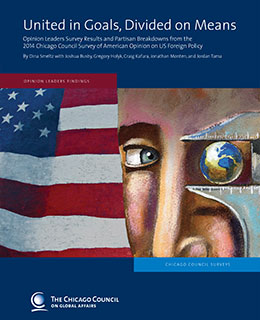
For the past two years, Jon Monten, Jordan Tama, and I have been working with the survey team at the Chicago Council on Global Affairs (Dina Smeltz and Craig Kafura) to revive the leader surveys that the Council used to run alongside their foreign policy opinion surveys of the American public. Because of the expense and the difficulties of getting responses, the Council discontinued those surveys in 2004, leaving academics with really limited options for comparing public and elite attitudes. With the release of a Council report and a recent piece ($, DM me for a PDF) in Foreign Affairs, we...
After you have seen the fall foliage at ISS-ISAC, why not see beautiful St. Louis, MO in November? ISA-Midwest - my FAVORITE conference - is November 19th - 22nd. Deadline for submissions is July 1st. This is a great conference for those interested in foreign policy or human rights themes. It's also a very inviting conference for junior scholars with lots of professional development opportunities. Hope to see you there - I'll join you for a drink at the amazing Three Sixty Bar.