The second installment of our live taping at the British International Studies Association annual…
Scholars of international relations don’t agree on much, but they at least agree that anarchy (th…
Professor Patricia Owens joins the Hayseed Scholar podcast. Professor Owens grew up in London, with Irish parents who'd emigrated from Ireland during the Troubles, and the conflict in Northern...
It turns out that it’s hard to write a roundup of happenings at the Duck of Minerva when there aren’t many to speak of. Much of that’s on me. What’s my excuse? Well, the kid finally contracted...
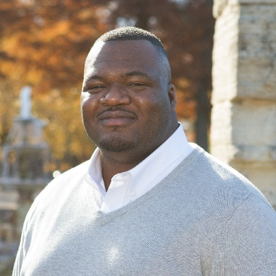
The Bridging the Gap team is thrilled to announce the addition of a new member of our leadership team: Emmanuel Balogun, the inaugural BtG Diversity, Equity, and Inclusion Fellow. We recently sat down with him to ask about his work, hobbies, and plans for the fellowship. Welcome to the team, Emmanuel! BTG: Tell us a bit about yourself. What drives your scholarship? EB: What drives my scholarship is my desire to highlight the multitude of ways African countries engage with the international community. I am also very curious about the role of African expertise in IR. My research on African...
As someone who works on religion and politics, I encounter the term "soft power" a lot. Most of the time it's in a good way; soft power is a means to advocate for policies that draw on our values but still advance our interests. But, occasionally, the term frustrates me. Too often it's used as a catch-all to address any foreign policy that doesn't involve military force or economic sanctions. If we want to advocate for a broader set of foreign policy tools, we need a better set of terms to describe them. Soft power Soft power was famously introduced by Joseph Nye in a 1990 Foreign Policy...
Hilary Matfess is a PhD candidate at Yale University, an incoming professor at the University of Denver’s Korbel School, and a 2020-2021 United States Institute for Peace (USIP) Peace Scholar Fellow. She will participate in the Bridging the Gap NEW Era workshop in 2021. Her work has been published in International Security, Security Studies, Stability, Studies in Conflict and Terrorism, and African Studies Review. Her first book, Women and the War on Boko Haram, was published in 2017 with Zed Publishers. Relevant to this article, she has also completed several marathons and looks forward to...
This post from our partners at Bridging the Gap is written by BTG Fellows Danielle Gilbert and Erik Lin-Greenberg, who are now the new editors of the BTG Duck channel, coordinating contributions from BTG’s network of scholars. The past twelve months have been fraught with challenges, yet they have also given rise to a host of new opportunities. We’ve faced a global pandemic, a contentious U.S. election, social and racial injustice, and assaults on democracy around the world. These experiences have led scholars to ask tough questions, have difficult—but critically important—conversations, and...
Academic debates about NATO-Russian relations are deeply entangled with policy preferences.
Aletta Jacobs. Raise your hand if you have never heard her name! In our neck of the tulip fields, however, she is a celebrated professional: she was the first woman to be officially enrolled and graduate with a doctorate at the university in the Netherlands (shoutout to my employer - Rijksuniversiteit Groningen!) and the first woman to receive a medical degree. On top of those accomplishments, she was a women’s suffrage and peace activist, and helped establish Women's International League for Peace and Freedom, a Novel prize winning anti-war organization. To celebrate international...
Photo courtesy of the Negative Psychologist. When sharing unpopular findings, what obligations (if any) do scholars have when policymakers do not care to hear the message? This is a guest post by Tricia Olsen, associate professor of business ethics and legal studies at the Daniels College of Business and Josef Korbel School of International Studies at the University of Denver. It is part of an occasional series discussing the ethical dilemmas that arise when academics engage with policymakers and the broader public. This series is part of the Rigor, Relevance, and Responsibility...
Photo courtesy of the Guardian UK. When engaging with policy audiences and organizations, how can one be truthful when telling the whole truth may be counterproductive? This post is part of an occasional series discussing the ethical dilemmas that arise when academics engage with policymakers and the broader public. This series is part of the Rigor, Relevance, and Responsibility project of the Sié Chéou-Kang Center for International Security & Diplomacy, which seeks to make ethical considerations an integral part of policy-relevant research and engagement. The program develops knowledge...