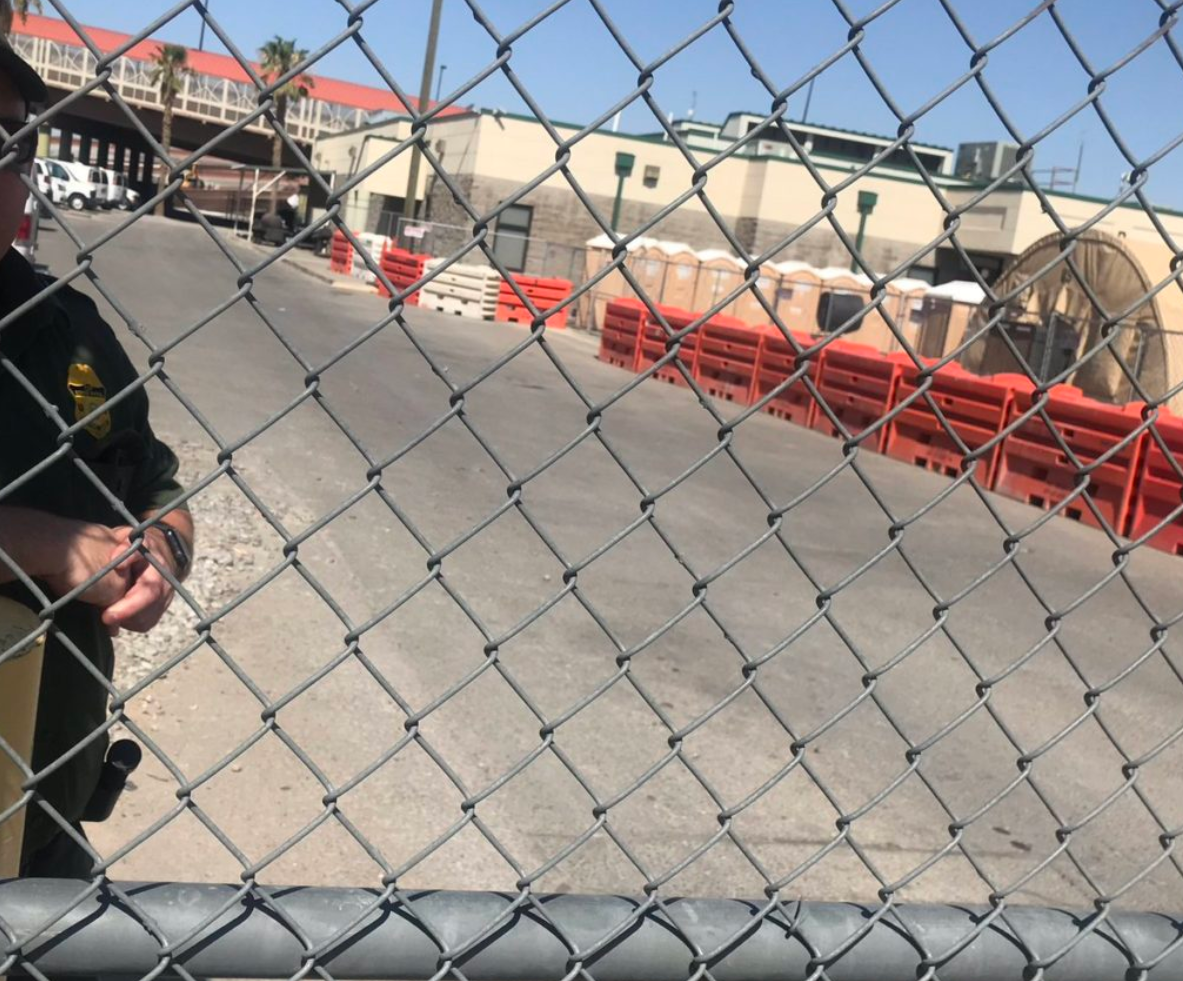
How a shift in tactical orientation by activists opposing the border camps might make all the difference.
The Enemy’s Gate is Down
read more
How a shift in tactical orientation by activists opposing the border camps might make all the difference.
Though I've been blogging at the Duck of Minerva for more than 9 years, I haven't posted much content for several years. My last post here was in mid-February. You can find maybe half a dozen...

Contenders for the Marine Corps Association's Major General Harold W. Chase Prize, ($3000, publication, and a plaque) are supposed to "propose and argue for a new and better way of “doing business”...
Much ink has been spilled over the last few days concerning President Obama’s speech on Wednesday evening regarding ISIS, as well as how his strategy will face many challenges going forward. Some...
It is time again for the International Studies Association Annual Conference. With thousands of attendees, a phone book full of panels, and a slough of receptions, dinners, meetings, and opportunities, the whole thing can be a bit overwhelming as a grad student (and for everyone else too!). You've likely received advice on how to present your work in 10 seconds or less- but what about the rest of the conference? Here are a couple of key tips for surviving the four days and getting the most out of the experience. Before we get to the real essentials (food, shelter, and clothing), let's start...
My post at e-ir on how folks understand IR and its manifestations in Game of Thrones is eclipsed by this series of videos. For the conclusion with heaps of paens to teen movies:
My first post on the Iraq War asked if academic IR had any responsibility to slow the march to war. The second tried to formulate what the neoconservative theory of the war was, because many of us, in retrospect of a conflict gone so badly, desperately want to un-remember that there really was a logic to the war, that it was at least somewhat intellectually defensible, and that a lot of us believed it. We may want to retroactively exculpate ourselves by suggesting it was just W the cowboy acting ridiculous, or a neocon hijacking of the policy process, or Halliburton oil...
Check out my new post at e-IR for a consideration of how Game of Thrones tends to reflect how non-IR scholars might be thinking about IR.That's all, folks.
Yesterday the Senate passed the Coburn amendment cutting off funds for political science research through the National Science Foundation. It was by a voice vote, which is another way of saying that it was so unanimous that no one bothered to even count hands. So that doesn’t bode well. I heard on NPR that the money will instead go to cancer research, which is a pretty clever move. Needless to say, APSA didn’t mention that in the press release. I must say that I would rather that the government spend money to help find a cure for the disease killing Aunt Millie than help Bueno de Mesquita...
Some further thoughts on why the United States invaded Iraq in 2003. We've had a few posts already now that the tenth anniversary has come. But given the magnitude of the decision and since even its most vocal defenders were caught off guard by how costly, lethal and protracted it was, it is worth lingering on the question. In varying degrees of sophistication, there is a recurrent argument that the Iraq war flowed out of pre-9/11 developments, with 9/11 itself merely functioning as an enabling event deftly exploited by the war party in Washington. But against the grain of some...
The debate is indeed on, and the Duck is paddling rapidly on this one with excellent posts from Robert, Jon, and Dan. I take/took a slightly different tack. I opposed the war at the time and like everyone else watched how President Bush--whose job ratings were so low on 9-10 that he was rapidly on his way to being a one-term president--relied on Karl Rove to use 9-11 to his supreme political advantage. A la Jon's post, it took the American people six more years to wake up to the (inter)national disaster that had been wrought. But remember Colin Powell's Pottery Barn rule? Taking that as...
Yesterday morning I forgot to link the National Security Archive's "Iraq War Ten Years After" page. It highlights some of the greatest hits of the period. I founded the Duck after the start of the Iraq War, but, as was the case for many US political and international-affairs blogs, the team blogged a fair amount on the subject. Given Jon's recent post, I thought I'd dredge up an old one that I wrote on the framing of the Iraq War. Given how recent apologias have emphasized certain aspects of pro-war rhetoric, such as the call to democratize Iraq, I think it remains relevant. Framing Iraq...