Hey, our auto-tweeter hasn't been working so I'm trying to fix it. This is a test...
Testing to Twitter
read more
Hey, our auto-tweeter hasn't been working so I'm trying to fix it. This is a test...
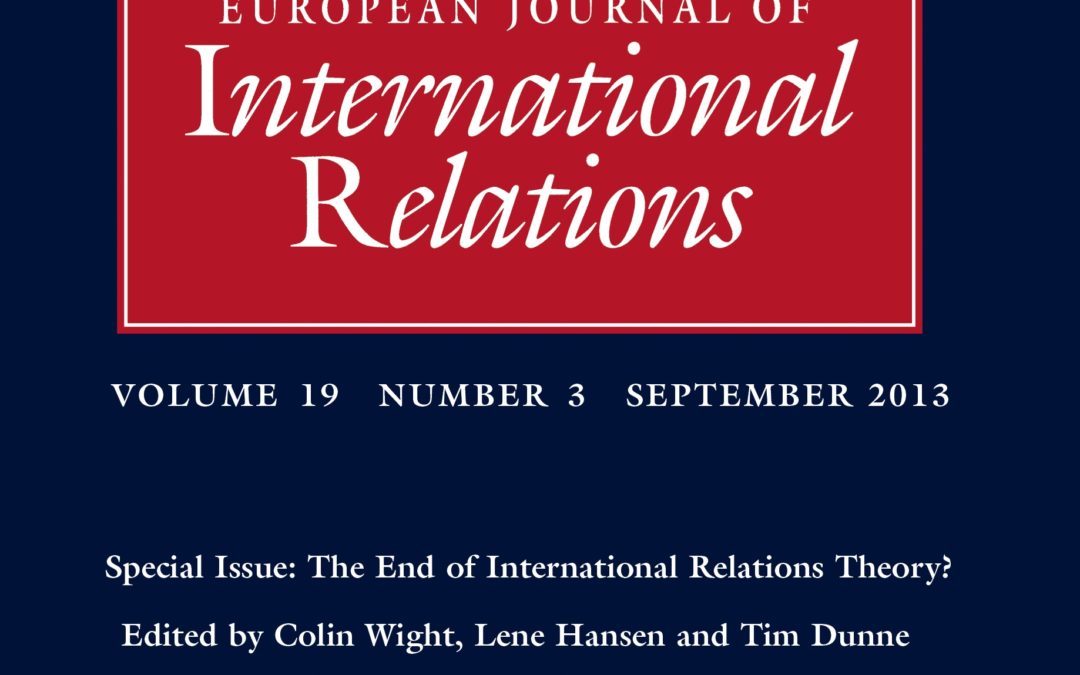
Other entries in the symposium--when available--may be reached via the "EJIR Special Issue Symposium" tag.Terms such as core and periphery (or third world) are largely passé, and may even be...
Syria has raised several questions that pertain to morality, legality, and strategy in international relations. Discussed extensively on the Duck, Opinio Juris, The Monkey Cage, and elsewhere the...
Sylvester productively draws out the implications of the current ‘camp’ structure of IR: on the one hand, the proliferation of ‘camps’ and communities within IR increases the opportunities for...
I cannot think of any other way to characterize the remarks made by Congresswoman Jean Schmidt (R-Ohio) during debate yesterday on the House floor. The lower chamber was debating a procedural rule connected to a Republican-proposed measure that attempted to make Democrats go on the record in favor of a measure similar to the one proposed earlier this week by Congressman John Murtha (D-Pa.), which called for the immediate withdrawl of US troops in Iraq. While I do not support Murtha's proposal (I am not yet convinced that pull out is the best strategic option at this point), the notion that...
The current issue of Foreign Policy includes an interesting study titled Inside the Ivory Tower. The story discusses the composition and nature of International Relations education in the United States. I would link to it directly but unfortunately it is behind a subscription wall so you will have to pick up your own copy. Some of what is reported is expected. For example, Harvard, Columbia, Stanford, Princeton and Chicago made up the top 5 PhD programs. One thing I found surprising is that MIT was ranked 11th. Given the strength of that program's security faculty and the students they have...
Clinton did it too, right?Iraq Liberation Act of 1998 (Enrolled as Agreed to or Passed by Both House and Senate)--H.R.4655-- SEC. 8. RULE OF CONSTRUCTION. Nothing in this Act shall be construed to authorize or otherwise speak to the use of United States Armed Forces (except as provided in section 4(a)(2)) in carrying out this Act.As for that part:SEC. 4. ASSISTANCE TO SUPPORT A TRANSITION TO DEMOCRACY IN IRAQ. (a) AUTHORITY TO PROVIDE ASSISTANCE- The President may provide to the Iraqi democratic opposition organizations designated in accordance with section 5 the following assistance:(2)...
How bloody difficult is it for people to distinguish the widespread belief that Iraq had possession of biological and chemical agents from the Bush administration's arguments that Hussein's possession of, or eventual acquisition of, weapons of mass destruction posed an imminent threat to America's urban centers? I know we have a small readership, but it isn't exactly like Rodger and I are the only people explaining the difference.This, after all, is what's at stake in accusations that the Bush administration distorted and selectively used intelligence to make their case for war: they...
The success of a free Afghanistan is our fight. The war on terror is our fight. All of us are called to share the blessings of liberty, and to be strong and steady in freedom's defense. It will surely be said of our times that we lived with great challenges. Let it also be said of our times that we understood our great duties, and met them in full.- George W. Bush, March 2004.UK tries to form coalition to fight in Afghanistan British troops to target al-Qaida, Taliban and fill gap left by US withdrawal- Simon Tisdall and Richard Norton-Taylor, The Guardian, Tuesday November 15, 2005It may be...
A lot of people think that "crazy postmodernists" are the biggest threat to the integrity of social science. Certainly, in my field, it isn't hard to find disciplinary statements that exclude "postmodernism" from the acceptable range of opinion about how to conduct social-scientific inquiry. I disagree. The real threat, in my view, is the practice of incredibly bad social science. (Warning: the link and the rest of this post contain referencess to sexual activity)Michael Scherer of Salon.com:With those words, Brownback kicked off a 90-minute discussion of hardcore sex scenes,...
In September I started series on the balance of power. Since then, I've been distracted by breaking news and other obligations. I am returning to the topic today.The first part of the series discussed, in very stylized terms, the history and core concepts of the balance of power. Since then, I've mentioned some aspects of the argument about "soft balancing" as it relates to the Shanghai Cooperation Organization. At least part of the reason why some scholars have introduced the concept of "soft balancing" relates to the general crisis of balance-of-power theory - in particular, the apparent...
The latest issue of Foreign Affairs has a fascinating piece by Alex Cooley called "Base Politics." Cooley writes about the dilemmas posed by American basing policy in the context of the kinds of political regimes that play host to US military bases. Cooley echoes some of the claims I made way back in a debate over Uzbekistan and K2, but he does so with far greater knowledge and eloquence. None of this is surprising, since Cooley has spent a great deal of time studying American basing policy and the "political economy" of American bases abroad. As he argues, there are real costs associated...