In this “Whiskey Optional” episode, PTJ facilitates a conversation among four colleagues from dif…
This post will be quick for me to write, but may suck up the rest of your morning. caveat lector. Rachel Navarre—my friend from grad school, who works at Bridgewater State—compiled what was then an...
The basic principles that should guide letters and their RFDs hold across every kind of decisions. However, we need to recognize important differences between, say, a rejection and an R&R. In...
Public Domain — From Pixabay For caveats and background, see my introductory post. Editors write a lot of decision letters. At high-volume journals, editors write so many decision letters that it...
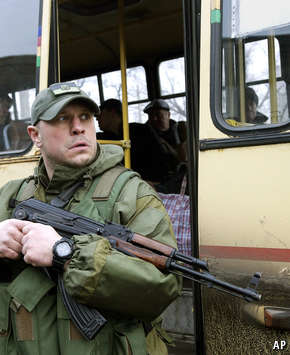
With Russia's incursions into Ukraine becoming more aggressive, there has been a lot of chatter about whether or not the U.S. government should arm Ukraine with lethal weapons. Defense Secretary Nominee Ash Carter has signaled his openness to such a move. Ivo Daalder, Strobe Talbott, Steven Pifer, and collaborators have issued a call for such support. There has been push back from Sean Kay and Jeremy Shapiro, other establishment foreign policy types. (With Talbott, Shapiro, and other folks from Brookings weighing in on opposing sides, there has been interesting discussion of this being an...
I am a huge fan of the Lego Movie, which is almost an IR movie, given that Will Moore is related to one of the movie's creators. But this somewhat critical take on the film is still delightful:
We hear every day that technology is changing rapidly, and that we are at risk of others violating our rights through digital means. We hear about cyber attacks that steal data, such as credit card numbers, social security numbers, names, incomes, or addresses. We hear about attacks that steal intellectual property, from movies to plans for the F-35 Joint Strike Fighter. Indeed, we face a continual onslaught from not only the cyber criminals, but from the media as well. One of the lesser-reported issues in the US, however, has been a different discussion about data and rights protection:...
*This is a guest post by Cynthia Weber, Professor of International Relations at the University of Sussex As the International Studies Association gears up for its 2015 annual convention in New Orleans, USA, an email announcing its Sapphire Series of panels was sent to ISA members. The email reads: ‘Introducing ISA’s new initiative THE SAPPHIRE SERIES. Covering key issues in the field and in international affairs, these talks will feature scholars discussing current world events, trends in academic research, and new challenges in teaching and learning’. Great idea, it seems to me, so I click...
I can still remember my first ISA conference. I was a PhD student eager to present early work at the freezing Montreal conference (not the last Montreal, the one before that). I remember being gobsmacked hearing academics talking about how they were booked up with meetings and hadn't attended a single panel. I thought: What did that mean?; What was this 'other' conference or set of meetings happening and why was it happening at the same time as the ISA?; How was it possible to attend the ISA, but not attend any panels? But several years later, as I look at my 'ISA Schedule' I'm struggling to...
Thanks to all of you who voted for this year’s OAIS Blogging Awards finalists. We had an amazing pool of nominees again this year in all four categories. We had a record voter turnout -- it's exciting to see the growth in interest in the Duckies in the past three years. It is even more exciting to see and read all of the incredible intellectual contributions made by all of the bloggers in the IR field. We are pleased to announce this year’s finalists. Finalists will now be reviewed by a panel of judges that includes last year’s winners and Duck of Minerva permanent contributors. We will...
About a week ago I published a piece with the International Relations and Security Network (ISN) on the analytical and political utility (or lack thereof) of the concept of terrorism. I cannot reproduce it here in full for Duck readers because the ISN owns it. But, since I think the topic might be of interest to readers, here is a taste of what I argue in hopes of prompting a discussion: With high-profile incidents of political violence continuing to make headlines, the time has come to question the labeling of these events as ‘terrorism.’ While politically or ideologically motivated...
Save room on your schedules for some Ultimate: I am hoping that there will be enough space and too few drunken folks on the playing field at Woldenberg Park at 10am on Saturday of ISA week. It is just up the river (if you look at a map, it looks is up and to the right of the Hilton along the waterfront). Bring a dark shirt and a light shirt. Cleats are optional. I will bring the cones and the disks. Hope to see you there. Proof that ISA and Ultimate go together!