What if how presidents talk about ending wars contributes to the cycle of U.S. military intervention? Stephen J. Heidt answers 6+1 questions about his new book.
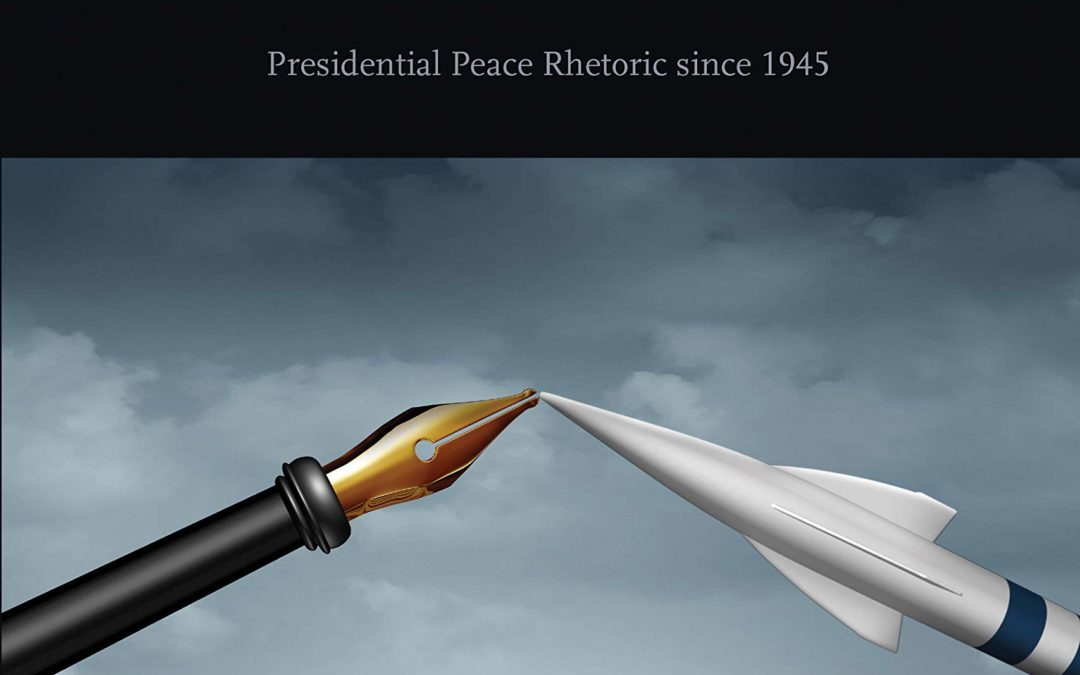
Consider these two presidential statements: “Happy New Year to all, including to my many enemies and those who have fought me and lost so badly they just don’t know what to do....
Putin’s annual press conference is a chance for regular citizens to spend 3 hours in a great and rich Russia, where everything is in order and Putin is capable of installing presidents in foreign...
The President-Elect has called for expanding the US nuclear arsenal, not just modernizing it (old warheads may not be good warheads). And when asked about whether this might lead to an arms race,...
Fans must content themselves with some trivia this week. Here are "15 Things [Most People] Don't Know About Game of Thrones."
This Duck spent the day in the car en route to the Brazilian consulate in Houston to get visas for a summer field course so I'm running behind in my linkage for the week. In the car, I had the amazing experience of listening to an audioversion of The Idealist, Nina Munk's magisterial account of Jeff Sachs and the Millennium Villages Project. I'm moderating a conversation with Ms. Munk on Monday. For those of you who follow debates in international development, I found her take on Sachs to be quite measured, far more nuanced than the media accounts I had read. At times, I found myself...
Voting closes tomorrow at 5pm EST for this year's OAIS Blogging Awards. If you haven't already done so, now is the time to cast your ballot. You can review the nominees and get more information here. Once the votes are in, we'll identify the finalists for each category and turn the process over to our panel of judges. We'll announce the winners at the OAIS Blogging Awards and Reception at ISA Annual Convention on Thursday, March 27.
My students and I have just read Emilie Hafner-Burton's grand treatise on the human rights regime, Making Human Rights a Reality. Following her earlier empirical studies, this is a sweeping descriptive appraisal of how human rights law works and why it works so poorly, coupled with a level-headed argument about strategies that human rights champions or "stewards" might adopt to achieve concrete improvements in human rights performance by circumventing existing human rights machinery. The book is readable, exhaustive and pitched to a non-scholarly audience; it combines an overview of...
This piece has been making waves in the academic world (for a much better set of recommendations, see this piece). It gets much attention because it both identifies a real problem and then suggests awful ways to handle it. The latter is easier to deal with quickly. However, first let me be clear--what I am talking about here are the letters that universities ask outside scholars to write as they evaluate candidates for tenure and/or promotion. The basic idea is that these letters serve two purposes (at least): so that folks who do specialized work can be fairly evaluated if their work is...
Editor's note: this is a slightly modified version of a post that originally appeared on my personal blog. As I mentioned here, I've decided to try "flipping the classroom" this semester, meaning I'm now posting the lectures online and using the class time this frees up for Q&A and for activities meant to reinforce core concepts and create strong incentives for students to keep up with the lectures from week to week. These activities will take a variety of forms, and I'll post about each one in case anyone out there is interested. Look below the fold for a description of the first...
I was struck this morning to read a post on a Cyber Security forum with a link stating the "Super Bowl was Hacked!" Â Clicking on the link lead to this write up and picture. Â I can't think of better visualization of the need for basic cyber hygiene. Â The cyber security industry kills many trees and wastes much bandwidth on discussions of cyber offensive and defensive strategies. Â Yet, if we can't practice basic cyber hygiene, what is the point? The UK Cabinet estimated that as much of 80 percent of cyber crime can be prevented with basic cyber hygiene. Â While that figure is pretty much a wild...
Howdy.  Here are your Monday links... A useful graphic on which countries are taking Syrian refugees. The best tribute to Pete Seeger I saw came from Outlook India, which has audio of Seeger singing Gandhi's "Raghupati Raghav Raja Ram" and Indians singing "Hum Honge Kamyaab" ("We Shall Overcome"). The NY Times' India Ink explains "Why  the US Embassy Releases Pollution Data in Beijing but not in New Delhi." Al Jazeera has a retrospective on the Iranian Revolution, which will turn 35 on 11 February.  Arguably, it was the most important revolution since 1789. Chad Raymond at Active Learning in...