Over the past month, U.S. President Donald Trump has shifted from misogynistic jabs to full‑scale performances of militarized authority, an evolution entirely consistent his political...
“A specter is haunting strategic studies—the specter of peace.” These bizarre words are from Richard Betts, who provocatively presented peace itself as a problem in a largely...
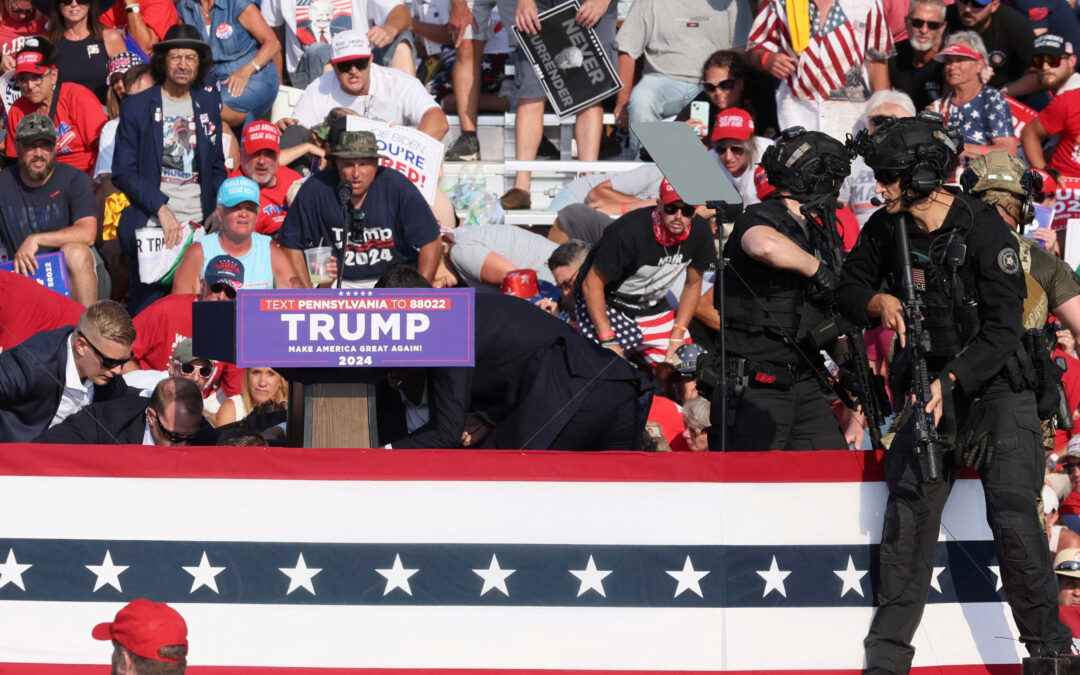
The implications of the attempted assassination of Donald Trump over the weekend remain unclear. Will it lead him to strike a more conciliatory tone during the upcoming Republican National...
Labour MP David Lammy has a new piece in Foreign Affairs called, “The Case for Progressive Realism.” Where his manifesto is punchiest is in its unsparing critiques of British foreign policy: the...
Since marginalized communities tend to suffer disproportionately when governments make contemptible policy choices, it stands to reason that those communities might develop a heightened sensitivity about the merits of new policies. At the very least they have reason to cultivate a perspective and preferences that differ from people with resources (money, power, societal standing) to buffer them from the consequences of poor policy stewardship. That perspective has a kernel of wise counsel. There’s an abundance of evidence that policies ranging from de-industrialization since the 1970s to the...
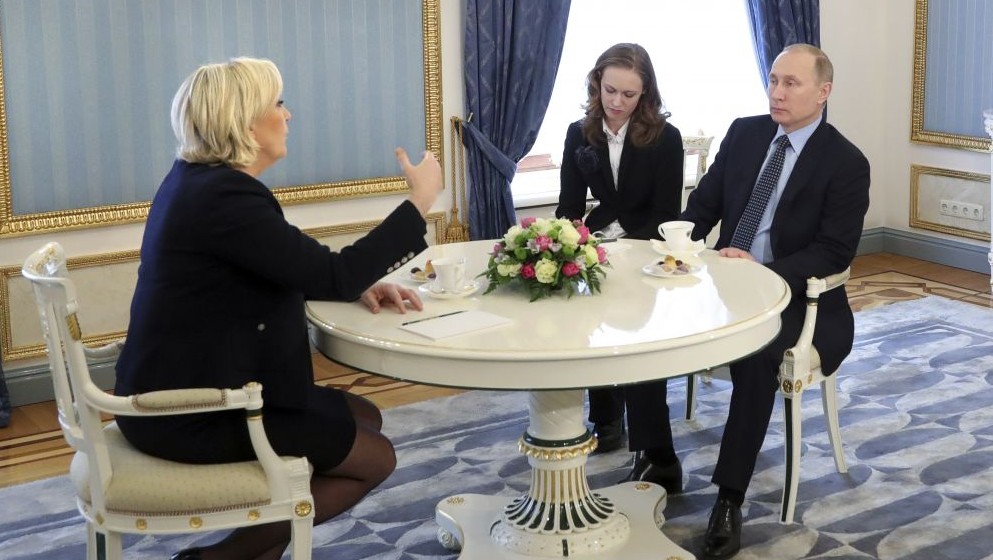
One year ago, Russia launched an illegal war on Ukraine, committing horrific war crimes against the people of Ukraine. Analyses and memorials abound, and I'm probably not the only person writing about this on the Duck today. I wanted to address a specific aspect of this war, though: why Russia's carefully cultivated ties with far-right forces in Western Europe and the United States failed to undermine Western opposition to the war. Undermining opposition to the Russky Mir? Last year, as Russia was about to launch its invasion of Ukraine, I was finishing a chapter on Russia in my new book....
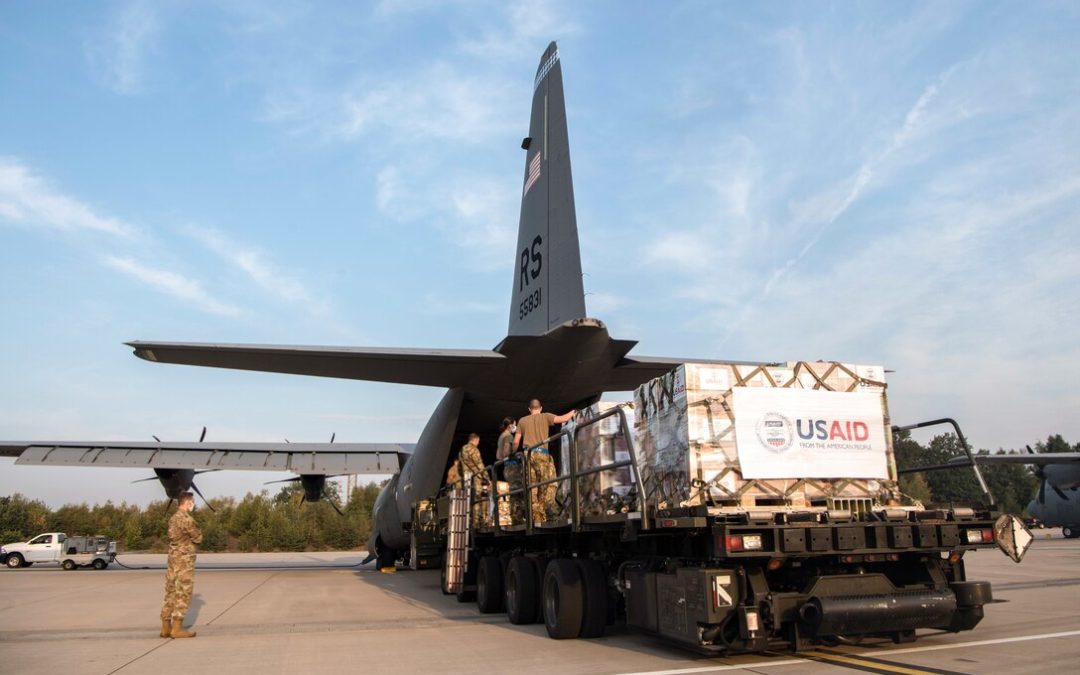
What is the name of the book and what are its coordinates? Michael A. Allen, Michael E. Flynn, Carla Martinez Machain, and Andrew Stravers. 2022. Beyond the Wire: U.S. Military Deployments and Host Country Public Opinion, Oxford University Press. Paperback (use code ASFLYQ6 for 30% off), ebook What’s the argument? U.S. military deployments — particularly the individual troops involved — anchor American influence abroad, and for many foreign populations they are the face of U.S. global power. That face isn't always welcome. U.S. service members commit crimes, cause deadly accidents, and...
What follows is my general philosophy on China issues, by way of answering the hardest of hard defense framing questions regarding China. After my most recent piece in Foreign Affairs, I got a note from a semi-prominent friend in Washington's foreign policy community basically praising it but also posing some tough questions about China policy. In my view they're the wrong questions. But we've known each other a long time, and my response, I think, might be useful for others to consider. So I've anonymized bits but otherwise include the entire note below. Hey [anonymized],...
My most recent Foreign Affairs article, co-authored with Justin Casey, landed yesterday. The article started out as an argument about how the normalization of the far right might affect national and international security. Those issues remain a major thread, but the true heart of the piece is a discussion of the dynamics of the transnational right during the 1920s and 1930s (that is, of interwar fascism) and how that relates to the present. The article warns against hindsight bias — which is a major problem in debates about reactionary...
The Biden administration’s jarring revisionism on economic policy toward China (and by extension the world) is reviving discussions (most acute during the Trump and George W. Bush years) about whether it’s right to label the United States a revisionist power. There’s a lot at stake in whether the United States is perceived as—or actually is—a “revisionist” (vice “status quo”) power. Theories predicting war are built out of the distinction between revisionist and status quo states. And if the world understands the United States as revisionist, then it is the one upending...
We need a critical strategic studies, or maybe a strategic peace studies. Critical security studies, of course, is a venerable research tradition that I sometimes identify with. There are also scattered references to the phrase “critical strategic studies” out there in the literature, though it appears to be synonymous with critical security studies. And there is a pretty robust peace studies and “conflict resolution” program within international relations. But it’s the synthesis of peacemaking, strategy, and critical analysis that lacks its own banner...
When it comes norm dynamics and how we theorize them, uncertainty presents something of a paradox. We study norms because we think that they matter. But if norms are inherently uncertain, then how is it possible that they constitute, constrain, and otherwise shape the behavior of global actors? Unless norms produce stable and defined expectations, then how can they have the power to structure international politics?