A distinctly unoriginal take on the pathologies of overvaluing academic “novelty.”

Get off my lawn! Are journal demands for “novelty” creating a culture of low-level academic dishonesty?
read more
A distinctly unoriginal take on the pathologies of overvaluing academic “novelty.”
Imagine it’s time for your yearly checkup at the family doctor. Sitting on the paper covered medical bench in a fluorescent room, you submit to the full array of tests. You say “ah,” you squint at...
This piece is written by Bridging the Gap co-Director Naazneen H. Barma, Director of the Scrivner Institute of Public Policy, Scrivner Chair, and Associate Professor at the Josef Korbel...

In Marvel comics and movies, Ant-Man is a super-hero who can change his size using a special suit and "Pym particles." When giant, he's...giant. But when he's tiny he keeps the same density as a...
Thankfully, The Disaster that was 2016 will soon be behind us. I’m sure hoping 2017 will be better! With all the uncertainty of 2017, I am assured of one thing: ISA 2017 is right around the corner and will be AMAZING. My favorite part of ISA for the last several years is the Online Achievement in International Studies Reception and Awarding of the Duckies! This year, the event will be held on Thursday, February 23rd at 7:30 pm. I’m excited about our Ignite speaker lineup – more information will be released on this soon. The ISA Online Media Caucus (OMC) is very thankful to have the...
What is the role of political science and political scientists during contentious social and political moments? This question seems foremost in the minds of many political scientists (read Jeffrey Issac and Jennifer Victor). Political scientists are uniquely positioned to understand the institutions of government, processes of democratic consolidation and decline, and the power and influence of civil society, social movements and advocacy. Political scientists study populism, civil rights movements, xenophobia, nationalism, autocracy and democracy; we have invaluable insights to add to the...
There is a lot to think about in the aftermath of Trump's win. Lots of early hot talks will be wrong. One of the first reactions has been to wonder about the value of political science (which is not the most important thing to think about but we have plenty of time and bandwidth to cover this and everything else): "Should we just bury political science as a discipline?" Some of this week's best reactions to Trump's win: https://t.co/OD707adPkR — OpenCanada (@OpenCanada) November 11, 2016 To be clear, folks in the discipline will be thinking about this election for some time to come, trying...
To commemorate the 70th anniversary of International Organization, the editorial team asked former editors of the journal to reflect on their time overseeing the journal as well as on the most significant articles published during their tenure. I recently read Stephen Krasner’s reflection and was surprised by a number of conclusions he draws regarding scholarship on ideas, norms and nonmaterial factors in international relations. Starting with Peter Haas’ “Introduction: Epistemic Communities and International Policy Coordination,” one of the two most cited articles published during Krasner’s...
We're happy to announce some new guest Ducks, some old guests staying on, and additions to our permanent contributors. In reverse order, Jarrod Hayes and Heather Roff-Perkins have joined us as permanent contributors. They have brought keen insights on a range of topics so we're happy they have agreed to stay on in a permanent capacity! Maryam Deloffre, Jeffrey Stacey, and William Kindred Winecoff continue on as guests with important insights on global health, security, and IPE respectively. Our thanks to our guests from last year -- Annick, Cai, Seth, Tom, and Wendy -- for their valuable...
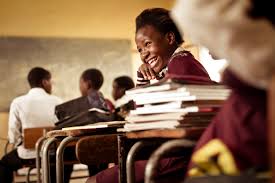
In previous posts on the environment and health, I highlighted lacunae in the field, which I attributed in part to there being few courses in those substantive areas. By providing a few exemplar syllabi, I thought more of us might find it easier to offer courses on those topics. At the very least, some might find inspiration for courses and mine these syllabi for readings. Another potentially under-studied area is international development. Here, there may be more course offerings and crossover with IPE, but I'm going to start an open thread with development syllabi because I can. Again,...
Rousseau once remarked that “It is, therefore, very certain that compassion is a natural sentiment, which, by moderating the activity of self-esteem in each individual, contributes to the mutual preservation of the whole species” (Discourses on Inequality). Indeed, it is compassion, and not “reason” that keeps this frail species progressing. Yet, this ability to be compassionate, which is by its very nature an other-regarding ability, is (ironically) the different side to the same coin: comparison. Comparison, or perhaps "reflection on certain relations" (e.g. small/big; hard/soft;...
Today, Dan Drezner pulled on my chain more effectively than damn near any other scholar I respect. I should keep quiet (not my strength) as I have an article* I am revising for resubmission that addresses this very argument--that big IR theory has gone away somehow. But I cannot help but respond, partly because this article may not make it past the next stage and partly because by the time it does, people will have moved on (or not, as this argument keeps coming up). * The rejected draft is here. The revised version is, um, being revised. I have some better graphs in the new version that...