We keep hearing that we live in an unprecedented “age of sanctions.” Trade and globalization data tell a different story — the world got bigger, not meaner.
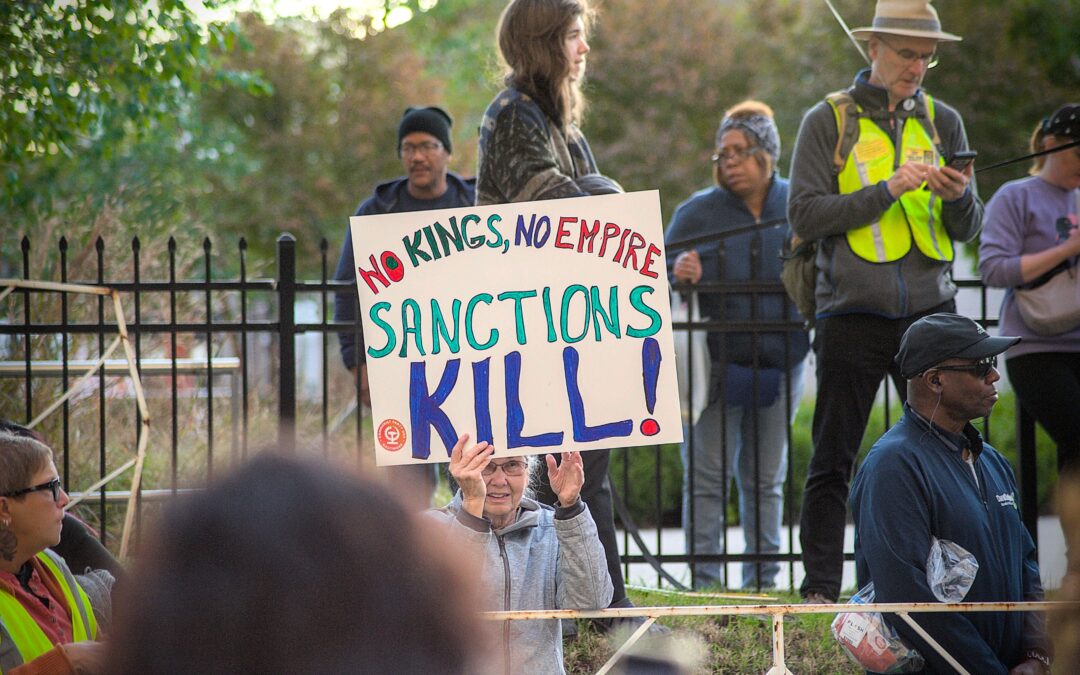
Today’s sanctions aren’t special. They’re just keeping up.
read more
We keep hearing that we live in an unprecedented “age of sanctions.” Trade and globalization data tell a different story — the world got bigger, not meaner.
Editorial Note: this post contains spoilers. Christopher Nolan is one of the most important working American movie directors. He is one of the few directors in the Hollywood system...
In January of 2025, the Republican party gained “the trifecta,” controlling the Presidency and the Senate, and the House of Representatives. Since then, congressional Republicans have done little...
Every year I make my third year Bachelor students read Carol Cohn’s article “Sex and Death in the rational world of defense intellectuals” and they are genuinely surprised by the number of penile...

A century before Trump’s tariff threats, Joseph Chamberlain pitched the same idea: use duties as a “big revolver” to force rivals into “fair trade.” That history helps explain why “unfairness” rhetoric and coercive foreign policy keep returning when hegemonic powers decline.
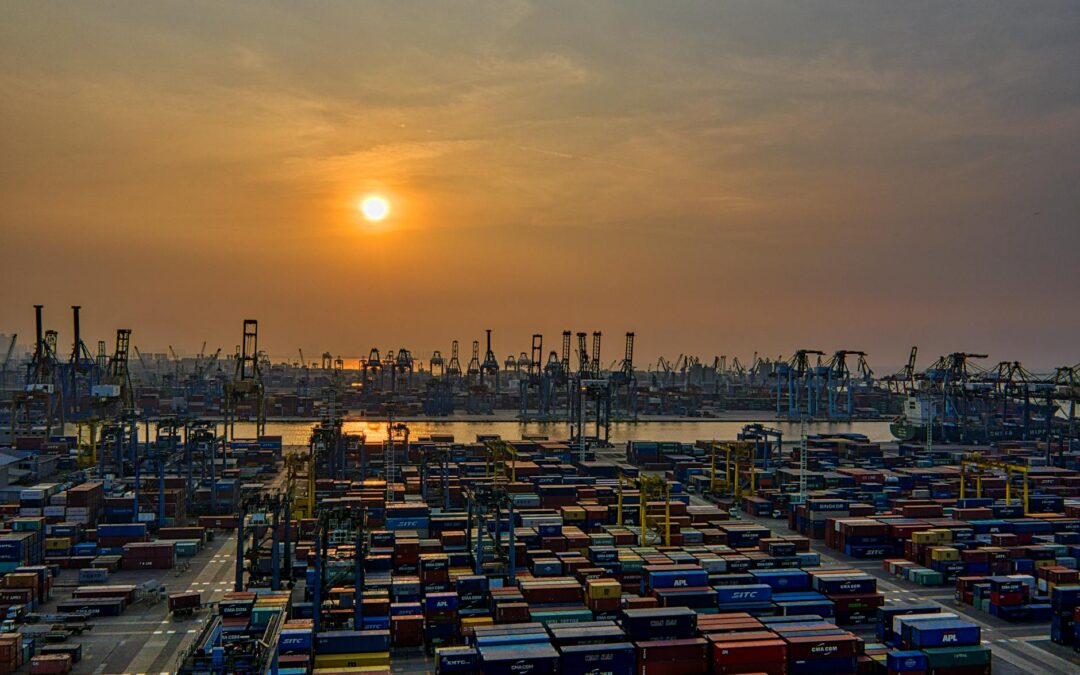
Dominant theories of international political economy leave little room for the influence of individuals. They also never anticipated that the United States might seek to completely upend the global economic order.

Who, if anyone, rules the world? Answering a question like that requires grappling with both the character of international order and the global distribution of power—facets of political life that are related but should not be conflated. Two new datasets—one by Security in Context* and the other compiled by Amitav Acharya, Antoni Estevadeordal, and Louis Goodman—give hints about the construction of global order and who rules. Taken together, these two datasets give a more granular sense of what may be going on: America has not necessarily lost control...

Dozens of regimes around the world are anti-liberal—autocratic to varying degrees—but also big fans of a "rules-based" international order, which for the past 50 years or so has been a neoliberal economic order. Not a coincidence. The reason an anti-liberal might also be a neoliberal seems rather obvious: Because they're kleptocrats and oligarchs who are getting paid! A regime doesn't need to embrace democracy in any meaningful sense in order to be a productive part of global capitalism. To the contrary, systematically suppressing collective and individual rights is a...
This piece is the third of a three-part series grappling with the role of political economy in making a just, sustainable international order. Neoliberalism — the ideology of the primacy of capital — has been bad for American statecraft. It’s a major reason why we have no economic strategy. And I’m totally a get-out-of-neoliberalism stan. But where we go from here matters. The new post-liberal right, for example, also hates neoliberalism, but of course it wants to take us into a future that looks something like the Handmaids Tale. Democrats, on the other hand, see...

This piece is the second in a three-part series grappling with the role of political economy in making a just, sustainable international order. Writing about America’s economic strategy deficit got me pondering why the United States had such a stunted economic imagination. How could the government that many consider to be the global economic hegemon be inept at economic statecraft? For one thing, I think the popular impression of America as the world’s economic hegemon is overstated. Yes, the United States has many economic advantages. Its domestic market is still the destination of choice...

This piece is the first of a three-part series grappling with the role of political economy in making a just, sustainable international order. hat’s America’s story for how economic policy relates to international security? I think for a long time the story was some version of the “big, dumb, beautiful dream of McDonald’s peace theory.” These days, I don’t think there is one. And while that’s not President Biden’s fault, it is his inheritance, and it hinders the task of formulating an economic strategy. The two biggest thematic criticisms lodged against Biden’s...
The Belt and Road Initiative (BRI) originated in provincial-level efforts that sought to simultaneously integrate interior and frontier provinces to the rest of China as well as neighboring countries during the 1990s.