Looking for some podcast episodes to give a listen to? I’ve got suggestions.

Podcast Recommendations
read more
Looking for some podcast episodes to give a listen to? I’ve got suggestions.

I'm working on a new project about the use of religion in power politics (part of which I'll be presenting "at" APSA this week). I'm finding good evidence, but the framing is tricky. Religion as a...
Eric Van Rythoven (PhD) is an Instructor in the Department of Political Science at Carleton University in Ottawa, Canada. His research focuses on the intersection between the politics of...
David C. Kang is Maria Crutcher Professor of International Relations at the University of Southern California, where he also directs the Korean Studies Institute. His latest book, coedited with...
This week is the 10th anniversary of the start of Canada's combat mission in Kandahar. This was the most stressful Canadian "expedition" since the Korean War, as Canada skipped Iraq 2003 and Vietnam. Today also happens to be the third anniversary of the rejection of an access to information request (Canadian for FOIA)--I had asked for the report detailing the Lessons Learned from the war. While armed forces create such reports all the time, this was a first for the government to consider how the various agencies performed. The report got buried, not just so that I couldn't see it, but...
The Gregynog Ideas Lab, a thinking space for scholars interested in studying global politics from a range of critical, postcolonial, feminist, post-structural and psychoanalytic traditions, takes place every summer at Gregynog Hall in mid-Wales (UK). This unusual summer school offers a set of seminars & workshops, an artist-in-residence, methods training and one-on-one consultations to allow graduate students and established scholars to re-examine their own work, participate in ongoing conversations and meet new people who share an interest in critical international politics....
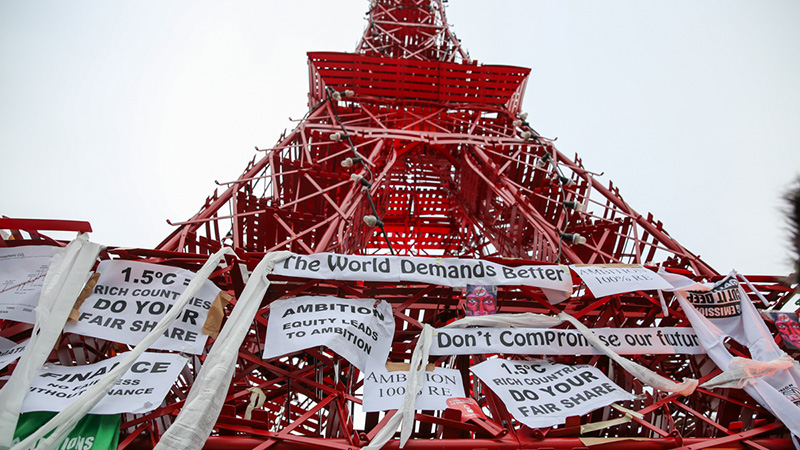
This is a guest post from Jennifer Hadden, an Assistant Professor at the University of Maryland's Department of Government and Politics. I had the pleasure of editing a reviews exchange on her new book, Networks in Contention. The exchange just came out in the latest issue of International Politics Reviews and features reviews from me (Josh), Thomas Hale, and Johannes Urpelainen, as well as a response from Hadden herself. Ungated access here. World leaders adopted a global agreement on climate change in Paris last month, as was widely reported. Less well know is that in parallel to the...
While it is hard to do and particularly hard to do while starting out, the general conventional wisdom (and wise it is) is that one should try to have three pieces under review at most/all times. Why? Because academic review is a capricious enterprise that often takes much time. Journals have gotten much better about shortening review times, with many journals averaging something like 40-60 days... which is actually more like two to three months (do weekends count?). But that is an eternity for junior faculty, and the reality is that rejection means that one goes through this spin cycle...
The following is a guest post by Jeffrey C. Isaac, who is James H. Rudy Professor of Political Science at Indiana University and editor in chief of Perspectives on Politics: A Political Science Public Sphere. “I reject this paper.” “I recommend that this paper be rejected.” “I am sorry to inform you that your paper has been rejected for publication.” Social practices are constituted in large part by the words we regularly use and the meanings these words typically convey. Political science is a social practice. And variations of the sentences above are commonly employed by political...
Much discussion lately about how much rejection is in this academic game. I had a conversation yesterday with a pal who was finding it much harder, it seemed, to get work published after tenure than before. "I thought I knew how to do this." Folks have been calling for the true CVs of people--where rejections would be listed. Not sure that is going to happen. However, in this week where I received news of receiving a fellowship to supplement my sabbatical, I thought I would list many of the rejections of my work along the way (my spreadsheet for tracking my work is pretty good but...

If you have been living under a rock as I apparently have, then like me you may be unaware of the DA-RT controversy that is brewing in the American Political Science Association.* Turns out that some of our colleagues have been pushing for some time to write a new set of rules for qualitative scholarship that, among other things will require “cited data [be] available at the time of publication through a trusted digital repository” [This is from the Journal Editor's Transparency Statement, which is what is being implemented Jan. 15]. The goal I gather is to enhance transparency and...

It is that point in the semester when the energy of summer wears off, endless grading awaits, deadlines loom, meetings drag on and everyone feels swamped, exhausted and grouchy. [1] It’s that point when we know the semester is going to become a runaway train, a downward spiral that ends in stacks of blue books, wine, and crying about your failure as a teacher. It’s that point in the semester when the blank page seems to stare back at you, when the spark of creativity has dimmed and you have serious doubts about the usefulness of anything you “study.” But it doesn’t have to be this way!...