Whether scholars embed policy recommendations in their work is a flawed measure of whether work is policy-relevant. Across a series of articles and book chapters, Michael Desch and Paul Avey have argued international relations scholarship is...

Last Monday, on May the 4th, citizens around the globe celebrated International Star Wars Day. In honor of this important event, Patrick Thaddeus Jackson and I are pleased to announce an...
Last Friday, I had the great pleasure to attend a workshop on "The Future of Global Security Studies" at University of Denver's Sie Center for International Security and Diplomacy. The event brought...
In advance of this year's ISA convention and the OAIS awards, we're happy to launch a new and improved Duck of Minerva with a revamped look and feel. You will notice automatically a direct link to...
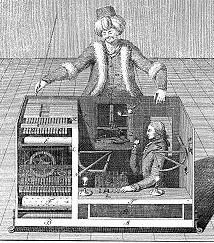
Amazon created a platform called Mechanical Turk that allows Requesters to create small tasks (Human Intelligence Tasks or HITs) that Workers can perform for an extremely modest fee such as 25 or 50 cents per task.* Because the site can be used to collect survey data, it has become a boon for social scientists interested in an experimental design to test causal mechanisms of interest (see Adam Berinsky's short description here). The advantage of Mechanical Turk is the cost. For a fraction of the expense it costs to field a survey with Knowledge Networks/GfK, Qualtrics, or other survey...
This piece is really interesting. It is written by Radhika Nagpal who was on the tenure track at Harvard but treated the experience like a seven year post-doc. That is, she didn't focus on what it took to get tenure there, because, well, most folks don't get tenure. Instead, Nagpal focused on pursuing the most fulfilling seven years so that she would be in a good position at the end of the "post-doc." This led her to some conclusions, which I consider below. But before I do so, it is important to note that this advice of hers applies everywhere but to greater or lesser degrees. There...
Andrew Gelman provides a nice rejoinder to Nicholas Christakis' New York Times op-ed, "Let's Shake up the Social Sciences." Fabio Rojas scores the exchange for Christakis, but his commentators provide convincing rebuttals to Rojas. Once again, I suspect reactions to the column are driven by homophily rather than network effects. But all this aside, Christakis makes an interesting claim about the evidence for stagnation: In contrast, the social sciences have stagnated. They offer essentially the same set of academic departments and disciplines that they have for nearly 100 years: sociology,...
Editor's Note: This is a guest post by Tobias Gibson of Westminster College. In recent days, there have been reports of U.S. drone strikes in North Waziristan, Pakistan. According to the New York Times article, these strikes killed at least two people. This remote area of Pakistan has long been subject to U.S. drone strikes. The Times also reports that U.S. anti-terrorism efforts are shifting theaters from Afghanistan and Pakistan to Africa. This shift includes the expansion of the use of surveillance drones in Mali, flown from a new drone base in Niger. According to the story, the U.S. is...
Editor’s Note: This is a guest post by Elizabeth Saunders who is an Assistant Professor of Political Science at George Washington University. In this year of Iraq-related anniversaries, this summer marks the 10-year anniversary of the emergence of the insurgency, when many Americans realized the Iraq War would not be over any time soon. Would things have been different had Al Gore been president? The latest issue of Perspectives on Politics has a symposium that considers this question in light of Frank P. Harvey’s book Explaining the Iraq War: Counterfactual Theory, Logic and...
Good morning... Salman Adil Hussain reviews Deepa Kumar's Islamophobia and the Politics of Empire. Hussain writes, "Kumar shines a bright light on liberal Islamophobia, and shows how the Obama administration’s emphasis on homegrown terrorism generated a lot of talk about ‘terrorists in our midst’ in the mainstream American media and presented right-wing Islamophobes with the opportunity they needed to (re-)popularise the old ‘Islamic peril’." David J. Morris asks: "How much does culture matter for P.T.S.D.?"  The following quote from the article is powerful and worth contemplating: "The...
Last week I purchased a Nintendo handheld (on steep discount) for the express purpose of playing Okamiden. Okami is one of my most favoritist games evah; even though Okamiden is basically more of the same, I'm cool with that. Yesterday we had to buy off the wee one--we did, in fact, have a pretty terrible day from her perspective--so we offered to purchase her a game to play. That led to Animal Crossing: A New Leaf and a complete loss of custody over the Nintendo. So complete, in fact, that she basically bought it from me. So here's the question: beyond the aforementioned piece of crack in a...
My initial reaction is that this is a spot of good news: Alan Turing, the Enigma codebreaker who took his own life after being convicted of gross indecency under anti-homosexuality legislation, is to be given a posthumous pardon. The government signalled on Friday that it is prepared to support a backbench bill that would pardon Turing, who died from cyanide poisoning at the age of 41 in 1954 after he was subjected to "chemical castration". Lord Ahmad of Wimbledon, a government whip, told peers that the government would table the third reading of the Alan Turing (statutory pardon) bill at...