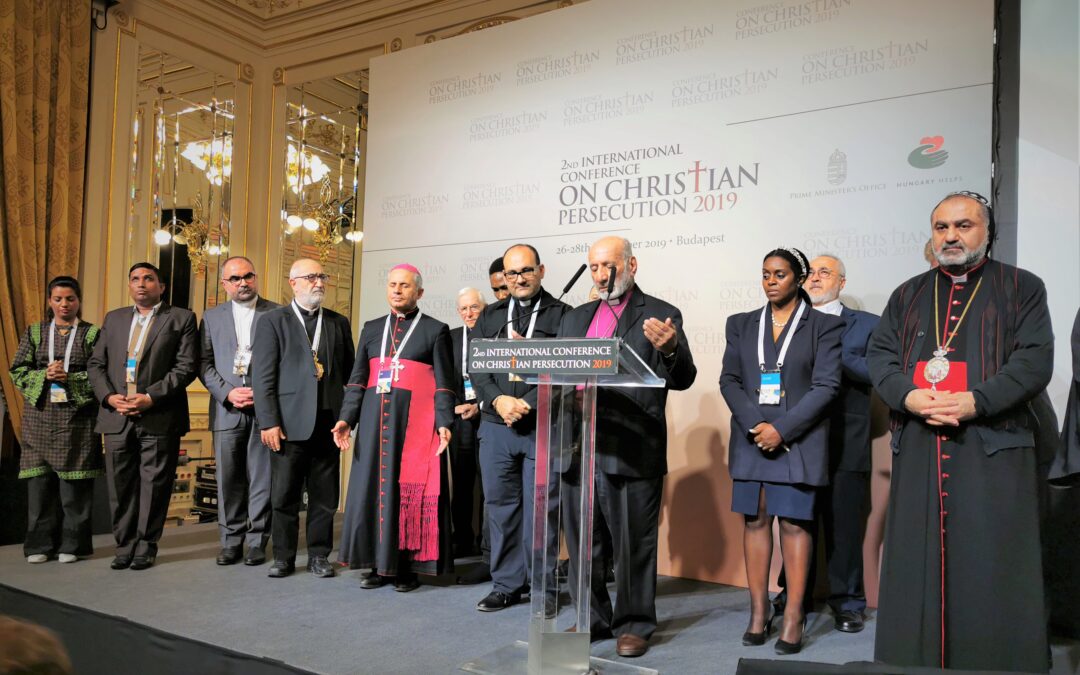
What is the name of the journal article (or book) and what are its coordinates? Miray Philips. 2025. “The Social Construction of Christian Persecution through Quantification in International Religious Freedom Advocacy.” Sociology of Religion....
THe short-term contributions of the Special Issue have been worthwhile, but there remains a continued concern and challenge that with greater attention paid to race and imperialism in IR, these issues will become co-opted into the game of academic production, sanitised as intellectual curiosities, instead of being treated as matters of life and death that need to be opposed practically and not just on paper.
International institutional policy, shaped by a globally entrenched explanatory framework of development and underdevelopment, perpetuates the suppression of knowledge production aimed at challenging social, economic, and political injustices by elites across the global South
Intra-elite, state-centric society is a strategic front, and ought to be defended and put to use in the continued development of a global and decolonial turn in IR.
The special issue’s concerns could easily be a passing ‘fad’ as the forces of the status quo bide their time. A focal point on race, necessary as it is, could elide class and material factors’ influence on world politics.
Even when Latin Americans are allowed to speak, IR scholars and practitioners do not listen to them due to the language in which they produce knowledge, epistemic violence and access barriers.
Decolonial methods, and the bringing of attention to race in knowledge production is necessarily historical. It demands a close re-reading of archives, forgotten texts, and sometimes “canonical” works. As a result, through this special issue and the wider work the authors build upon, we now have a very different understanding of the historical entanglements of race and international affairs knowledge.
Now that the myth of “theory-practice gap” has been largely refuted what role might IR and journals like International Affairs play in crafting a “reparative praxis”?
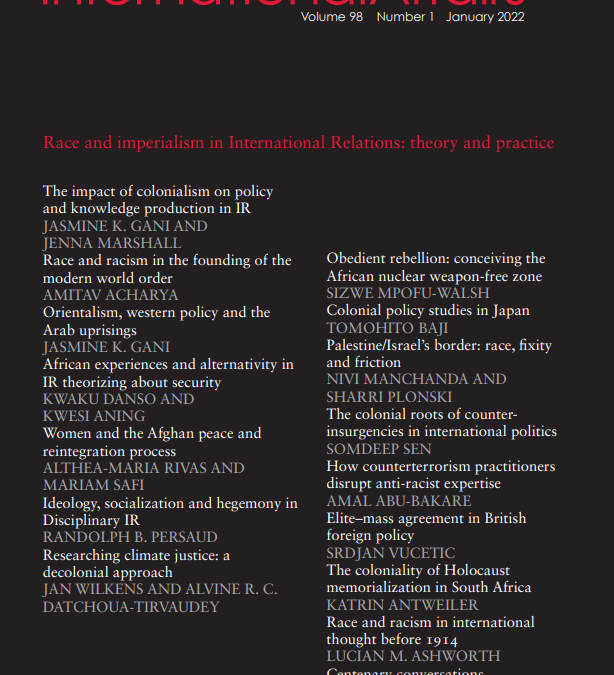
The International Affairs Centenary Special Issue on “Race and Imperialism in International Relations: Theory and Practice” was published two years ago in the aftermath of the global Black Lives Matter movement; it marked an atypical period of introspection by many scholars, departments, and journals of International Relations on the general paucity of attention given to matters of race and imperialism in IR research and teaching.
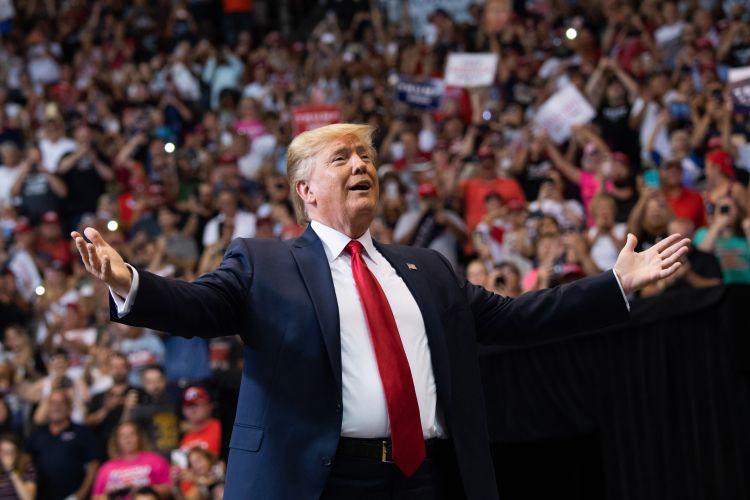
If Donald Trump was President of the United States when Russia invaded Ukraine in February 2022, instead of Joe Biden, Trump’s personality would have led to a very different U.S. response. Trump would not have swiftly and strongly condemned Russia or clearly sided with Ukraine in the initial stages of the invasion, and he would not have brought together a multilateral front against Russia – as Biden did.
As long as international organizations have existed their relationships with their member states have been conflict-ridden. States use numerous methods to influence international organizations according to their interests or to contest the authority and policies of international organizations, including by reducing financial contribution, threatening withdrawal, and by actually exiting. Between 2014 and 2020, the United States cut its contributions to numerous international organizations, several African states threatened to withdraw from the International Criminal Court, and the United...
Whenever we talk about the liberal international order, we actually also talk about globalization. The former promoted international trade and financial liberalization , the spread of democracies, and the growth of global governance. These, in turn, promoted interdependence. Markers of global economic interdependence — such as global trade flows and global financial direct investment — increased. In integrating regions, and especially among advanced industrial democracies, boundaries lost political and cultural salience. Over the course of the 1990s, Europe took on new significance as an...