This is the third and final part of a three part interview between Adam B. Lerner (ABL) and Patrick Thaddeus Jackson (PTJ). It is the first instalment of a new series of interviews on Duck of Minerva entitled Quack-and-Forths.
In some sense, it is with a heavy heart that I write my last permanent contributor blog post at the Duck. I’ve loved being with the Ducks these past years, and I’ve appreciated being able to write...
It seems that “totalitarianism” is everywhere these days. I suppose that is the point of totalitarianism. Nonetheless, the buzzword has seen a remarkable resurgence in popular usage and misusage in...
This is a guest post (begun as a set of hasty scribbles on Facebook in the wake of Charlottesville) by Sean Parson, Assistant Professor in the Departments of Politics and International Affairs and...
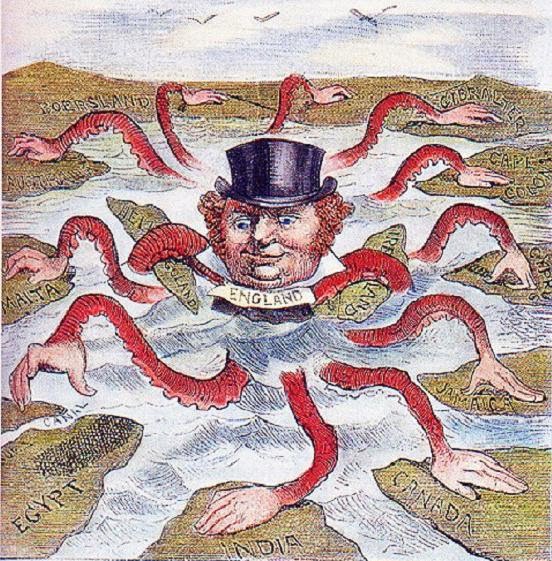
The Commonwealth Games begin tomorrow in Delhi, which offers a good excuse for some thoughts on two neglected topics in contemporary international relations – India and the Commonwealth. With 54 nations involved the Games are a major international sporting event, and were bid for by India as a way of demonstrating their emerging significance in the world, a kind of Olympics in a minor key that would do for the Indian bit of the BRIC nations what the Beijing Olympics did for China. To put it mildly, things have not quite worked out as intended. Some twenty plus firms were involved in the...
A (way) while back Charli posted a link to a report by Landmine Action. The short version is that it is calling for a ban on so-called ‘blast-weapons’ as a method of warfare.From the outset I’m going to admit that it’s simply not easy to defend things that can blow innocent civilians to smithereens. And I don't intent to defend the weapons themselves as some kind of fabulous invention. I do, however, wish to take on some of the thinking and insertions in the report as I think that 1) the report is problematic; 2) that there may actually be a case for not banning such weapons – possibly even...
My (first) book, Prisoners of America’s Wars: From the Early Republic to Guantanamo is now shipping on Amazon.com (or Amazon.co.uk, Amazon.ca, etc.). Considering that this would be the closest thing to offspring that I have ever produced, I thought that I would post it in the hope that it may be of some interest to some Duck readers. I've pasted the abstract below for that very reason:Prisoners of war have been a significant feature of virtually every conflict that the United States has engaged in since its revolutionary beginnings. Today visitors to Washington DC will frequently see a black...
For my first Duck post to be so parochial is a shame, but I can’t resist commenting on the result of Labour’s leadership election, declared a couple of hours ago. For someone such as myself who was once, briefly, one of Ralph Miliband’s students at LSE in the 1960s, the idea that the son of the author of Parliamentary Socialism should now be the leader of the British Labour Party is weird. That he should have obtained that post by beating his elder brother is positively surreal. Brothers have quite often competed for the top job in old-style monarchies – indeed, in the Ottoman Empire it was...
Two cyber warfare trends are catching the eye, but both raise the same major question. First, cyber attacks have been democratised in recent years because of social media and easy to use denial of service attack (DDoS) tools. Popular armies have returned, made up not of a mass of bodies charging, a Clausewitzian centre of gravity on a field, but constituted by curious and enthusiastic citizens on the internet. As William Merrin argued at a keynote in 2009, security has been crowdsourced. US officials set up webcams along the Mexico border so that citizens can sit at leisure and watch for...
My blogging has been light lately as I have been on the road travelling a lot. This recent period has had me travelling like something of a crazy person with trips all over the Centre/East Coast of North America.Part of this trip included some time in Ottawa, where it was some interesting times. The week before I arrived there was a series of dramatic arrests here against individuals suspected of plotting to carry out terrorist attacks against the city. These are individuals who, from most media accounts, were largely raised in Canada and subsequently became radicalized. This is not the...
After hearing that former Fugee and musical star Wyclef Jean is running to be the President of Haiti (despite not having lived there for decades and apparently not actually speaking French very well), I got to thinking – what other musical super stars could run as leaders to help fix the nations of the world? In what way could Lady Gaga help with nation-building projects? Could Paul McCartney advise the World Bank in any way (other than being able to possibly fund a small third world nation by himself for a year)? After a lot of sugar and housecleaning I have come up with the following list...
Lots happening on the international law front – A Spanish judge (not Garzon!) has indicted three American soldiers who fired upon a hotel in Iraq which resulted in the death of a Spanish journalist. (Those Spanish judges sure love their universal jurisdiction...) Also, the Cluster Munitions Treaty came into effect.But perhaps the biggest international law story of the week was that of the conviction of Kaing Guek Eav or “Duch” by the Extraordinary Chambers in the Courts of Cambodia for the Prosecution of Crimes Committed During the Period of Democratic Kampuchea (aka Cambodia...