Back in March, I wrote a post at Lawyers, Guns and Money called “Remember ‘Great Power Competition?’ Lol.” As the “Grand Strategy” of Trump 2.0 comes into focus, I thought it would be a good idea to revisit and update it. In brief, the normie...
Since marginalized communities tend to suffer disproportionately when governments make contemptible policy choices, it stands to reason that those communities might develop a heightened sensitivity...
Twenty year recollections of the 2003 invasion of Iraq are popping up. Some are debating whether there were any positive outcomes from the war, others reflecting on what it meant for those who...
What follows is my general philosophy on China issues, by way of answering the hardest of hard defense framing questions regarding China. After my most recent piece in Foreign Affairs, I...
This is a guest post from Manuel Reinert, a PhD candidate in international relations at American University and consultant with the World Bank. As the COVID-19 crisis illustrates, international cooperation is crucial to address global issues. International organizations (IOs), created in the so-called rules-based “liberal international order” (LIO) after WWII, have been extensively involved in the response. The United Nations (UN) launched a global humanitarian response plan. UN’s agencies, principally the World Health Organization (WHO), have provided worldwide data, guidelines, and...
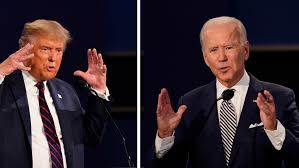
This is a guest post from Ryan Beasley, Senior Lecturer at the University of St Andrews, with research interests in political psychology and foreign policy: Juliet Kaarbo, Professor at the University of Edinburgh, who works on personalities, parliaments and parties in foreign policy; and Consuelo Thiers (Twitter @Consuelothiers), a PhD student at the University of Edinburgh, who is completing her doctorate on beliefs and emotions in enduring rivalries. For those of us who study leaders’ personalities and how they affect their actions while in power, President Trump has really been a...
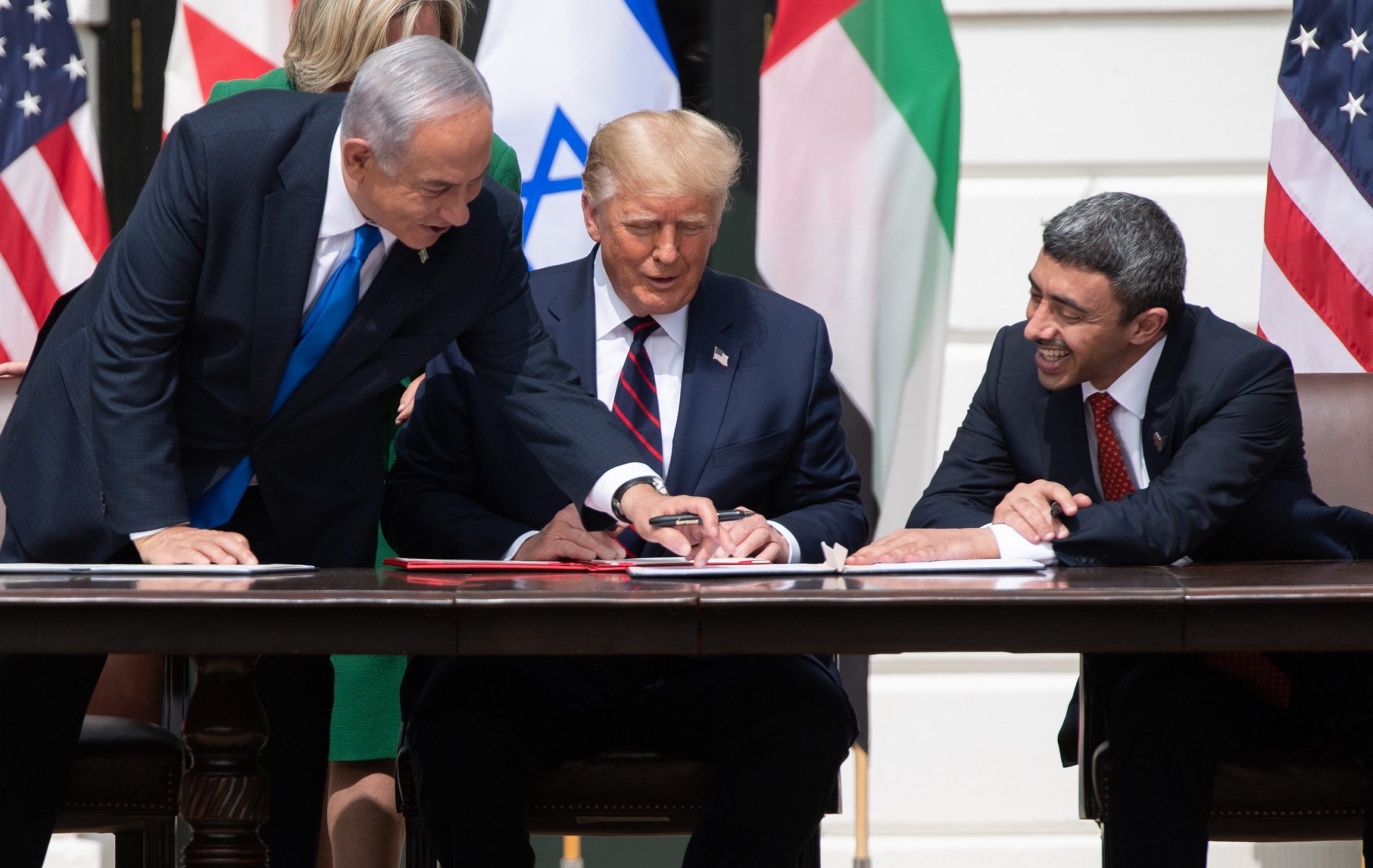
In September, the UAE and Israel signed "the Abraham Accords," normalizing relations between the UAE and Israel. The Trump Administration presented this as if it was equivalent to the Camp David Accords, a ground-breaking peace agreement that would transform the world. Much of the Middle East policy community, however, met it with a shrug. I'm not sure I'm joining in on that shrug. While it's true Trump exaggerated and misrepresented the deal, as he is wont to do, I worry a sneaky "common wisdom" has developed among observers that may obscure the significant impacts of this agreement. The...
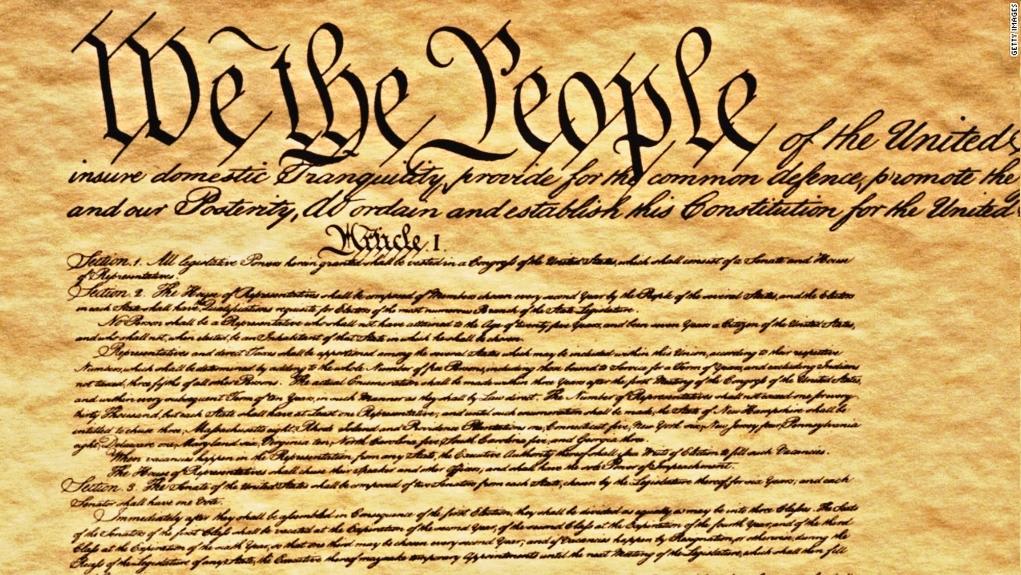
This is a guest post by Jeffrey C. Isaac, James H. Rudy Professor of Political Science at Indiana University, Bloomington. You can follow him at his blog at Democracy in Dark Times. Democracy is a central and arguably the central theme of contemporary American political science research and teaching. This is certainly true in the “subfields” conventionally designated as “Comparative Politics,” “American Politics,” and “Political Theory.” And even where it is not the central theme, as in most “International Relations” inquiry, it is an important theme. By far the most broadly influential...
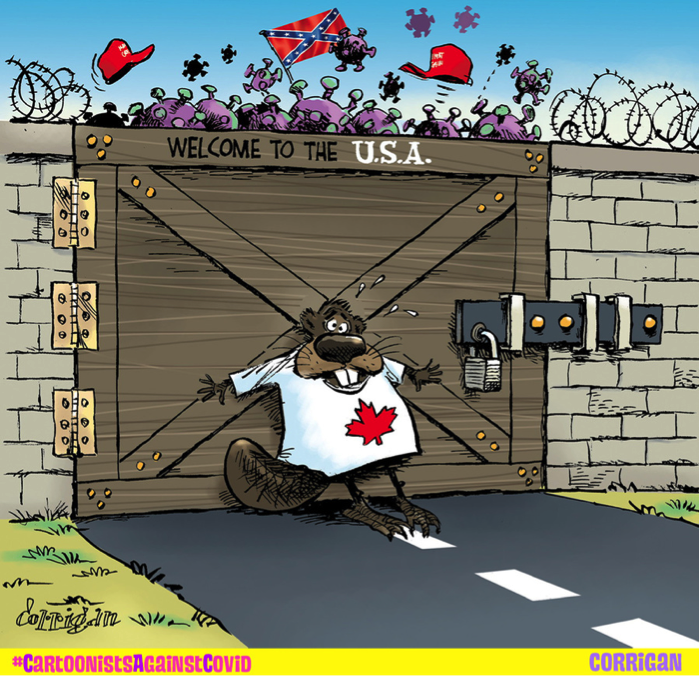
This is a guest post from Jennifer Mustapha and Eric Van Rythoven. Mustapha is an Assistant Professor at Huron University College in London, Ontario and studies the politics of the War on Terror, globalization and development, and Southeast Asian regional relations. Rythoven teaches International Relations and Foreign Policy at Carleton University, Canada. His work has been published in Security Dialogue, European Journal of International Relations, and Journal of Global Security Studies, among others. For many observers America’s catastrophic response to COVID-19 is a far-off spectacle...
Guest post by Sandor Fabian is a PhD candidate at the University of Central Florida and instructor of record at the NATO Special Operations School. His research is in security studies with a focus on new concepts of conflict, U.S. foreign military aid, and counter hybrid warfare. Follow him at @SandorFabian2 and Doreen Horschig is a PhD candidate and teaching associate at the University of Central Florida. Her research is in nuclear security with a focus on public and elite opinion on nuclear weapons and norms of weapons of mass destruction. Follow her at @doreen__h By now the world has...
This is a guest post from Collin Meisel and Jonathan D. Moyer. Collin Meisel (Twitter: @collinmeisel) is a Research Associate at the Frederick S. Pardee Center for International Futures and a veteran of the U.S. Air Force. At Pardee, Collin works with the Diplometrics team to analyze international relations and build long-term bilateral forecasts for topics such as trade, migration, and international governmental organization membership. Jonathan D. Moyer (Twitter: @moyerjonathan) is Assistant Professor at the Josef Korbel School of International Studies at the University of Denver and...
This is a guest post from Erik Dahl, an associate professor of national security affairs at the Naval Postgraduate School in Monterey, California, and the author of Intelligence and Surprise Attack: Failure and Success from Pearl Harbor to 9/11 and Beyond (Georgetown, 2013). The opinions expressed in this article are the author’s alone, and do not necessarily reflect the views of the Naval Postgraduate School or the U.S. Department of Defense. As many parts of the United States begin to slowly reopen amid the continuing coronavirus pandemic, there are increasing calls in Congress and from...