Back in March, I wrote a post at Lawyers, Guns and Money called “Remember ‘Great Power Competition?’ Lol.” As the “Grand Strategy” of Trump 2.0 comes into focus, I thought it would be a good idea to revisit and update it. In brief, the normie...
126 countries now publish a national security strategy or defense document, and 45 of these feature
a leaders’ preambles. How these talk about the world, or not, is surprisingly revealing of historical
global strategic hierarchies.
When I arrived at the Pentagon in 2009, the Obama administration was just getting its footing as caretakers of the War on Terror. Our focus then was truly global dominion. That meant, yes, killing...
Our next Bridging the Gap Book Nook features Rachel Whitlark, an associate professor in the Sam Nunn School of International Affairs at the Georgia Institute of Technology. She discusses her recent...
Canadian scholar and politician Michael Ignatieff had a piece in Persuasion recently on the "collapse of liberal internationalism." For Ignatieff to admit this (as one of the strongest proponents of this foreign policy orientation) says a lot. However, he inadvertently gives too much of the argument away. Liberal internationalism is more than military interventions, something both its critics and proponents seem to have forgotten. The fall of liberal internationalism Liberal internationalism is the claim that state interests are best served by engaging with the world to advance liberal...
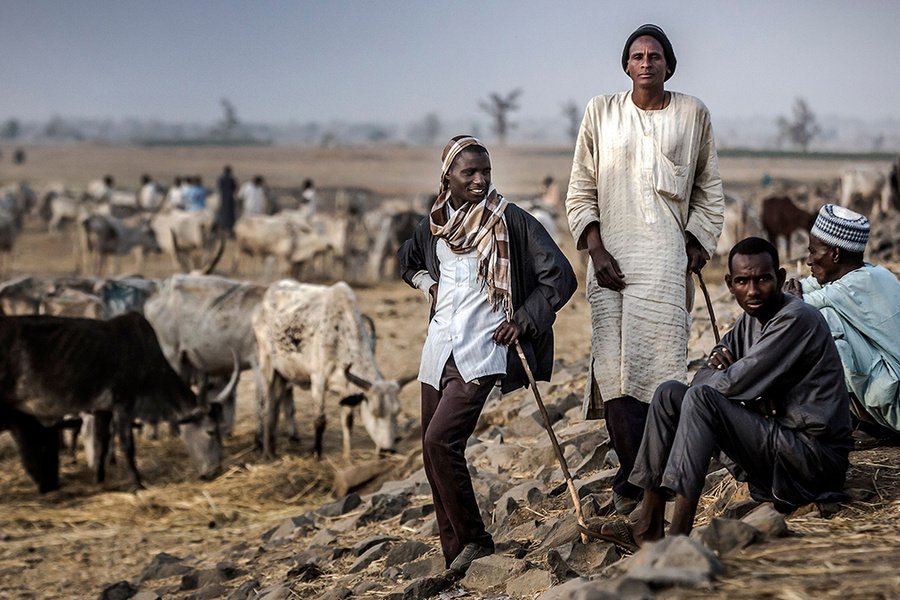
The US State Department recently released the lists of Countries of Particular Concern (CPC) on religious freedom, part of its responsibilities under the International Religious Freedom Act (IRF). The list now includes Russia alongside countries like Burma and China. But one change angered many religious freedom advocates: the removal of Nigeria from the list. IRF advocates claim this is tantamount to abandoning Nigerian Christians, who are often the target of violence in that country. I think the situation is more complicated than that: Nigeria's addition to the list was the result of the...
In 1932, John Chamberlain lamented “the unwillingness of the liberal to continue with analysis once the process of analysis had become uncomfortable.” He was critiquing the way Wilsonian liberals drifted into World War One. Socialists and reformist progressives had thought seriously about both the causes of the war and the realistic consequences for American democracy if the nation opted in. Liberals, he charged, couldn’t stomach such analysis and instead idealized the upside of succumbing to war fever. I think about Chamberlain’s quote...
When I first started teaching introduction to international relations, I included a lecture on the use of force in my foreign policy unit. We talked about Art's four uses of force, Schelling's diplomacy of violence, etc. But I worried I was downplaying the importance of diplomacy. So beginning last year I've changed the use of force lecture to the "use and non-use of force," covering both force and diplomacy. The takeaway is that, as liberal internationalists have argued, diplomacy is not "weakness." It can be just as effective, if not more effective, in advancing interests than coercive...
Not many know that Trump was on the verge of publicly announcing U.S. withdrawal from the alliance at the 2018 summit. Congress would have prevented a formal end to U.S. membership, but Trump’s announcement itself would have caused irreparable damage. Why then did Trump change his position on NATO in 2019? And why was NATO, at least in military terms, in better state when Trump left office than when he began his term?
The United States has repeatedly used its military to overthrow foreign regimes – at least sixteen times from 1906 to 2011 – but these interventions seldom work out particularly well. So why does Washington continue to engage in violent regime change? The answer is that US leaders forcibly overthrow regimes to relieve emotional frustration.
You're going to need some help. Since 2017, when I departed the Beltway in favor of (literally) greener pastures, I've been trying to figure out how to create an institutional presence for alternative (ok, progressive) voices on foreign policy. Why? Although I don't like the "Blob" epithet, there is a lot of consensus thinking in Washington — especially circa 2017 — and it's historically really difficult to promote competing perspectives without your invitation to the cocktail party getting lost in the mail. Worse than that though, I was appalled watching the "ideas industry" line up to...
WHAT’S THE NAME OF THE BOOK? Gregorio Bettiza. 2019. Finding Faith in Foreign Policy: Religion and American Diplomacy in a Postsecular World (New York, Oxford University Press) WHAT’S THE ARGUMENT? Since the end of the Cold War, American foreign policy has increasingly “desecularized,” such that it is now deeply intertwined with religious agendas, interests, and organizations. We see this trend in efforts to advance international religious freedom, mobilize faith-based actors for humanitarian and development purposes, fight global terrorism by promoting ‘moderate Islam,' and solve...