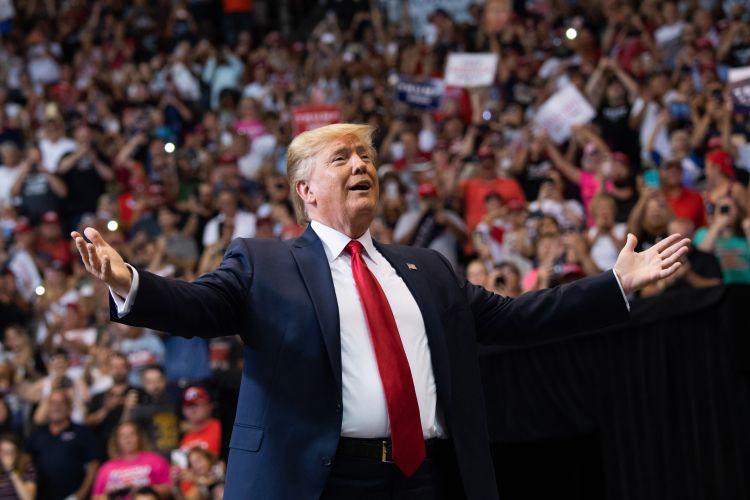
Maybe the problem isn’t that scholars don’t know how to speak to U.S. foreign-policy makers, but rather that U.S foreign-policy makers don’t know how to engage with scholarship?
https://www.youtube.com/watch?v=RoTOvR4uofY This is a guest post from Randall Schweller, Professor of Political Science at The Ohio State University and author of Maxwell’s Demon and the Golden...
Patrick and Dan discuss J. Ann Tickner’s 1997 article, “You Just Don’t Understand: Troubled Engag…
This is a guest post from Sahar Khan, an editor at Inkstick and adjunct fellow of Defense and Foreign Policy at the Cato Institute. She tweets at @khansahar1. This is the third post in our...
"The hour is getting late...all along the watchtower, princes kept the view...two riders were approaching, the wind began to howl." Bob Dylan America and Russia are not engaged in a new Cold War, but Russia is playing the global menace du jour. The U.S. and Europe need to take more aggressive...
The IPCC released the Working Group III summary report for policymakers on Sunday. I wrote about the Working Group II report on impacts on The Monkey Cage. Working Group III covers climate mitigation, that is the challenges of reducing greenhouse gases. Tonight, I read through the report and...
As I noted last week, for the final project in my linked seminar this year, my students have to design and launch a website to promote their fictitious human rights NGO. In prepping for the course and in developing the grading rubrics, I've spent quite a bit of time reading the literature on what...
This week’s installment of An Academic Woman’s Rant of the Week concerns self-promotion and self-citation differences between men and women. The idea for this installment came to me while I was having a celebratory drink with K. Chad Clay and Jim Piazza at ISA. We were celebrating our recent...
Over the last week we've had an excellent post by Cynthia Weber on queer theory and the forms of academic disciplining and bullying that take place on the website Political Science Rumors, as well as a interesting (and surprisingly convincing) piece by Steve Saidman on why he participates on the...
This activity comes after students are to have listened to a lecture (slides) on commitment problems. The lecture focused in particular on how the anticipation of future shifts in power can create incentives for preventive war. After walking them through a formal model fleshing out the argument, I...
Last year I wrote a post titled “So You Want to be a Liberal Arts Professor.” At the time, I promised a series of pieces on the subject, but then my job as a liberal arts college professor got in the way…. Oh well. Among other things, I got mired in a faculty committee examining the future of the...
[Note: This is a guest post by Jarrod Hayes, assistant professor of international relations at the Sam Nunn School of International Affairs at the Georgia Institute of Technology. His first book, Constructing National Relations: US Relations with India and China was published by Cambridge...
Defense analyst Lawrence Lewis has authored an unclassified report critically analyzing the metrics used to estimate civilian casualties from drone strikes.* Lewis is an analyst and field representative for the Center for Naval Analysis, which published the report today. He has led numerous...
The first rule of the internet is not to read the comments for any op-ed one posts. Why? Because the cover of anonymity allows people to say awful stuff. Of course, Twitter amply demonstrates that people will say awful things on the internet even when one can be clearly identified. Anyhow,...
As we hurtle to the end of the semester, here are some stories for the week that caught my eye: Felix Salmon on why wonk bloggery is the future of journalism From Kyle Dropp and co-authors, Americans who can't find Ukraine on the map are more likely to support intervention there. What does this...
Felix Haas has written a monster blog post over at Bretterblog with interesting descriptive statistics from the #ISA2014 hashtag. Among other fascinating points: 11% of IR scholars at the conference tweet, compared to only 2% of the global population The most popular tweet of the conference...