Maybe the problem isn’t that scholars don’t know how to speak to U.S. foreign-policy makers, but rather that U.S foreign-policy makers don’t know how to engage with scholarship?
This is a guest post from Jennifer Mustapha and Eric Van Rythoven. Mustapha is an Assistant Professor at Huron University College in London, Ontario and studies the politics of the War on Terror,...
https://www.youtube.com/watch?v=Dz4nVxxllTo This entry in the Bridging the Gap Book Nook series comes from Elisabeth King and Cyrus Samii of New York University. In their new book, Diversity,...
In a sequel (of sorts) to Episode 11, Patrick and Dan talk about Susan Strange’s “Cave! hic drago…
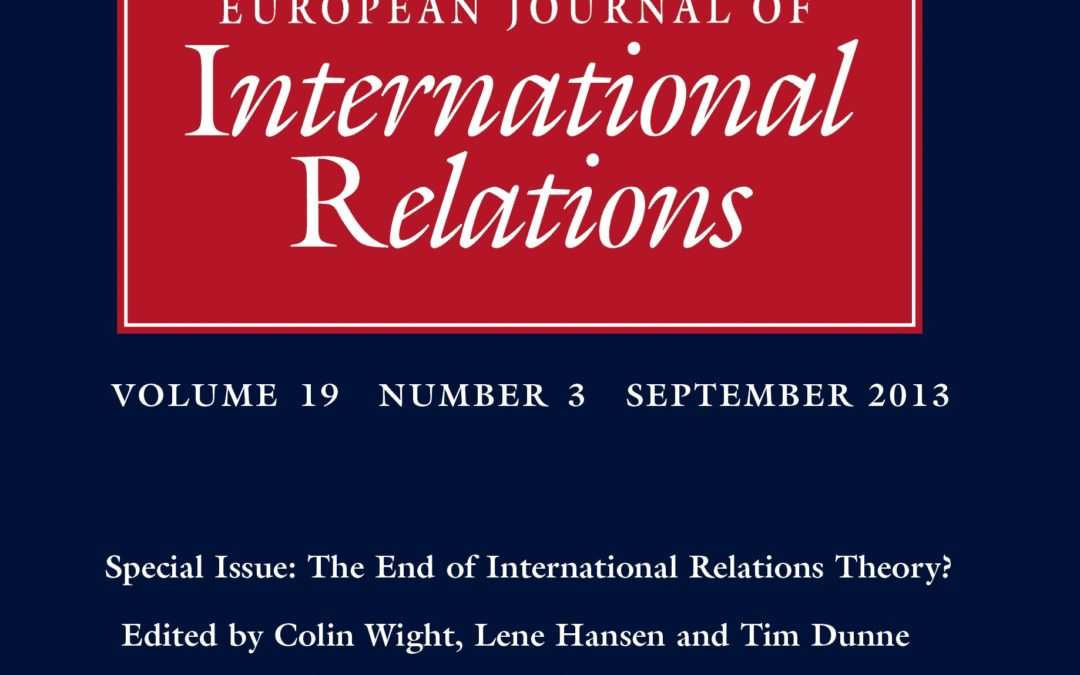
Having been invited to offer an ‘overall response’ to this special issue, I decided to take a look at how the contributors deal with the editors’ claim that we are witnessing the end of ‘IR Theory’. But let me preface this with an observation. The EJIR editors’ decision to compile this special...
We have all quit from time to time. Choosing when to quit and move on is tough proposition, especially for researchers. I never really thought much about the issue and how it relates to our work until Dave Chappelle brought it home for me recently. I saw his set on the Funny or Die tour during...
Brief but important interview with Andrew Gelman. Here's one thing regarding "great applied work": Ask yourself the question: What makes a statistician look like a hero? You might think that the answer would be, Extracting a small faint signal from noise. But I don't think so. I think that a...
Peter Campbell and Michael Desch write in Foreign Affairs that the National Research Council's rankings of political science departments are systematically biased against international relations scholarship and against policy-relevant scholarship: The NRC’s methodology biased its rankings against...
“In the Beginning” joins a growing literature – including my own Recovering International Relations – in which normative claims regarding the vocation of IR theory are tied to an historical account of its disciplinary emergence.* If these arguments vary in their details, they share a common...
From its very inception IR was a substantive normative and political project.
The Navy Yard in DC came under fire this morning. Developing. 9/11 Anniversary commentary of note: Tom Junod on the sanitization of disaster footage. Dan Nexon's original thoughts on this are always worth a re-read. Reframing the anniversary by conservatives (Benghazi) and human rights...
That was the apex of Dependency Theory in the US, I am betting. It wasn’t long before it was shelved in the curio cabinet. Dependency Theory had died from neglect, not from critique.
Other entries in the symposium--when available--may be reached via the "EJIR Special Issue Symposium" tag.Terms such as core and periphery (or third world) are largely passé, and may even be conceptually and heuristically objectionable on the grounds that they are rooted in dichotomous language...
Syria has raised several questions that pertain to morality, legality, and strategy in international relations. Discussed extensively on the Duck, Opinio Juris, The Monkey Cage, and elsewhere the situation in Syria has sparked a valuable debate on critical issues, both old and new. I would like...
Sylvester productively draws out the implications of the current ‘camp’ structure of IR: on the one hand, the proliferation of ‘camps’ and communities within IR increases the opportunities for publication and advancement for those whose work does not conform to traditional disciplinary norms; on...
Editor's Note: This is a guest post by Christine Sylvester. It is the 19th installment in our "End of IR Theory" companion symposium for the special issue of the European Journal of International Relations. SAGE has temporarily ungated all of the articles in that issue. This post refers to...