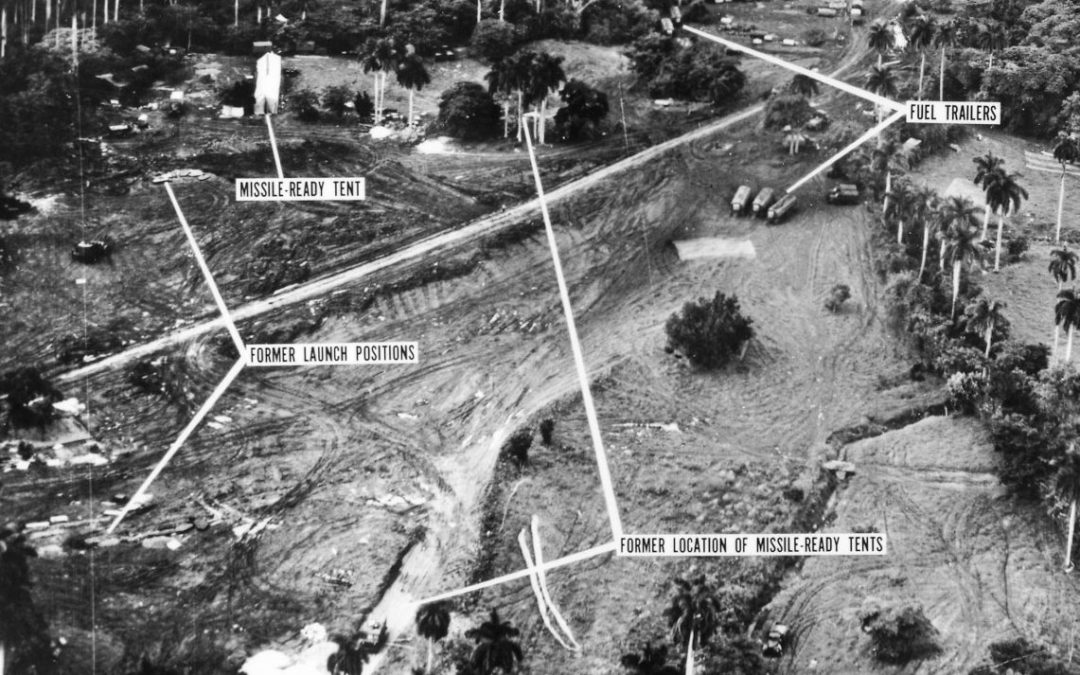
This post is the first in a four part symposium on the Cuban Missile Crisis, one of the the most studied cases of IR. With the release of documents in recent decades, historical revisions have challenged the received wisdom informed by mainstream...
Erica Chenoweth et al had a great article in the Monkey Cage yesterday about the Lights For Liberty protests. On June 12, Americans turned out in nearly 700 cities to protest the complex of...
Ah, the sweet time your baby becomes a toddler and maybe lets you sleep for more than 5 hours a night. Your teaching is sort of kind of on track, your scant article submissions get a steady number...
This is a guest post from Jeremy Youde, Dean of the College of Liberal Arts at the University of Minnesota Duluth. Follow him on Twitter @jeremyyoude. Anyone who studies global health security has a...
First off, this is my first post. Thanks to Dan and the rest of the crowd for inviting me, though I fear they – and Duck readers – may soon tire of hearing about how building effective control over a given territory is just really damn hard. But, then again, why else would one invite an...
I got back from an extended trip to London last night. To all the people who hosted me for talks, entertained me, and generally made the trip both fun and productive: a big thanks! I also bought some sweet rubber ducks at the British Museum. I'm going to start repeatedly flogging the nomination...
Good morning! Obama became the first sitting president to visit Myanmar/Burma yesterday. Plus, Amnesty International announced the release of political prisoners in the country yesterday, too. It’s a little rare for the organization to “name and praise” instead of “name and shame” so I wonder...
Today, Human Rights Watch (HRW) released a new report, Losing Humanity: The Case Against Killer Robots, becoming the most influential NGO to date to join an emerging call for a preemptive norm against the deployment of autonomous weapons. The International Committee for Robot Arms Control, an...
I'm at the end of a rather long trip to London, which is why I haven't been able to process or upload either Duck of Minerva or NBN podcasts yet. Nevertheless, I've got some good stuff coming on both fronts. So stay tuned. Today's linkage focuses on Gaza. Al-Jazera reports that 92 Palestinians...
The Canard “All the Fake News that is Fit to Print” The Duck of Minerva, considered one of the nation’s top international relations blogs, has recently come under attack from Cat Fancy magazine. Aggressively trying to expand their market share and brand, the leading source of information for...
From our infatuation with swing states to the pageantry of the Chinese Communist Catwalk -- great night of TV in China as Xi Jingping steps out first from behind the curtain. I miss the old days when it was a surprise.... This isn't going to end well. This morning's Jerusalem Post...
Morning! Check out Reed Wood's post at Political Violence @ a Glance on the lack of improvement in core physical integrity rights over time. It's not just the Political Terror Scale, either - the Physical Integrity Index from Cingranelli and Richards (CIRI) Human Rights Dataset shows the same...
Below, the latest volley in the blog wars between the Human Security Report Project authors and their critics. _______________________________ Guest Post by Andrew Mack We thank Amelia Hoover Green, Dara Kay Cohen and Elizabeth Jean Wood (henceforth GCW) for their thoughtful critique of the Human...
Welcome, Venezuela and Hugo Chávez, to a seat on the UN Human Rights Council. The US also won a seat. Worth noting, Hugo’s seat wasn’t contested but the seat the US won was contested. Don’t worry, though, Council may just be there for “rhetorical inaction.” Or, maybe it does more than that....
A strong correlation between cooperation and membership in international institutions is not enough to establish that international institutions cause cooperation. If we're to claim that institutions matter, we need to at least identify mechanisms by which institutions might promote cooperation...