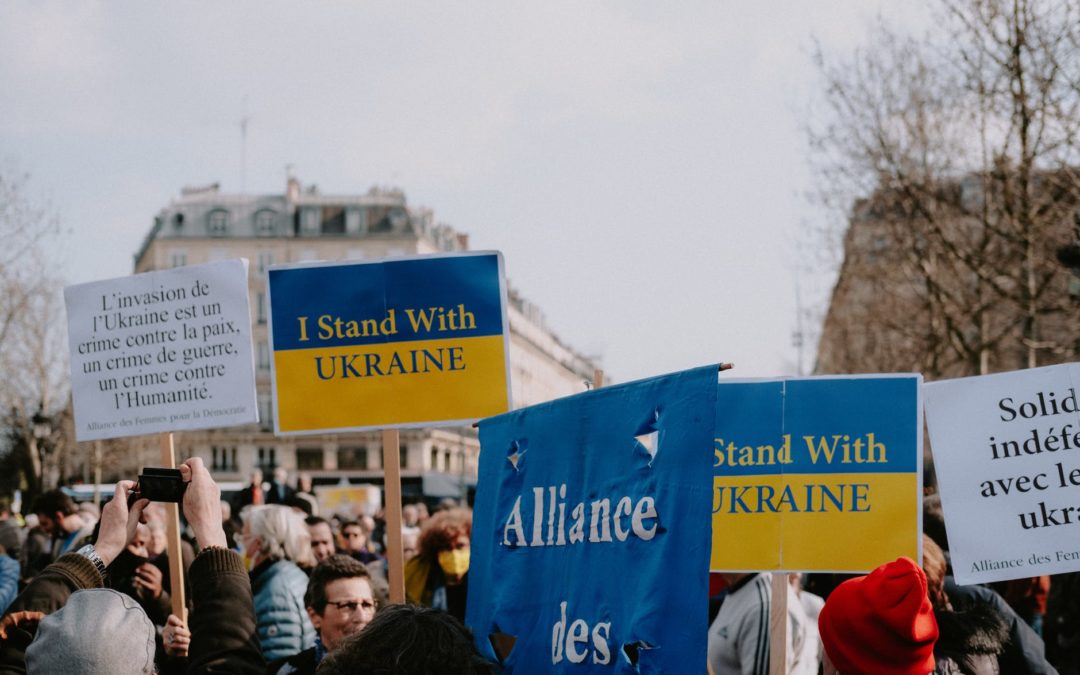
At its core, the current war in Ukraine reflects an incompatibility of nationalist narratives. Many Ukrainians want to escape Russia’s imperial shadow. Putin wants to reextend that shadow – to erase Ukraine as an independent national identity.
The following is a guest post by Jay Benson and Eric Keels. Jay Benson is a Researcher at One Earth Future (OEF), with research focusing on issues of peacekeeping, civilian protection and...
There is a certain theatre to the Global War on Terror (GWoT). From the opening sequence of 9/11 to the shock and awe campaign’s projection of American sovereign power through the broadcast of the...
As Josh has already noted, grandee of IR Stephen Walt published a condemnation of US professional schools of IR, calling them broken and claiming that while there is superficial innovation the ‘rot...
The participation of four Russian counter-narcotics agents in a US/ISAF raid on four heroin labs in Afghanistan has left many pundits wondering whether the war in Afghanistan as well as US/NATO/ISAF--Russian relations are entering a new phase. However, before one can speculate, there are a few...
While WikiLinks is dumping information from the US military all over the internets, the South African government is taking some rather disturbing steps to ensure that citizens, citizens and pretty much everyone in between will not have the right to access any information deemed a threat to...
Shortest Drezner: The specialization of knowledge leads actors to reduce the transacton costs of communication with each other. Naturally, this phenomenon creates a barrier to entry for outside consumers, while instilling a common identity among specialists.This is his short and concise but...
Just a few initial observations/questions1. Iraq Body Count is arguing that the documents help provide further information on civilian deaths. No doubt this will add further impetus for the call for militaries to release information on casualties killed in armed conflict. I wonder, however, if...
In April of this year I noted the death of Professor Fred Halliday – a noted scholar of nationalism, the Middle East and International Relations generally. He was something of a giant in British IR and I know his work was well known throughout the Middle East as well. I was fortunate enough to be...
The New York Times is reporting that ISAF troops are making progress in Kandahar. Credit for progress is given equally to the surge in troops and a new mobile rocket which has "pinpoint accuracy -- like a small cruise missile." While military commanders are cautious, Western and Afghan civilians...
The question of human over-population of our planet seems to resurface every few decades, driven by fears that there are too many people to feed, clothe and shelter, or that the sheer volume of human beings working, travelling and polluting is causing environmental damage. But the persuasiveness...
The London School of Economics runs a blog on British politics to which I contribute occasionally; this week I’ve posted on the British Government’s defence review, and I thought I’d share this with the Duck readership. A little bit of context: the new British government is simultaneously engaging...
The debate that my original post has sparked has been really interesting. Charli Carpenter has written a thoughtful and excellent response to my first post, and even Discourse on Explosive Weapons (DEW) - part of the United Nations Institute for Disarmament Research (UNIDIR) has been paying...
The drone and the cyborg were born near the dawn of the nuclear age (i.e. the Vergeltungswaffen and the Kamikaze), and appeared in several previous conflicts, but they did not simultaneously reshape the dynamics of war until after 2001.The armed drone represents a displaced subjectivity that...
Later this week, I will be participating in a roundtable discussion with my esteemed colleagues Juan Cole, Manan Ahmed, Joshua Foust and Madiha Tahir on "The Blogs of War: The Analytical Terrain of the Af-Pak Blogosphere" at the annual conference on South Asia at the University of Wisconsin,...
It was Canadian Thanksgiving this past weekend but Canukistan has one less thing to be grateful for today - it failed to get a UN Security Council seat for the first time in 50 years of trying. Alas, (eh?), Canada lost out to Germany and Portugal in the Western group (with India, South Africa and...