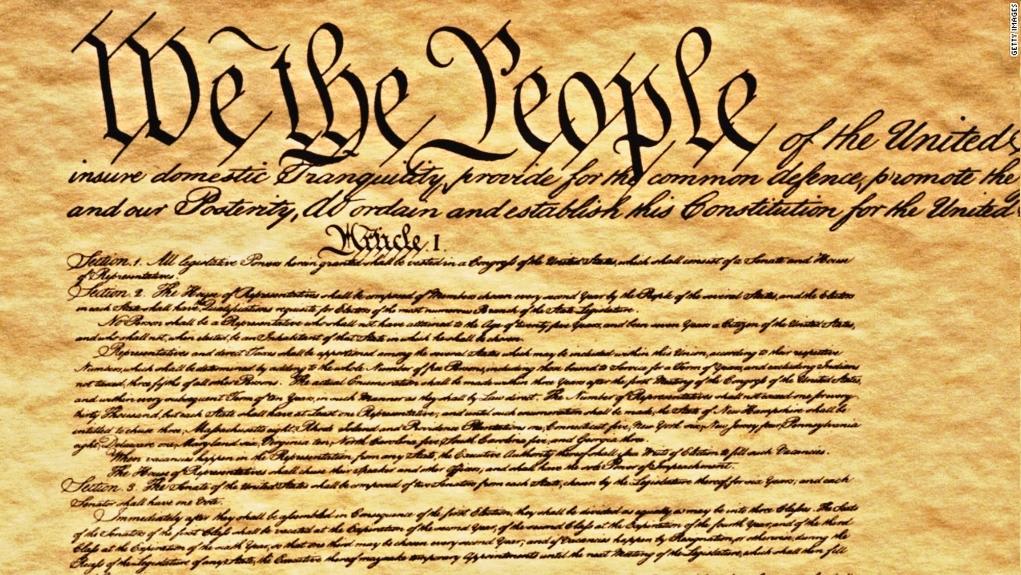
How can we understand Tump 2.0 foreign policy? It’s the product of the fusion of two different forces: Christian Nationalism and Personalist Rent-Extraction.
Who, if anyone, rules the world? Answering a question like that requires grappling with both the character of international order and the global distribution of power—facets of political life that...
Forced migration--the movement of people for reasons beyond their control--has become a global crisis. According to both the UNHCR and the Norwegian Refugee Council, over 100 million people were...
On the sidelines of the Pacific Islands Forum, Australia and Tuvalu just signed a new, major agreement—the Australia-Tuvalu Falepili Union Treaty. It binds Australia and Tuvalu much...
David C. Kang is Maria Crutcher Professor of International Relations at the University of Southern California, where he also directs the Korean Studies Institute. His latest book, coedited with Stephan Haggard, East Asia in the World: Twelve Events that Shaped the Modern International Order, will...
Whether scholars embed policy recommendations in their work is a flawed measure of whether work is policy-relevant. Across a series of articles and book chapters, Michael Desch and Paul Avey have argued international relations scholarship is declining in policy relevance, with...
Photo courtesy of the European Union. Used under Creative Commons License. This is a guest post by William Akoto, a postdoctoral researcher jointly appointed at the Sié Chéou-Kang Center for International Security & Diplomacy at the Korbel School of International Studies,...
This is a guest post by Jeffrey C. Isaac, James H. Rudy Professor of Political Science at Indiana University, Bloomington. You can follow him at his blog at Democracy in Dark Times. Democracy is a central and arguably the central theme of contemporary American political science research and...
Professor Lucian Ashworth talks about growing up in England and Wales, his decision to go to Keele, and his major influences.
This is a guest post from Alexander R Arifianto (Twitter: @DrAlexArifianto), a Research Fellow with S. Rajaratnam School of International Studies (RSIS), Nanyang Technological University, Singapore. His research focuses on contemporary domestic politics and political Islam in Indonesia. Nearly six...
In less than a month, I'll be teaching "Introduction to International Relations" for the first time in over ten years. As luck (for certain values of "luck") would have it, this means I'm building a 100-200 person course from scratch and teaching it online. But where some might see a yawning black...
This is a guest post from Jennifer Mustapha and Eric Van Rythoven. Mustapha is an Assistant Professor at Huron University College in London, Ontario and studies the politics of the War on Terror, globalization and development, and Southeast Asian regional relations. Rythoven teaches International...
https://www.youtube.com/watch?v=Dz4nVxxllTo This entry in the Bridging the Gap Book Nook series comes from Elisabeth King and Cyrus Samii of New York University. In their new book, Diversity, Violence, and Recognition (Oxford, 2020), they address key questions for peace-building in multi-ethnic...
In a sequel (of sorts) to Episode 11, Patrick and Dan talk about Susan Strange’s “Cave! hic drago…
Guest post by Sandor Fabian is a PhD candidate at the University of Central Florida and instructor of record at the NATO Special Operations School. His research is in security studies with a focus on new concepts of conflict, U.S. foreign military aid, and counter hybrid warfare. Follow him at...
Professor Priya Dixit talks about being born in Thailand, growing up in Nepal, college and her master’s in Australia, working for the United Nations, and life as an academic.