The buzzword of the first Trump administration was “Great Power Competition.” That was also a lie.
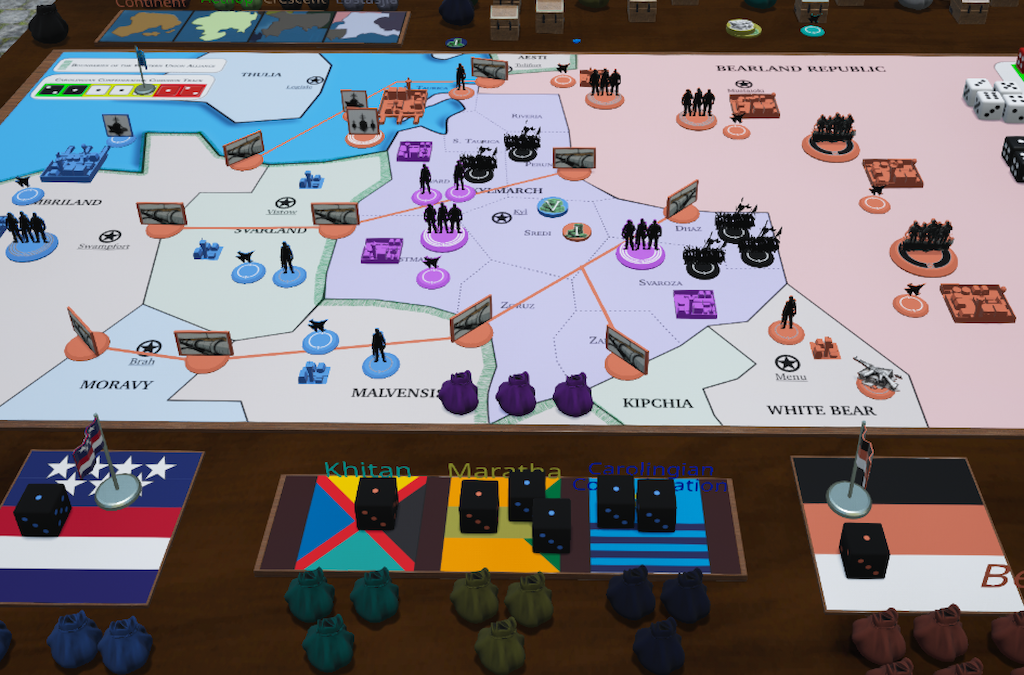
So much for “Great Power Competition”
read more
The buzzword of the first Trump administration was “Great Power Competition.” That was also a lie.
You never know when IR is going to bite you in the ass. One minute you are reading a children’s nursery rhyme and the other you realize that the spokesperson for the Russian Foreign Ministry Ms....
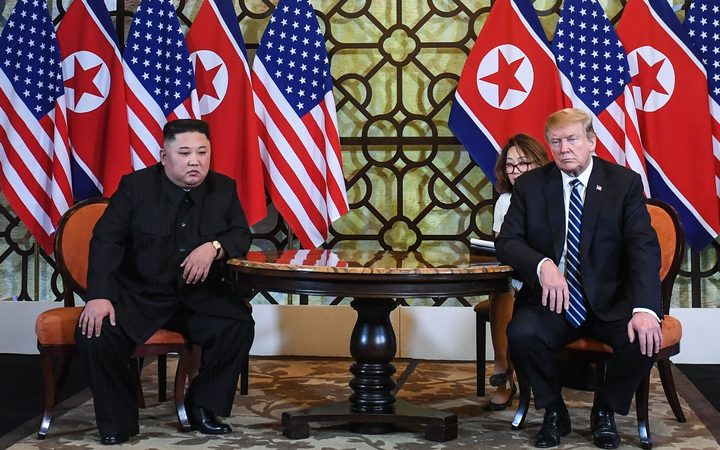
This week has seen a number of key events and crises in global politics that have made crystal clear once again the careening mess that is US foreign policy under the current administration. The...
This is a guest post, the first of two, by Eric Parajon, Richard Jordan, and Marcus Holmes. Eric Parajon is a recent graduate of William & Mary and currently a Project Manager for the Teaching,...
Gone are the good old days when I had to explain what the word ‘yarki’ means to my friends and colleagues (for the record, ‘colorful’, not ‘brilliant’). Now I will have to clarify the complexities of planting child pornography into the computers of oppositional leaders thanks to the re-emergence of ‘kompromat’. Why did kompromat, arguably a KGB-developed practice of mining compromising material on politicians and blackmailing them with it, surface again in the media? As Fabian Burkhardt noticed, the word first appeared in the English language with the information wars of the 90s. Moreover,...
This World Politics in a Time of Populist Nationalism (WPTPN) guest post is written by Daniel Braaten, Assistant Professor of Political Science at Texas Lutheran University. His main research interests are in the areas of global governance, human rights, and U.S. foreign policy. His research has been published in the Review of International Studies, Journal of Peace Research, Journal of Human Rights, and Human Rights Review. What effect will a Donald Trump presidency have on American hegemonic legitimacy? My purpose here is not to wade into debates about whether U.S. hegemony is benign,...
[This is a guest post by Valerie J. Bunce, the Aaron Binenkorb Chair of International Studies at Cornell University, and Mark R. Beissinger, the Henry W. Putnam Professor of Politics at Princeton University. After Aida Hozic shared the essay with me, I asked Valerie and Mark if I could post it at the Duck. They kindly agreed. I think it is one of the clearest—and most succinct—statements of why we should be worried and vigilant about the fate of US institutions.] How might American democracy end? The United States would not be the first long-lasting government to collapse. Whether they...
Trump’s election may amount to an inflection point in the institutional fabric of our political system. I do not simply mean our domestic republican institutions. I also mean the broadly liberal-republican international order constructed after World War II. Indeed, these two sets of institutions are profoundly bootstrapped to one another. This dual threat amounts to the greatest challenge to the American experiment since the early years of the Cold War.
By and large, world leaders have gone from being taken aback about Donald Trump’s unexpected victory to being outright alarmed. Exceptions to this rule are Vladimir Putin and Bashar al-Assad, both of whom expect Trump to be far better to deal with than Secretary Clinton. Yet, while it still is not remotely clear what a Trump Doctrine will strategically comprise, his coming moves in Syria do not bode well. Russia and the Syrian regime look to be the chief beneficiaries of the coming shifts in U.S. policy toward the 5-year old conflict that has weaponized half the country as refugees, killed...
This is a guest post by Eric Grynaviski, an Associate Professor of Political Science at International Affairs at George Washington University. He is the author of Constructive Illusions (Cornell, 2014) .He studies sociological approaches to cooperation and conflict, and international ethics. Over the last few days, protestors have taken to the streets to combat what they believe is an evil power that will soon occupy the White House. The problem of evil has featured in rhetoric about this election, in fact, for months, as featured in the Washington Post commentary on the election. The tropes...
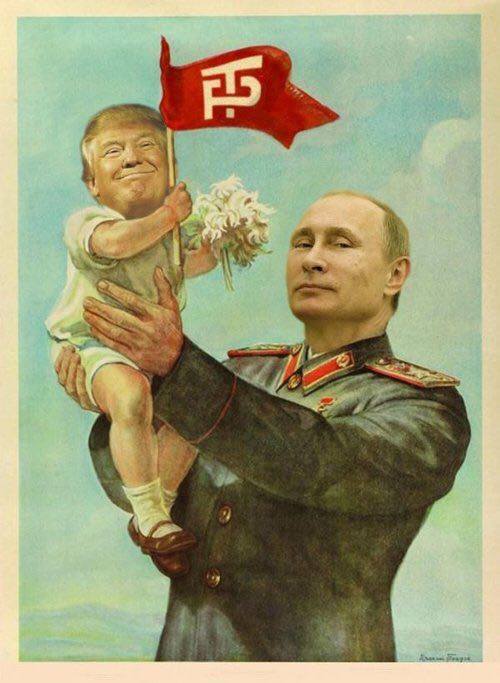
We’re not so different, you and I. We both dislike Hillary. It doesn’t really matter that she was among key players in the Russian reset policy back in 2009, we really don’t trust her – just like you! We also like a strong leader. Our leader is much better at doing business than yours though. You have a misogynist pig for a presidential candidate? We’ll take that and raise you a foreign minister who jokes about female journalists on their knees. Not to mention a former children’s ombudsman who thinks that after 27 women shrivel up, and that it’s ok for a teenager to be married off as a...
In this, the first of a sequence of posts addressing Brexit in one way or another, I want to take a look at the shifting systems of authority in the current political climate and comment on how they might impact international relations into the future. At the time of the Brexit vote, commentators and news reports drew parallels between the British decision to the leave the EU and the tumult of the US elections, particularly the rise of Donald Trump. Many pointed to the resurgence of nationalism, but here I want to argue that while the concept of nationalism as a practice of identity...