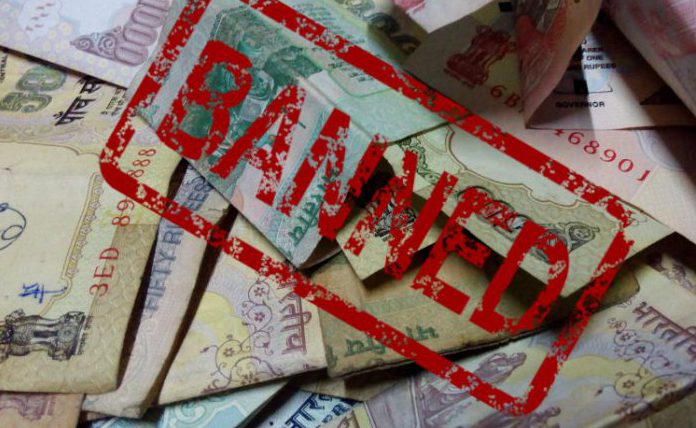
Dozens of regimes around the world are anti-liberal—autocratic to varying degrees—but also big fans of a "rules-based" international order, which for the past 50 years or so has been a neoliberal economic order. Not a coincidence. The reason an...
Corruption is an issue largely off the radar screens of many IR scholars. How can they better theorize corruption’s pervasiveness in international politics, while avoiding the biases of past approaches?
Divorces don’t usually send shockwaves through the global policy field. They almost never create uncertainty about the health of hundreds of millions of people. The split between Bill and Melinda...
California is home to the US’ largest garment industry, where many migrant women toil for far less than minimum wage. I examine recent legislation to improve conditions, as well as how the LA garment industry is shaped by global forces that create gendered and racialized patterns of vulnerability among workers.
This World Politics in a Time of Populist Nationalism (WPTPN) guest post is written by Aida A. Hozić is an Associate Professor of International Relations at the University of Florida. This blogpost draws on a chapter prepared for Hegemony and Leadership in the International Political Economy, edited by Alan Cafruny and Herman M. Schwartz (Lynne Rienner, forthcoming). There is a moment at the end of every regime when the relationship between all hitherto accepted modes of representation and reality seems to collapse. Regimes start running on fumes when well-established political rituals...
This World Politics in a Time of Populist Nationalism (WPTPN) guest post is written by Daniel Braaten, Assistant Professor of Political Science at Texas Lutheran University. His main research interests are in the areas of global governance, human rights, and U.S. foreign policy. His research has been published in the Review of International Studies, Journal of Peace Research, Journal of Human Rights, and Human Rights Review. What effect will a Donald Trump presidency have on American hegemonic legitimacy? My purpose here is not to wade into debates about whether U.S. hegemony is benign,...
In previous posts on the environment and health, I highlighted lacunae in the field, which I attributed in part to there being few courses in those substantive areas. By providing a few exemplar syllabi, I thought more of us might find it easier to offer courses on those topics. At the very least, some might find inspiration for courses and mine these syllabi for readings. Another potentially under-studied area is international development. Here, there may be more course offerings and crossover with IPE, but I'm going to start an open thread with development syllabi because I can. Again,...
Rousseau once remarked that “It is, therefore, very certain that compassion is a natural sentiment, which, by moderating the activity of self-esteem in each individual, contributes to the mutual preservation of the whole species” (Discourses on Inequality). Indeed, it is compassion, and not “reason” that keeps this frail species progressing. Yet, this ability to be compassionate, which is by its very nature an other-regarding ability, is (ironically) the different side to the same coin: comparison. Comparison, or perhaps "reflection on certain relations" (e.g. small/big; hard/soft;...
This is a guest post from Hannes Hansen-Magnusson, a Lecturer in International Relations at Cardiff University (contact by email: Hansen-Magnusson”at”Cardiff.ac.uk or via twitter: @HansenMagnusson) For centuries the political struggle over the legal status of global oceans was presented as one of mare clausum vs. mare liberum. These concepts concerned the possibility of movement as well as rights and responsibilities of seafaring nations and coastal states which had sometimes been the subject of small-scale physical confrontations at sea, such as the so-called Cod or Turbot Wars, but also of...
This is a guest post by Jan Fichtner, Postdoctoral Researcher in the CORPNET project at the Department of Political Science of the University of Amsterdam. So far, International Relations and International Political Economy have not dedicated much attention to analyzing the group of the Anglophone countries together (notable exceptions are Andrew Gamble, Jeremy Green, Kees van der Pijl, and Srdjan Vucetic). Instead, the vast majority of IR and IPE approaches treats the English-speaking countries and jurisdictions solely on the grounds where they are located geographically: the Unites...
Why do some transnational advocacy movements have more success transforming global markets than others? Can we look to look to differences in market structure for a preliminary account? Why were AIDS advocates able to achieve extended access to antiretroviral medications for millions of people while climate campaigners have struggled to achieve comparable gains? This week, International Studies Quarterly published an early access and ungated version of my article with Ethan Kapstein where we examine how the structure of markets shaped the differential scope for climate and AIDS advocacy....
This is a guest post by Randall Germain, Professor of Political Science at Carleton University, as part of the Duck of Minerva’s Symposium on Structural Power and the Study of Business. Links to other posts in the symposium can be found here. A scholar knows he has been around for a while when the problem of structural power re-emerges as a legitimate and worthy subject of research. My graduate education in IR and IPE was pre-occupied with debates over hegemonic stability theory and neo-realism, which were, in their own ways, very particular demands to take structure and the power of...