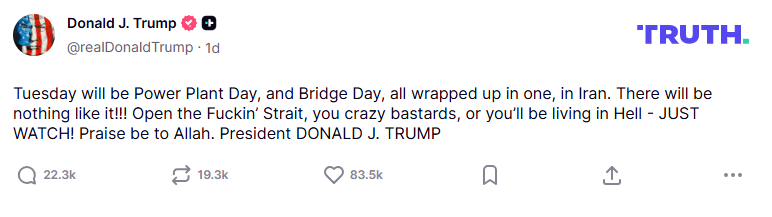
How can we understand Tump 2.0 foreign policy? It’s the product of the fusion of two different forces: Christian Nationalism and Personalist Rent-Extraction.
In the recent Settling for Less: Why States Colonize and Why They Stop, Lachlan McNamee makes a rationalist argument—“colonization projects” are “characterized by a triangle of actors—settlers,...
126 countries now publish a national security strategy or defense document, and 45 of these feature
a leaders’ preambles. How these talk about the world, or not, is surprisingly revealing of historical
global strategic hierarchies.
When I arrived at the Pentagon in 2009, the Obama administration was just getting its footing as caretakers of the War on Terror. Our focus then was truly global dominion. That meant, yes, killing...
Most versions of the left gain little and sacrifice much in accepting a realist epistemology. Theories of international relations are just tools for making sense of patterns and puzzles in the world; they don’t need groupies.
Recent chatter about David Remnick's interview of Stephen Kotkin reminds me of another interview that Kotkin recorded in February. Kotkin draws an analogy between Putin's decision to invade Ukraine and Stalin's decision to give Kim Il-sung the "green light" to invade South Korea in 1950. The comparison not only highlights the dysfunctions of personalist regimes, but the (potential) effects of the Russo-Ukraine War on U.S. foreign policy. Back in January, Gregory Mitrovich published an excellent piece about that in The Washington Post. Though the Cold War had begun several years before the...
For Mearsheimer “freedom” and “prosperity” are simply weapons of great power politics rather than aspirations sought by the Ukrainian people.
This piece is the second in a three-part series grappling with the role of political economy in making a just, sustainable international order. Writing about America’s economic strategy deficit got me pondering why the United States had such a stunted economic imagination. How could the government that many consider to be the global economic hegemon be inept at economic statecraft? For one thing, I think the popular impression of America as the world’s economic hegemon is overstated. Yes, the United States has many economic advantages. Its domestic market is still the destination of choice...
Joe Biden's "Summit for Democracy" was held last week. This summit meant to bring together the world's democracies, strengthening them and pro-democratic global norms. The hope is that this would reverse the growing trend of authoritarianism around the world. Some were hopeful. In his opening address, President Biden called on the "global community for democracy" to "stand up for the values that unite us." Some agree this gathering may be beneficial. Max Bergman of the Center for American Progress argues the United States should be gathering democracies, even if the "what next" aspect of the...
The Biden administration just issued the government’s first ever anti-corruption strategy. The upshot: It’s needed. It’s analytically informed. It raises the prioritization of fighting kleptocracy. The downside: It’s not all that realistic. It defines corruption so widely that it makes prioritization fanciful. And it defers most of the real work to some to-be-determined imaginary future on the other side of Republican authoritarianism. Eons ago, during the 2020 presidential campaign cycle, anti-corruption was a major theme in the progressive foreign...
Canadian scholar and politician Michael Ignatieff had a piece in Persuasion recently on the "collapse of liberal internationalism." For Ignatieff to admit this (as one of the strongest proponents of this foreign policy orientation) says a lot. However, he inadvertently gives too much of the argument away. Liberal internationalism is more than military interventions, something both its critics and proponents seem to have forgotten. The fall of liberal internationalism Liberal internationalism is the claim that state interests are best served by engaging with the world to advance liberal...
The US State Department recently released the lists of Countries of Particular Concern (CPC) on religious freedom, part of its responsibilities under the International Religious Freedom Act (IRF). The list now includes Russia alongside countries like Burma and China. But one change angered many religious freedom advocates: the removal of Nigeria from the list. IRF advocates claim this is tantamount to abandoning Nigerian Christians, who are often the target of violence in that country. I think the situation is more complicated than that: Nigeria's addition to the list was the result of the...