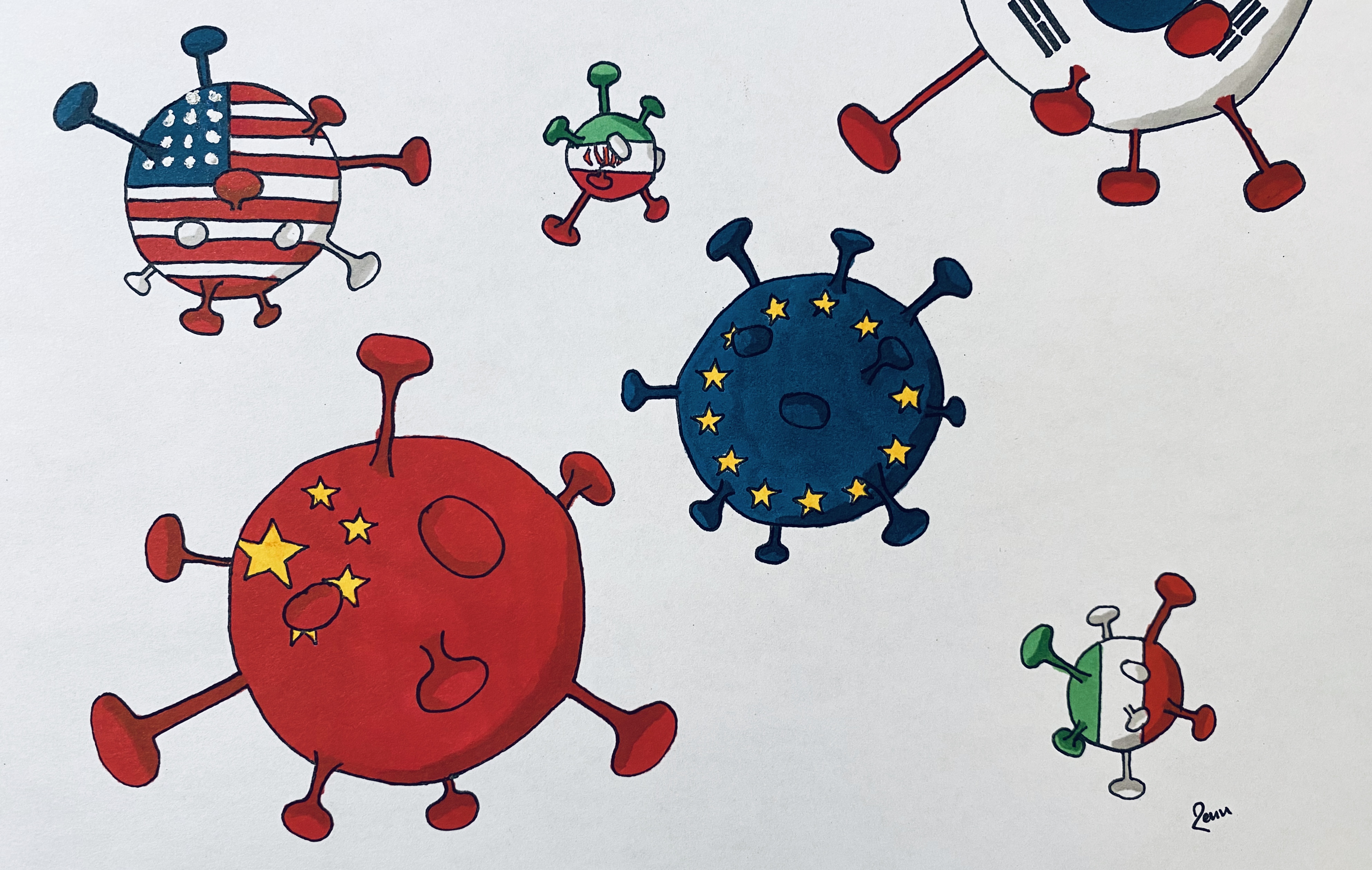
It’s no surprise that current events regularly lead us to update our syllabi. That doesn’t mean we can’t make “surprise” an important feature of our courses.
As a reviewer and recipient of reviews, I've noted a recent trend among IR papers. A study uses cross-national data with regression analysis, and runs multiple models with different variables or...
Dan Nexon reflects on editing International Studies Quarterly.
I had a kind of unique path to my current tenure-track job, straddling the policy-academia divide. So I've followed current discussions on "alt-ac" careers with interest, but found something lacking...
One point that I'd like to see made a little bit more clearly is that political scientists should try to reframe this. I doubt that we have much sympathy among members of other disciplines; that quote about "first they came for the X" is troubling precisely because, well, nobody stands up for the...
A very restricted number of links today: Jennifer Victor lays out the strategy for an effective lobbying effort for political science. [The Mischiefs of Faction] Phil Schrodt delivers a sensible assessment of the state of play, including a warning about vitriol and a savage critique of the APSA....
Much ado. Investors keep getting burned in betting on the exit of members of the Eurozone, let alone the breakup of the currency/monetary union of the EU. And econ/business experts keep getting their predictions wrong. The simple reason: the EU, from its econ/financial area to the vast array...
This is a guest post by Konstantinos Travlos of the University of Illinois and Brandon Valeriano of the University of Glasgow. The mark of the ten year anniversary of the beginning of the US invasion of Iraq in 2003 has been, as such anniversaries tend to be, a chance for scholars, pundits and...
Todd Sechser and Matthew Fuhrmann argue that possessing nuclear weapons confers few benefits for coercive diplomacy.
Matt Kroenig argues that states should strive for nuclear superiority as it confers strategic advantages.
Catch my prescient NCAA prediction at the beginning.
Good morning, Duckaroos! Here's your Monday linkage from... "Dixie": The South will rise again - according to the UN. No, not that South, the Global South. For the first time in two centuries, Brazil, India, and China's combined GDP is nearly equivalent to the combined GDP of the leading powers...
It is time again for the International Studies Association Annual Conference. With thousands of attendees, a phone book full of panels, and a slough of receptions, dinners, meetings, and opportunities, the whole thing can be a bit overwhelming as a grad student (and for everyone else too!). You've...
My post at e-ir on how folks understand IR and its manifestations in Game of Thrones is eclipsed by this series of videos. For the conclusion with heaps of paens to teen movies:
My first post on the Iraq War asked if academic IR had any responsibility to slow the march to war. The second tried to formulate what the neoconservative theory of the war was, because many of us, in retrospect of a conflict gone so badly, desperately want to un-remember that there...
Check out my new post at e-IR for a consideration of how Game of Thrones tends to reflect how non-IR scholars might be thinking about IR.That's all, folks.