Exercising feminist curiosity: how Ukraine women are involved in the conflict and how Putin’s nationalist fever dream is a patriarchal one.

Sunflower seeds and Molotov cocktails
read more
Exercising feminist curiosity: how Ukraine women are involved in the conflict and how Putin’s nationalist fever dream is a patriarchal one.

I excitedly read this recent tweet by Evan Perkoski of UConn, about a new article he co-authored that has been accepted in International Organization. Beyond being glad for a colleague's success, I...

The academy is traditionally a place students and scholars go to hone their critical faculties. But perhaps, in some cases, we take this critical approach too far. In this Quack-and-Forth, Adam B. Lerner and Jarrod Hayes discuss academic grudges and whether the academy would be a kinder or gentler place if we all acted a bit more like Larry Bird (and a bit less like Larry David).

After a two-year COVID-induced hiatus, the International Studies Association Online Media Caucus (OMC) is pleased to announce the return of the Duckies! Please send you nominations...

This piece is the second in a three-part series grappling with the role of political economy in making a just, sustainable international order. Writing about America’s economic strategy deficit got me pondering why the United States had such a stunted economic imagination. How could the government that many consider to be the global economic hegemon be inept at economic statecraft? For one thing, I think the popular impression of America as the world’s economic hegemon is overstated. Yes, the United States has many economic advantages. Its domestic market is still the destination of choice...
I wrote the first draft of “What’s it Like to Be a State?” sometime in late 2017, during an unusual time in both my personal life and my research career. I was about halfway through my PhD at the University of Cambridge and was feeling both immensely homesick and quite bored—trapped in a small town that felt ripped from the Victorian era. I filled my free time watching large numbers of pre-recorded NBA games and, also, for some reason, reading philosophy of mind….

I appreciate this opportunity to remark on Adam Lerner’s (hereafter, just ‘Adam’), excellent 2020 International Theory article on state consciousness. I recall first chatting with Adam about this paper when it was still in development, over a coffee in Prague at the 2018 European International Studies Association (EISA) annual meeting. Some of what I’ll mention here will be a rehashing – but also rethinking – of what I told him then. To cut to the chase, I still maintain my skepticism regarding how Adam’s article, and those like it, will be received in certain corners of International...
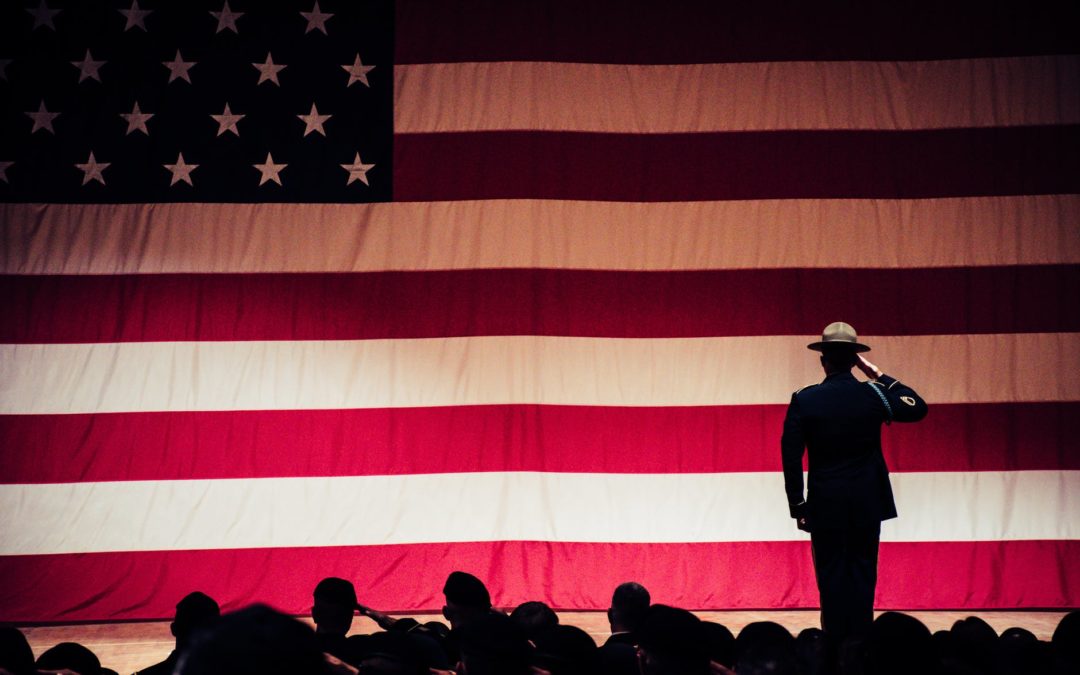
state takes precedence over their own lives. Focusing on states as persons distracts us from how violence travels across levels of analysis. States don’t do violence to one another. They inflict violence on actual living beings.

I have mixed feelings about Adam’s article. On the one hand, I think it does a very good job of outlining the realist metaphysical argument for treating states and other similar corporate actors as conscious, or as having minds, if you’re the sort of person who needs that. On the other hand, I am not the sort of person who needs that, and I’m not sure who is. To be clear, I think Adam has applied perspectives from the philosophy of mind in ways that critically examine...

A state of mind is a contagious thingSpread it around you never know what the future brings…Marillion, “State of Mind” n his later writings, Ludwig Wittgenstein spends quite a bit of time thinking about the problem of exactly what we are doing when we refer to the “inner” state of some entity, as juxtaposed with “outer” evidence of that entity’s behavior. We see someone grab at their arm and yell “ouch!”, and then their face contorts in a grimace, but Wittgenstein points out that this is not “outer” evidence of an “inner” mental state called “being in pain.” Rather,...
Way back in the summer I commissioned a symposium on Adam Lerner's provocative 2021 International Theory (vol. 13, no 2: 260-286) article, "What's it Like to be a State? An Argument for State Consciousness." Questions of consciousness pervade the social sciences. Yet, despite persistent tendencies to anthropomorphize states, most International Relations scholarship implicitly adopts the position that humans are conscious and states are not. Recognizing that scholarly disagreement over fundamental issues prevents answering definitively whether states are truly conscious, I instead demonstrate...
As long as international organizations have existed their relationships with their member states have been conflict-ridden. States use numerous methods to influence international organizations according to their interests or to contest the authority and policies of international organizations, including by reducing financial contribution, threatening withdrawal, and by actually exiting. Between 2014 and 2020, the United States cut its contributions to numerous international organizations, several African states threatened to withdraw from the International Criminal Court, and the United...