Even when Latin Americans are allowed to speak, IR scholars and practitioners do not listen to them due to the language in which they produce knowledge, epistemic violence and access barriers.
What happens when a research subject becomes a research and briefing partner? In 2017, I was contacted by the peacebuilding NGO Peace Direct to contribute to a policy report on...
The ISA statement lacks not only comparative history but also local historical depth. It also distorts moral responsibility.
I hold a PhD in history from the University of Virginia. Like many graduate students, I began my doctoral program hoping to become a professor. When I decided to pursue a different career, my university didn’t know how to advise me. Here’s what I learned about finding a non-academic job.
This is the second installment in our series on Race&IR.This is a guest post from Ebby L. Abramson who is a Doctoral student in the political science program at the University of Ottawa and a research associate and editor for Endangered Scholars Worldwide. His current research systematically investigates counterterrorism policies in Europe and the United States, examining how these policies account for and impact their respective society. Abramson has worked for the United Nations Office for Disarmament Affairs, the New School, Cardozo School of law, and The George Washington University...
This post, part of the Bridging the Gap channel, is written by Rosella Cappella Zielinski, an Assistant Professor of Political Science at Boston University and non-resident fellow at the Brute Krulak Center for Innovation and Creativity at Marine Corps University. She is an alumna of BTG’s International Policy Summer Institute. For those of us figuring out how to navigate our identities in the classroom, on the job market, and in the wider world of academia, mentoring often plays a crucial role. Yet, often, our institutional...
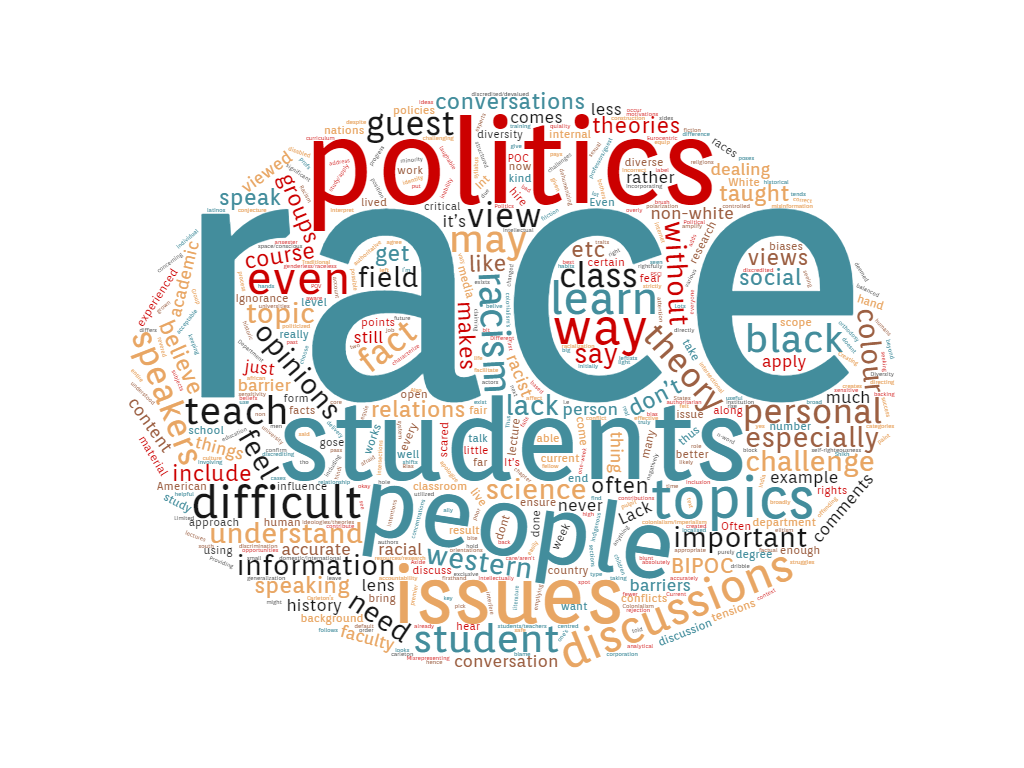
This is the first post in our series on Race&IR.This is a guest post by J.P. Singh--Professor of International Commerce and Policy at the Schar School of Policy and Government, George Mason University, and Richard von Weizsäcker Fellow with the Robert Bosch Academy, Berlin. He specializes in culture and political economy. Singh has authored or edited ten books, published over 100 scholarly articles, and worked with international organizations such as UNESCO, the World Bank, and the World Trade Organization. Twitter: @Prof_JPSingh Issues of race and racism are intense subjects of...
The following is a guest post by Dr. Dan Reiter. Dr. Reiter is the Samuel Candler Dobbs Professor of Political Science at Emory University. He is the author, coauthor, or editor of Crucible of Beliefs: Learning, Alliances, and World Wars (Cornell, 1996), Democracies at War (Princeton, 2002, with Allan C. Stam), How Wars End (Princeton, 2009), and The Sword’s Other Edge: Tradeoffs in the Pursuit of Military Effectiveness (Cambridge 2017), as well as dozens of scholarly articles. I am the new associate editor for international relations (IR) at the American Journal of Political Science, and I...
Mentoring starts with how we ourselves act and move through our shared academic world. The more that each of us, particularly those in positions of relative power, can be honest and open about our own diverse identities, the more space we create for others to do the same.
Recent events make it clear: whether loved or loathed, government policies are central to our lives. That’s why public policy schools are devoted to understanding the causes, design, implementation, and effects of government policies. And it’s why some political scientists (including me) feel the pull to work in both a political science department and a policy school. But if we make this choice, what goes from optional to required? For answers, look at Georgetown University faculty member Kate McNamara, the 2020 recipient of a prominent mentoring award from...
What was it like to have Kate McNamara a mentor?
Kate’s has always been my favorite voice in any room. In our current moment especially, it is a voice that has become vitally important for women in the profession as well as so many others marginalized in the academy.