Jarrod is joined by Daniela Lai and Adam Lerner to talk about the role of big questions in IR scholarship and teaching.

Does IR ask big questions?
read more
Jarrod is joined by Daniela Lai and Adam Lerner to talk about the role of big questions in IR scholarship and teaching.
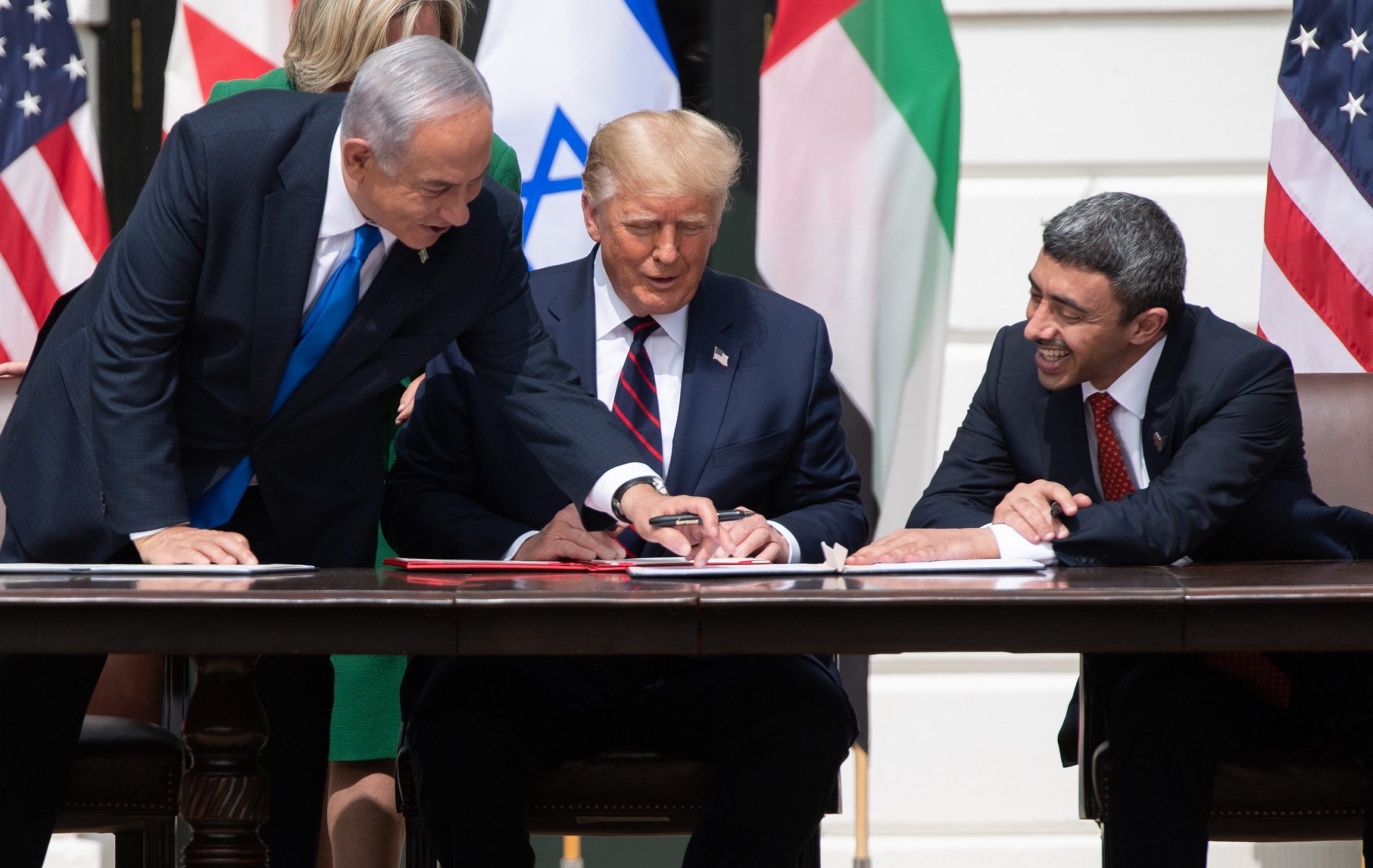
In September, the UAE and Israel signed "the Abraham Accords," normalizing relations between the UAE and Israel. The Trump Administration presented this as if it was equivalent to the Camp David...
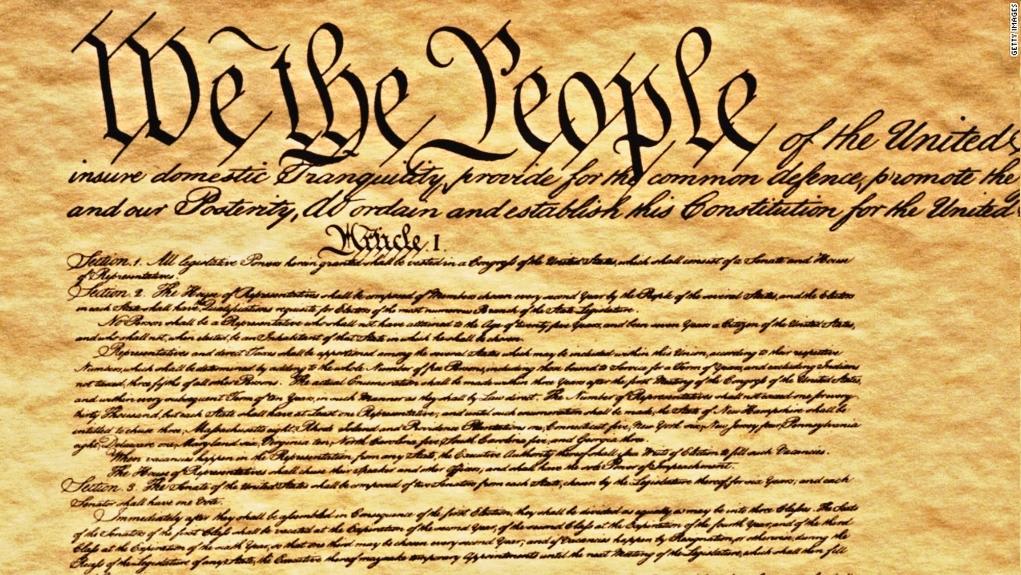
Last night’s debate might go down as one of the greatest in recent memory, and I am prepared to die on that hill. It was ugly. But it was also raw, unfiltered, and honest. It was thin on policy...
Professor Julie Kaarbo (U. of Edinburgh) discusses role theory, the relationship between FPA and IR theory, and a new project she is calling Breaking Bad. As always thanks go to Steve Dancz (https://stevedancz.com) for our theme music.
A couple of years ago, Human Rights Watch launched a report arguing for a treaty ban on fully autonomous weapons, claiming military robots who target and kill human beings would violate international law. Among other arguments, the report Losing Humanity cited the Marten’s Clause of the Hague Convention, which encourages states to consider the “dictates of the public conscience” in determining whether as-yet-ungoverned activities were morally permissible among civilized nations. Intrigued by this advocacy claim, I conducted a survey in 2013 to test whether public revulsion at the idea of...
Last December, on “Giving Tuesday,” I encouraged friends and family to send donations to three of my favorite charitable causes in lieu of birthday presents: low-income housing, domestic violence, and Syrian refugee relief. My son and I had signed up to compete that week in the Habitat for Humanity Gingerbread Build (see our prize-winning creation in the photo!),* the Safe Passage 5K run, and a UMass benefit dinner for Syrian refugees being organized by the student Amnesty International chapter. Safe Passage had an online portal for collecting donations, but for the two other organizations...
At War on the Rocks, Mieke Eoyong intervenes in the Sanders-Clinton foreign-policy debate. Although the case made for Sanders' foreign policy by those she critiques—including Sean Kay—is much broader, she focuses on three arguments: that "Sanders has superior judgment because he opposed the Iraq War and Clinton didn’t; Sanders would exercise restraint in intervention, where Clinton is on record supporting U.S. intervention in a number of cases; [and] Sanders would restrain defense spending." I'm going to respond to the first two. I do so as a recovering liberal hawk. In the 1990s, my views...
This week is the 10th anniversary of the start of Canada's combat mission in Kandahar. This was the most stressful Canadian "expedition" since the Korean War, as Canada skipped Iraq 2003 and Vietnam. Today also happens to be the third anniversary of the rejection of an access to information request (Canadian for FOIA)--I had asked for the report detailing the Lessons Learned from the war. While armed forces create such reports all the time, this was a first for the government to consider how the various agencies performed. The report got buried, not just so that I couldn't see it, but...
Syria’s civil-proxy war is on the cusp of turning into an all-out regional war, with negative repercussions for all involved in the conflict. The humanitarian disaster is at its most acute to date, with Russian forces systematically attacking the Syrian opposition and on the verge of a rout of Aleppo—and now Turkish ground forces engaging Kurdish forces across its border. With the U.S.-Russian ceasefire accord appearing unlikely to alter much on the ground, the time has come for the U.S., Europe, and the Saudi-led Gulf countries to make a decisive move to take the initiative back from...
The following is a guest post by Dan Reiter, the Samuel Dobbs Candler Professor of Political Science at Emory University. Dr. Cullen Hendrix’s recent Duck of Minerva post on citation counts sparked a vibrant discussion about the value of citation counts as measures of scholarly productivity and reputation. Beyond the question of whether citation count data should be used, we should also ask, how are citation count data being used? We already know that, for better or worse, citation count data are used in many quantitative rankings, such as those produced by Academic Analytics and the...
A short time from now, at a conference venue far, far away (at least from Amherst, MA...): The papers on this panel examine the relationship between the Star Wars franchise and socio-political dynamics in the area of international security, broadly defined. In other words, this panel focuses specifically on the inter-relationship between pop culture ideas and “real-world” security-seeking processes and practices. The papers span methodological approaches, but all reflect on or empirically investigate connections between Star Wars’ fictional memes, concepts or allegories and the real-world...
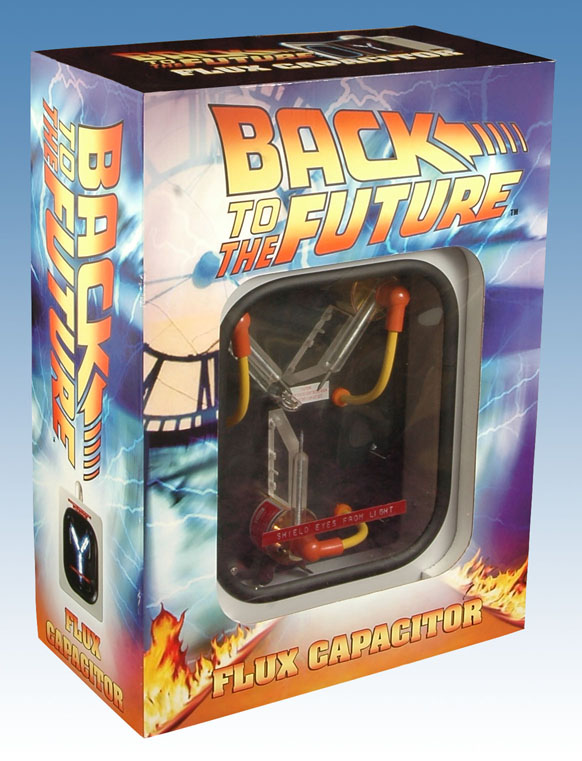
When the Soviets launched Sputnik in 1957, the US was taken off guard. Seriously off guard. While Eisenhower didn't think the pointy satellite was a major strategic threat, the public perception was that it was. The Soviets could launch rockets into space, and if they could do that, they could easily launch nuclear missiles at the US. So, aside from a damaged US ego about losing the “space race,” the strategic landscape shifted quickly and the “missile gap” fear was born. The US's “strategic surprise” and the subsequent public backlash caused the US to embark on a variety of science and...