Dominant theories of international political economy leave little room for the influence of individuals. They also never anticipated that the United States might seek to completely upend the global economic order.
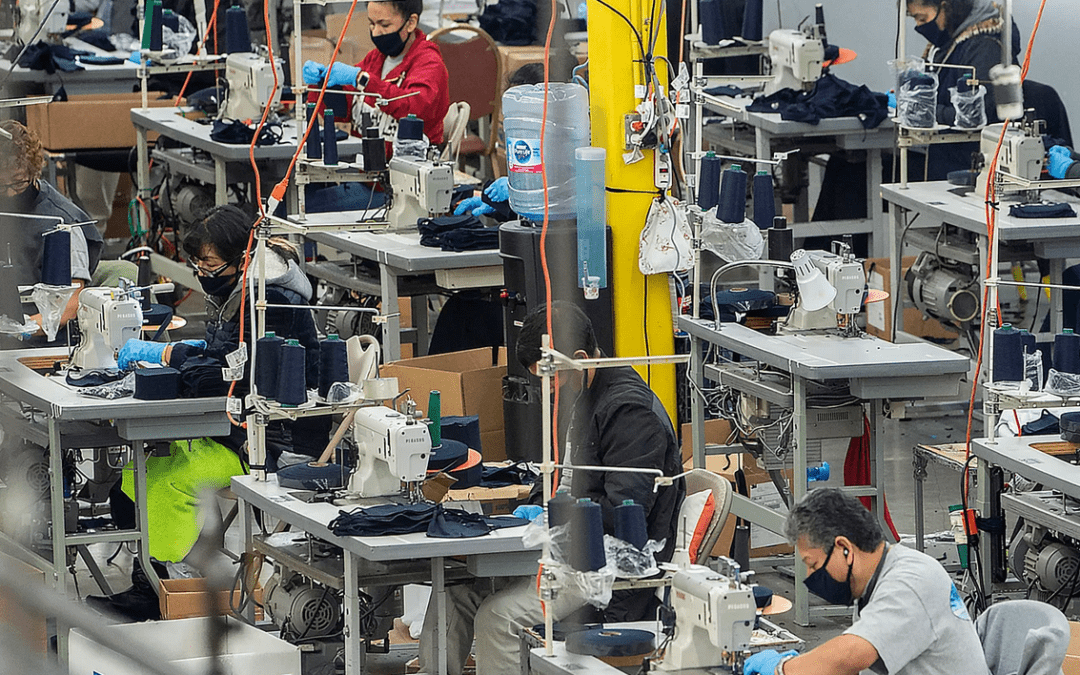
California is home to the US’ largest garment industry, where many migrant women toil for far less than minimum wage. I examine recent legislation to improve conditions, as well as how the LA garment industry is shaped by global forces that create gendered and racialized patterns of vulnerability among workers.
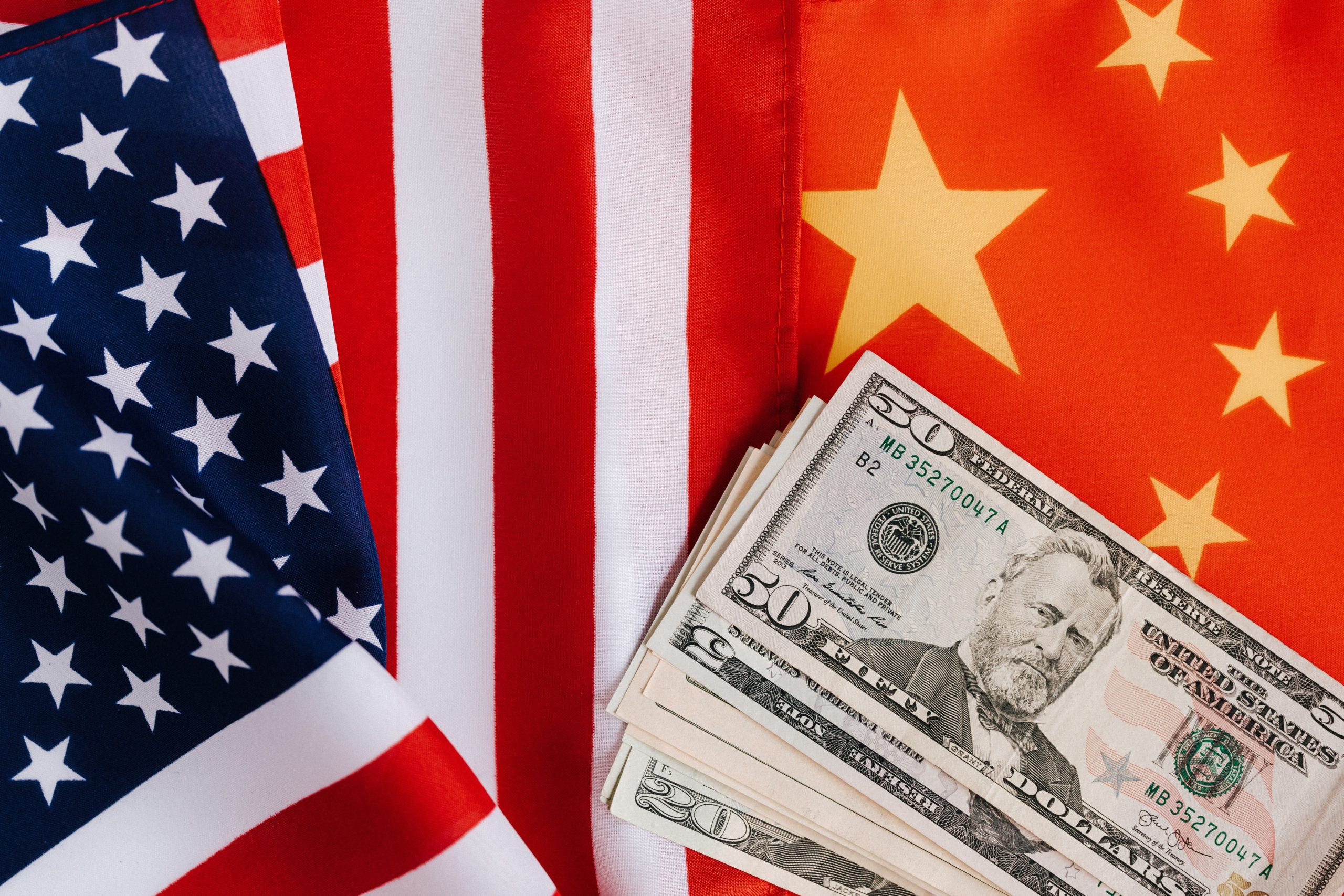
The White House is close to announcing "301s" (investigations under Section 301 of U.S. trade law) into Chinese use of industrial subsidies. It matters because 301s are the prelude to tariff...
Does China's more ambitious foreign policy and bid for "national rejuvenation" come at America's expense? It's a question where some neoliberals and some on the anti-imperialist left converge — in...
This is a guest post by Tasha Fairfield, Assistant Professor in the Department of International Development at the London School of Economics and Political Science, as part of the Duck of Minerva’s Symposium on Structural Power and the Study of Business. This post draws on ideas developed at greater length in Fairfield’s article found here. Links to other posts in the symposium can be found here. Taxation is a policy area rife with examples from around the world of the substantial influence that business can wield. Consider Latin America, a region known for phenomenal inequality and light...
This is a guest post by Kevin Young, Assistant Professor of Political Science at the University of Massachusetts Amherst, as part of the Duck of Minerva's Symposium on Structural Power and the Study of Business. This post draws on ideas developed at greater length in Young's article found here. Links to other posts in the symposium can be found here. We live in a civilization populated by an organizational form that has replicated itself throughout the world with incredible speed, voracity and flexibility. It might be the organizational form of our age. This organizational form organizes the...
This is a guest post by Patrick Emmenegger, Professor of Comparative Political Economy and Public Policy at the University of St. Gallen, as part of the Duck of Minerva's Symposium on Structural Power and the Study of Business. This post draws on ideas developed at greater length in Emmenegger's article found here. Links to other posts in the symposium can be found here. The United States of America is the most powerful country in the world but when it comes to interactions with international banks, it looks surprisingly feeble – at least according to conventional wisdom. Two types of...
This is a guest post by Pepper D. Culpepper, Professor of Political Science at the European University Institute, as part of the Duck of Minerva's Symposium on Structural Power and the Study of Business. This post draws on ideas developed at greater length in Culpepper's article found here. Links to other posts in the symposium can be found here. Crises shake up the real world. Sometimes, they even shake up the world of political science. The recent global financial crisis and the ongoing bank and sovereign debt crisis associated with it in the Eurozone have led many scholars to reach back...
This week the Duck will host a symposium on a recent special issue of Business and Politics on Structural Power and the Study of Business, which was guest-edited by Pepper Culpepper and published in October. De Gruyter has generously agreed to temporarily ungate the issue to correspond with this symposium; the articles may be found here. Each day of the week will contain a post in the morning and the afternoon, written by the authors of the articles in the issue, with a concluding post discussing the project by Randall German. We hope you will join us in the comments as we go along. This...
This is a guest post from Tana Johnson, an Assistant Professor at Duke University's Sanford School of Public Policy. I had the pleasure of editing a reviews exchange on her important new book, Organizational Progeny. The exchange just came out in the latest issue of International Politics Reviews and features reviews from me (Josh), Tanisha Fazal, and Alexandru Grigorescu, as well as a response from Johnson herself. Ungated access here. I’ve recently returned from Geneva, home to scores of international intergovernmental organizations (IGOs). It’s an intriguing place: unlike New York,...
The Chronicle of Higher Education has a longish write-up on Pinar Dogan and Dani Rodrik’s efforts to exonerate Dogan’s father after he had been caught up in then Turkish Prime Minister Recep Tayyip Erdogan’s efforts to push Turkey’s generals out of the political arena. At the heart of this effort was the publication in 2010 of documents detailing an alleged plot—Operation Sledgehammer—by Turkish military leaders in 2003 to overthrow the government by undertaking a massive campaign of state terrorism. Dogan’s father was a general in 2003 and was, according to the documents, the leader of the...
I just got out of a half-day APSA pre-conference short course on the politics of markets, firms, and interest groups organized by the sociologist Edward Walker and political scientist Patty Strach. Having attended Thad Dunning's short course on natural experiments in the past, I think there is a lot to be said for alternative formats to the traditional panel of papers and discussants. This morning, 9 panelists each reflected on a common set of questions with two discussants, Ed and David Vogel, weighing in on our remarks. Fellow panelists including a number of folks who study American...