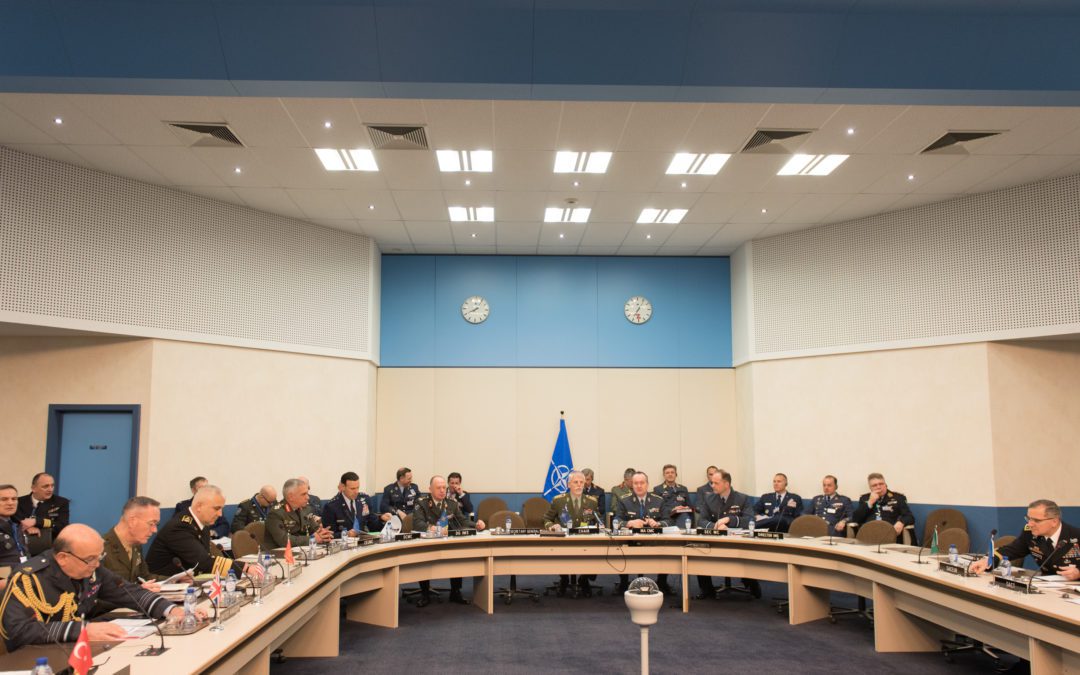
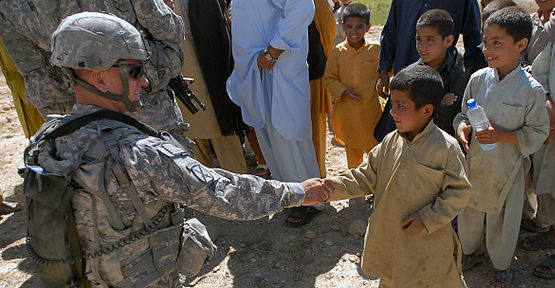
Drew Hogan answers 6+1 questions about how the United States does, and does not, support its overseas citizens.
126 countries now publish a national security strategy or defense document, and 45 of these feature
a leaders’ preambles. How these talk about the world, or not, is surprisingly revealing of historical
global strategic hierarchies.
Scotland's independence drive won't disappear anytime soon. In "Scots Wha Hae," (from which the title of this post comes) Robert Burns calls on Scots to remember their victory over the English at...
A controversy broke out the weekend before Christmas, when Fr. Edward Beck, a Roman Catholic priest, claimed Jesus was a "Palestinian Jew" while discussing the current war between Israel and Hamas....
Name Of The Book… And Its Coordinates? Jennifer D. Sciubba, ed. 2021. A Research Agenda for Political Demography (Cheltenham, UK and Northampton, Massachusetts, USA: Edward Elgar) What’s the Argument? We cannot understand contemporary international relations without understanding the demographic shifts going on around the world. Demographics – the characteristics of populations, such as age and location – are not just a backdrop for other, supposedly more important, forces. Population plays a key role in the outcomes of armed conflict, economic development, and political reform....
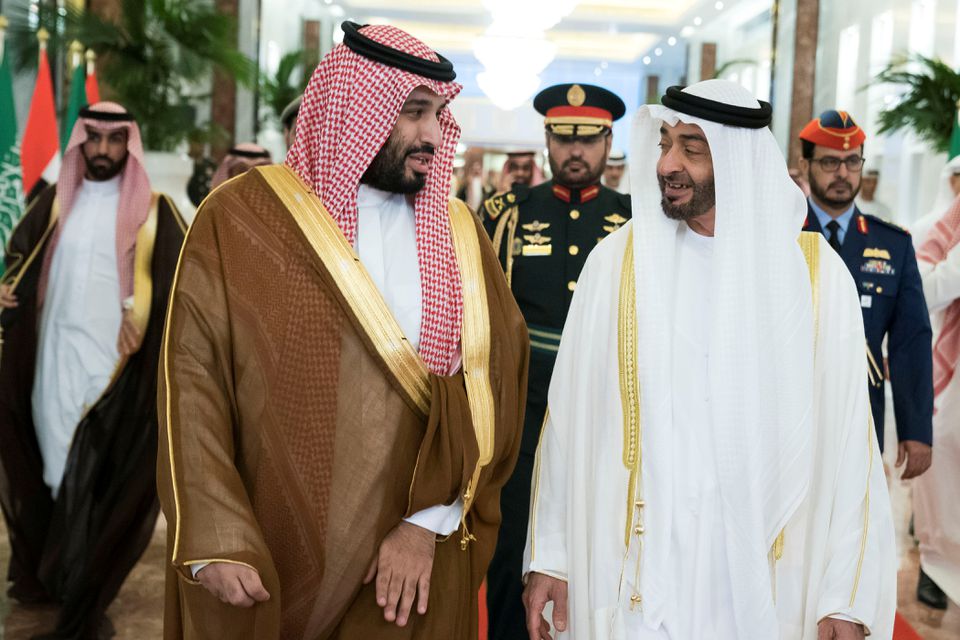
Anwar Gargash, a diplomatic advisor to the UAE, recently spoke to an international conference on the UAE's desire to smooth over tensions with Turkey and Iran. Turkey and the UAE found themselves on opposite sides of the Arab Spring, with the former supporting revolutionary movements around the Middle East and the latter trying to frustrate them. And the UAE shares Saudi concerns about Iran's influence. This may be, as Trita Parsi recently wrote, part of a broader pattern of regional reconciliation sparked by America's withdrawal. But I think there is something unique to the UAE in this...
Over the past six months or so, I've gotten a lot of pings about NATO and the "Big 3" (UK, France, and Germany) taking on a role in Asia — and specifically a bigger military presence in the region. The issue has come up a few times on my podcast. I got an early preview of a book about a closely related question by a European scholar. I've had EU parliamentary staffers reach out to me about this. And I gave an interview to a lefty newspaper in Norway that was trying to make sense of NATO's approach to China/Asia/Indo-Pacific. It keeps coming up. Then, of course, the big Australia-US-UK...
Though unlikely to happen any time soon, recent calls for the US to pay reparations to the Afghan people provide an opportunity to reflect on the complexities of reparations and global justice.
Everyone is (rightly) thinking about Afghanistan, but I'm still thinking of Tunisia. Each fall I teach a Middle East politics class. And each fall I end our discussion on the Arab Spring with a debate over whether the Arab Spring actually mattered. Most students end up arguing that it didn't, or that its overall effects were negative. But they exclude Tunisia from this gloomy picture; they see it as the success story. This came to mind as reports have emerged that Kais Saied, Tunisia's President, has indefinitely extended his emergency powers, which effectively concentrates all power in his...
As access to vaccines continues to hamper developing countries’ response to the COVID-19 pandemic, many of these countries also face significant public debt burdens. The Debt Service Suspension Initiative (DSSI), intended to ease pandemic-related burdens on low and middle income countries, expires at the end of 2021. The DSSI saved 43 countries $5.7 billion in total, paling in comparison to their overall debt levels. Last month, the Group of 20 (G-20) central bank heads and finance ministers offered a broader plan, the Common Framework, for restructuring debt to official creditors. They...
Film critics have approached Adam Sandler’s films the same way that IR scholars have analyzed the rise and fall of the Liberal International Order (LIO)
Did the study of state formation ever lose its religion? There’s a new wave of interest in the Catholic Church as an institutional formation.