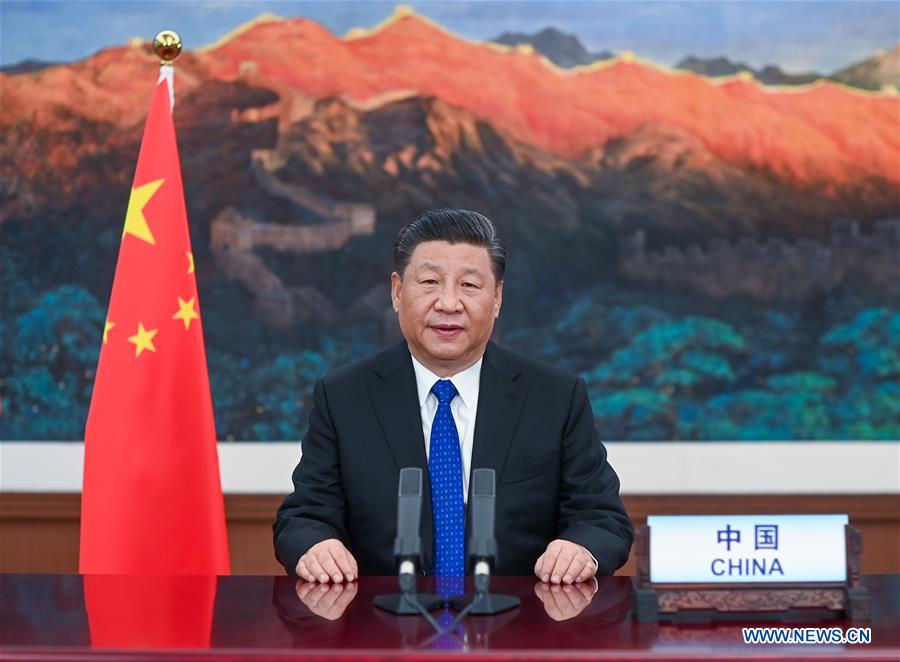
126 countries now publish a national security strategy or defense document, and 45 of these feature
a leaders’ preambles. How these talk about the world, or not, is surprisingly revealing of historical
global strategic hierarchies.
126 countries now publish a national security strategy or defense document, and 45 of these feature
a leaders’ preambles. How these talk about the world, or not, is surprisingly revealing of historical
global strategic hierarchies.
Since 2014 the international community has considered the issue of autonomy in weapons systems under the framework of the United Nations (UN) Convention on Certain Conventional Weapons (CCW)....
“Some came to kill and the others came to protect” says the main male character with a charisma of a doorknob to his love interest in the “based on real events” movie “Crimea” (2017), financed by...
Once again, America is enduring the horrors of a mass shooting. This time a gunman attacked a gay nightclub in Colorado Springs, opening fire before patrons grabbed his weapon and beat him with it....
This is a guest post from Emily Meierding, who is an Assistant Professor of National Security Affairs at the Naval Postgraduate School in Monterey, CA. Her book, The Oil Wars Myth: Petroleum and the Causes of International Conflict, has just been published by Cornell University Press. The views expressed here do not represent the perspective of the US Navy or Department of Defense. The global oil market has entered uncharted territory. On Monday, the price of WTI crude, the US oil benchmark, went negative for the first time in history, closing at -$37 per barrel. What happened? And what does...
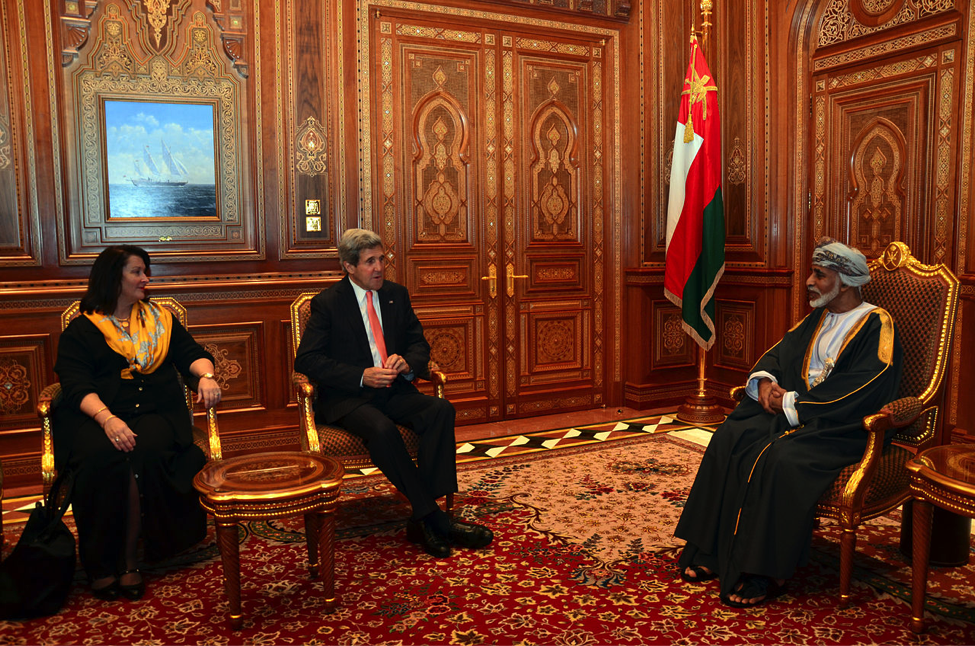
The following is a guest post by Andrew Leber, a PhD candidate in Government at Harvard University. The death of Sultan Qaboos bin Said, and the succession of Haitham bin Tariq as the country’s new ruler, was yet one more high-profile news item this year amid the back-and-forth attacks and tragic consequences of events further up the Gulf. Yet for the world of political science, this transition calls to mind important questions for comparativists about authoritarian successions in particular and authoritarian institutions more general. Thinking about Authoritarian SuccessionWhen are...
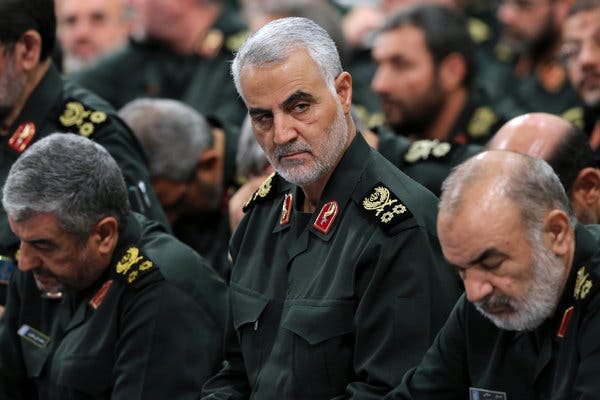
Depending on your Twitter addiction, you either went to sleep or woke up with the news that America had assassinated Qassim Suleimani, the commander of Iran's Quds force. Suleimani was one of the most powerful men in Iran, and the driver of its activities in the Middle East, so this is a big deal. People are debating whether this was just and necessary, and what happens next. But I wanted to raise a different point: what this means for America's Persian Gulf allies. Many would suspect these states--particularly Saudi Arabia and the United Arab Emirates (UAE)--to be the biggest winners in...
I had a piece in the Washington Post's "Monkeycage" over the weekend, which you can read here. I noted that many worry Saudi Arabia and the UAE will pull America into war with Iran. But it actually looks like they're the ones restraining us. The piece was inspired by the famous "chain-ganging" dynamic in IR scholarship, but there was little discussion of that as it was geared towards a broader audience, so I wanted to expand here. I suspect most readers of this site had to read Christensen and Snyder's "Chain gangs and passed bucks" at some point. In case you didn't, the argument is...
This is a guest post by Kara Hooser and Austin Knuppe, Conflict to Peace Lab, Mershon Center for International Security Studies, The Ohio State University Rebuilding social cohesion—restoring bonds of social trust that bind people together in communities and enable them to peacefully coexist—commonly serves as a central goal for peacebuilders engaging in communities fractured by political violence. Despite a growing consensus about the necessity of promoting social cohesion in the aftermath of widespread violence, questions remain about how scholars, practitioners, and donors can collaborate...
Warning! According to the law that the Russian parliament passed yesterday, this post might need to be prefaced with a disclaimer that the following text has been compiled by a foreign agent. An individual can be labeled as a “foreign agent” in Russia if they (1) distribute information, and (2) receive funds from sources outside Russia. I am ticking both boxes here, even as an academic working at a university, and the law intentionally left the “information spreading” extremely broad: you can literally post something on social media. It would be up for the Justice Ministry and the Foreign...
So by this point we all know the big news on Syria. Overnight, Trump announced that--after consulting with Turkish President Erdogan--the US would be pulling troops out of north Syria, giving Turkey freedom to operate. This would likely involve military actions against Kurdish forces there, which Turkey fears are coordinating with Kurdish insurgents in Turkey. This is concerning for two reasons. First, the United States had worked with these Kurdish forces to fight ISIS, so we're basically abandoning them. Second, this will basically leave ISIS detention camps unguarded, possibly letting...
This is a guest post from James Guild who is a PhD candidate in political economy at the S. Rajaratnam School of International Studies in Singapore. His research interest is economic growth and infrastructure development in Indonesia and Southeast Asia, and his work has appeared in The Diplomat, Jakarta Post and New Mandala. Follow him on Twitter @jamesjguildThis is the fourth in the series on changing the field. #IRChange The dominance of rational-positivist approaches to modern social science, particularly in the United States, has tended to privilege research designs featuring deductive...