The Republic as we knew it is over. The fight now is whether the new one will be a fascistic, competitive authoritarian regime or a pluralist democracy that, one hopes, is better than what came before.

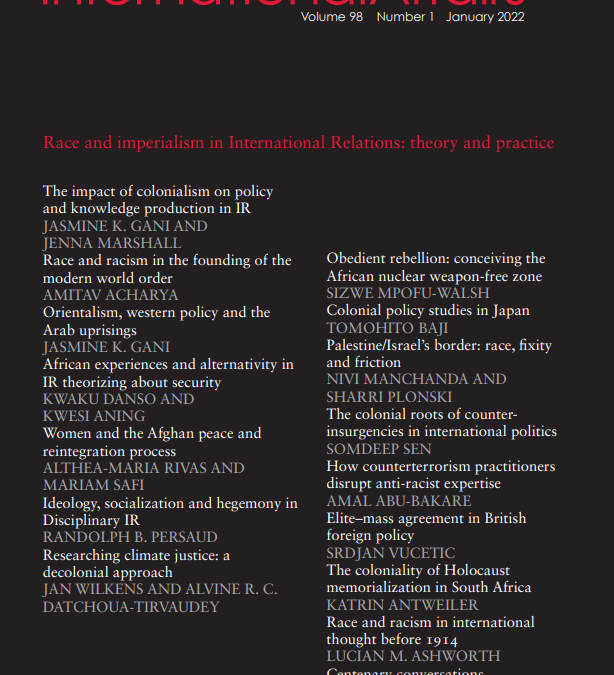
THe short-term contributions of the Special Issue have been worthwhile, but there remains a continued concern and challenge that with greater attention paid to race and imperialism in IR, these issues will become co-opted into the game of academic production, sanitised as intellectual curiosities, instead of being treated as matters of life and death that need to be opposed practically and not just on paper.
International institutional policy, shaped by a globally entrenched explanatory framework of development and underdevelopment, perpetuates the suppression of knowledge production aimed at challenging social, economic, and political injustices by elites across the global South
Intra-elite, state-centric society is a strategic front, and ought to be defended and put to use in the continued development of a global and decolonial turn in IR.
You can read it here or via the menu. ...Someday we'll be a real weblog.
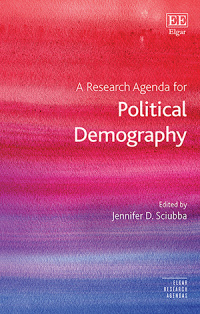
Name Of The Book… And Its Coordinates? Jennifer D. Sciubba, ed. 2021. A Research Agenda for Political Demography (Cheltenham, UK and Northampton, Massachusetts, USA: Edward Elgar) What’s the Argument? We cannot understand contemporary international relations without understanding the...
You're going to need some help. Since 2017, when I departed the Beltway in favor of (literally) greener pastures, I've been trying to figure out how to create an institutional presence for alternative (ok, progressive) voices on foreign policy. Why? Although I don't like the "Blob" epithet, there...
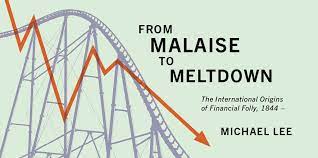
Financial hegemony brings with it substantial benefits, most notably reserve currency status. In order to successfully compete, rising powers need to lure financial institutions away from incumbent powers. They often try to make themselves more attractive to international finance by removing longstanding financial regulations.
WHAT’S THE NAME OF THE BOOK? Gregorio Bettiza. 2019. Finding Faith in Foreign Policy: Religion and American Diplomacy in a Postsecular World (New York, Oxford University Press) WHAT’S THE ARGUMENT? Since the end of the Cold War, American foreign policy has increasingly “desecularized,” such...
It seems like everyone has an opinion to offer about the "lessons" that the United States needs to learn from the war Afghanistan. “Here’s what we must learn,” asserts the former NATO Commander, James Stavridis. Anthony Cordesman, one of the war’s great chroniclers, asks readers to “examine the...
There is perhaps no greater film institution than the James Bond franchise. Over 27 movies and 59 years from Doctor No (1962) to Goldfinger (1964) to the modern era of Goldeneye (1995) and Skyfall (2012), Bond is a touchstone in many people lives, although not without controversy. Bond is a threat...
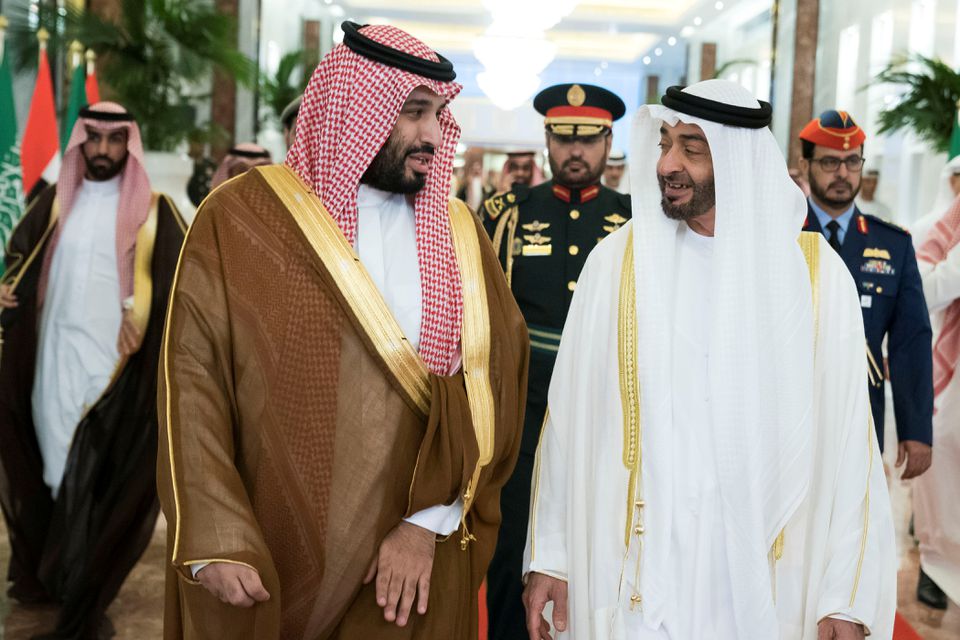
Anwar Gargash, a diplomatic advisor to the UAE, recently spoke to an international conference on the UAE's desire to smooth over tensions with Turkey and Iran. Turkey and the UAE found themselves on opposite sides of the Arab Spring, with the former supporting revolutionary movements around the...
Matt Hancock, a Conservative MP and the UK’s Health Secretary during most of the Covid lockdowns, has failed upwards.
“Kuzushi” is the concept of off-balancing. It refers to a tactic of getting your opponent out of a fixed position where he’ll be vulnerable, maybe getting his weight tilted too much to one side or making him overcommit to a move. With kuzushi, you aren’t achieving anything; you’re opening up a window of opportunity. Window ajar, you have a split second to advance your position. A sweep or submission attempt that would’ve been impossible under normal conditions suddenly works against an unbalanced opponent.
If you’ve written a guest post for the Duck of Minerva recently, or published a piece at International Studies Quarterly while I was editor, you know that I really hate “heavy noun phrases.” Scholars seem to really like using them. I don’t know why. Perhaps they think it makes their writing sound more sophisticated. There’s an article at PS which is good at diagnosing the problem (but offers bad fixes).
The way that APSA leaders handled the Claremont Institute situation was troubling… will APSA, as an organization, be committed to some broadly liberal democratic values?