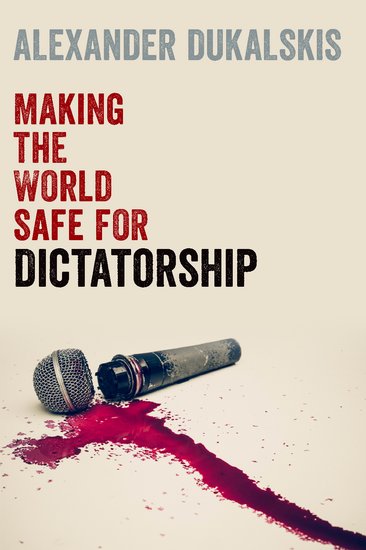
Dominant theories of international political economy leave little room for the influence of individuals. They also never anticipated that the United States might seek to completely upend the global economic order.
When I arrived at the Pentagon in 2009, the Obama administration was just getting its footing as caretakers of the War on Terror. Our focus then was truly global dominion. That meant, yes, killing...
With a symbolically successful COP28 and substantively significant investments in clean energy around the world, 2023 boasts some positive news on climate change. Not a moment too soon: global GHG...
A controversy broke out the weekend before Christmas, when Fr. Edward Beck, a Roman Catholic priest, claimed Jesus was a "Palestinian Jew" while discussing the current war between Israel and Hamas....
Professor Francois Debrix of Virginia Tech University joins the Hayseed Scholar podcast. Francois grew up in France, attending college there with degrees in Spanish and English, and then International Law, Political Science and Diplomatic History. An exchange program through the University of...
For decades, many International Relations (IR) scholars portrayed experiments with foreign policy elites as too risky, too costly, or too difficult to implement. Faculty mentors discouraged graduate students from wasting their time. In a new article in European Journal of International Relations,...
Professor Timothy Longman of Boston University joins the Hayseed Scholar podcast. He speaks about his decision, eventually, to focus on Rwanda as the basis for his dissertation.
Tony Lang discusses philosophy, writing, and why the International Ethics section of the ISA developed into such a friendly environment for junior scholars.
A discussion with Nina Kollars and Mark Raymond about the SolarWinds hack, recorded in March, 2021
The COVID-19 pandemic makes it clear – our students need a blend of science and policy literacy. Transnational challenges with technical dimensions are increasingly common. Pandemic disease, climate change, artificial intelligence, biotechnologies, and other issues touching our politics and...
Recently, David Edelstein and Jim Goldgeier circulated an open letter for signature to address bullying in the profession. The open letter can be found here. So far, there are nearly 100 signatures, including mine. As a sophomore in high school, I was 5’2”, weighed 215 pounds, was in a bunch...
Academia would benefit from “the motivation to see things as they are and not as” one wishes “they were.”
I've started practicing mindfulness, partly to deal with the stress of being a Professor and parent of small kids in a pandemic, and partly to reduce the number of times I become unreasonably angry over bad policy arguments. I experienced a major setback this week, when I encountered yet another...
The Bridging the Gap team is thrilled to announce the addition of a new member of our leadership team: Emmanuel Balogun, the inaugural BtG Diversity, Equity, and Inclusion Fellow. We recently sat down with him to ask about his work, hobbies, and plans for the fellowship. Welcome to the team,...
As someone who works on religion and politics, I encounter the term "soft power" a lot. Most of the time it's in a good way; soft power is a means to advocate for policies that draw on our values but still advance our interests. But, occasionally, the term frustrates me. Too often it's used as a...
If border closures are stopgaps that are costly and potentially illegal, then countries must explore additional options for dealing with infectious diseases.