Dominant theories of international political economy leave little room for the influence of individuals. They also never anticipated that the United States might seek to completely upend the global economic order.
The foreign policy world was abuzz this morning with the news that Antonio Guterres invoked Article 99 of the UN Charter over the Israel-Hamas conflict. This allows the Secretary General to bring an...
Who, if anyone, rules the world? Answering a question like that requires grappling with both the character of international order and the global distribution of power—facets of political life that...
Forced migration--the movement of people for reasons beyond their control--has become a global crisis. According to both the UNHCR and the Norwegian Refugee Council, over 100 million people were...
This is a guest post by Simon Frankel Pratt. He is a lecturer in the School of Sociology, Politics, and International Studies at the University of Bristol. In the social sciences, research and data are often divided into the categories ‘quantitative’ and ‘qualitative’. This is incoherent and...
This is a guest post from Jeff Colgan, Richard Holbrooke Associate Professor of Political Science and Director of the Climate Solutions Lab at Brown University. He is author of Petro-Aggression: When Oil Causes War, and tweets @JeffDColgan A slew of new books on grand strategy and international...
Philip Cunliffe, Senior Lecturer at the University of Kent, on his book, The New Twenty Year’s Crisis.
Professor Aida Hozic discusses her journey from Sarajevo to studying, writing on, and teaching IR in the United States.
Last week, the American Political Science Association released a milquetoast statement on the January 6 white supremacist attack at the U.S. Capitol that got buried in the onslaught of news coverage. It resurfaced on Twitter over the weekend to outrage, with many political scientists noting that...
Daniel J. Levine is Aaron Aronov Associate Professor of Jewish Studies at the University of Alabama, where he divides his time between the Departments of Political Science and Religious Studies. Information on his research can be found here. Last fall, I taught – as I have...
US President Donald Trump gestures as he arrives to a "Make America Great Again" campaign rally in Cincinnati, Ohio, on August 1, 2019. (Photo by SAUL LOEB / AFP) (Photo credit should read SAUL LOEB/AFP/Getty Images) This is a guest post by Emily Holland, an Assistant Professor in the Russia...
On Monday, Iran began enriching uranium to the 20% threshold for the first time since before its 2015 nuclear deal, the Joint Comprehensive Plan of Action (JCPOA). Iran appears to be trying to maximize its leverage with the incoming Biden administration in the hope that the US will agree to...
This post was written by Marie Berry and Milli Lake, co-founders and principal investigators of the Women’s Rights After War Project. Dr. Berry is Associate Professor at the Josef Korbel School of International Studies at the University of Denver and a member of Bridging the Gap's...
The awfulness of 2020 has become one of the year’s most unforgettable cultural memes.
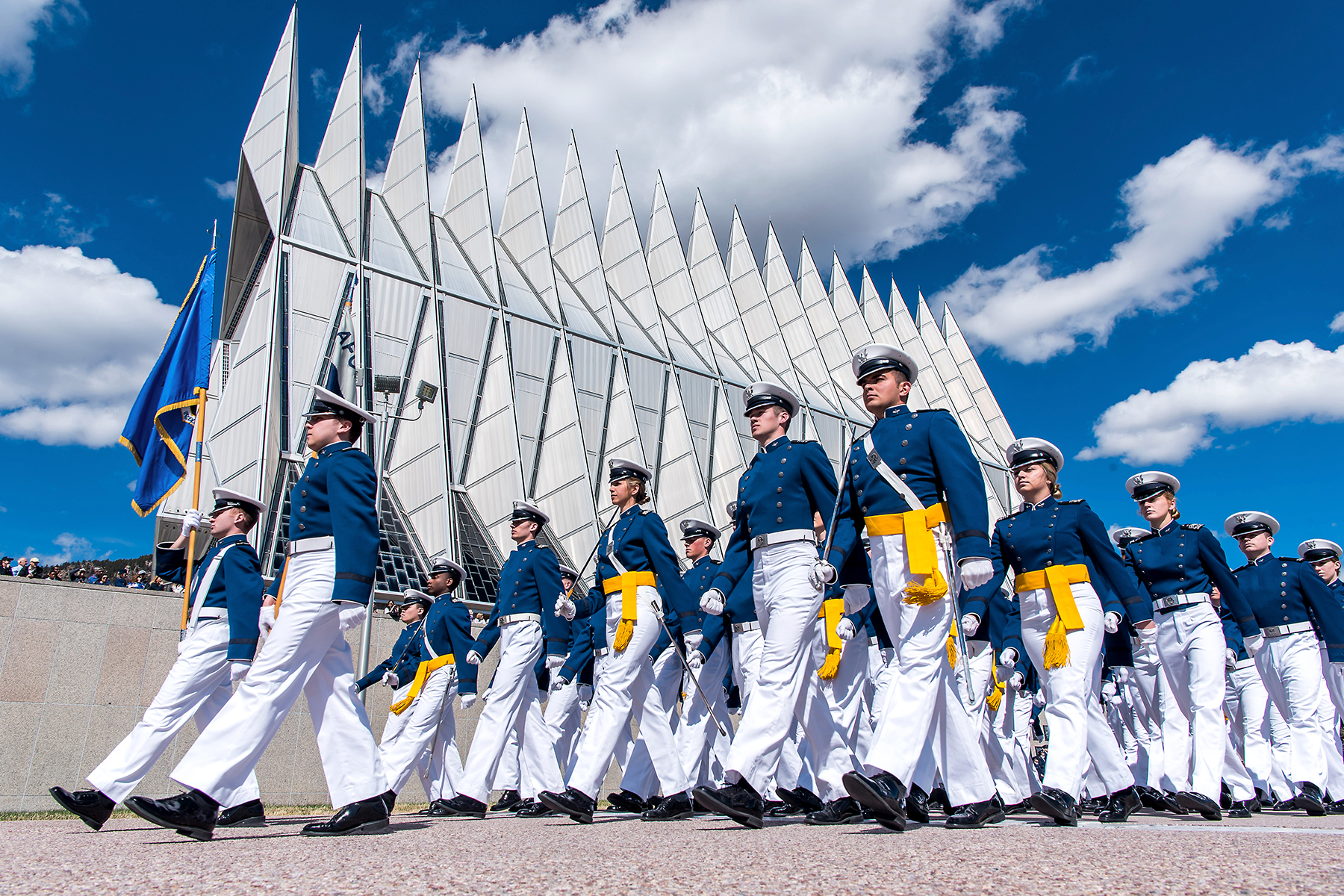
This post is written by Bridging the Gap Fellow Dr. Danielle Gilbert, Assistant Professor of Military & Strategic Studies at the U.S. Air Force Academy. The views expressed in this article are the author’s and do not represent the U.S. Air Force Academy, the Department of the Air Force,...
WARNING: Minor Spoilers for Wonder Woman 1984 ahead Like many Americans, I ended my Christmas day by paying $15 to subscribe to HBO Max and watch Wonder Woman 1984. The much anticipated sequel to 2017's Wonder Woman promised to make the horrors of 2020 fade for awhile. And it did, but only by...