Dominant theories of international political economy leave little room for the influence of individuals. They also never anticipated that the United States might seek to completely upend the global economic order.

Now that the myth of “theory-practice gap” has been largely refuted what role might IR and journals like International Affairs play in crafting a “reparative praxis”?
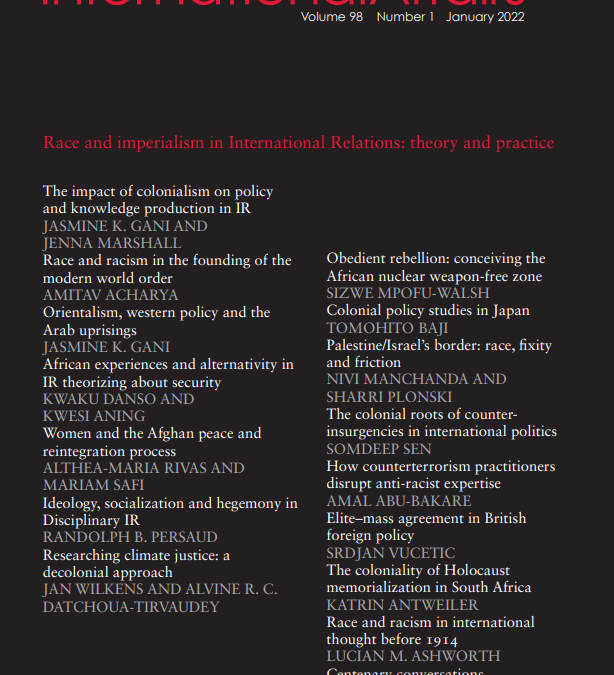
The International Affairs Centenary Special Issue on “Race and Imperialism in International Relations: Theory and Practice” was published two years ago in the aftermath of the global Black Lives Matter movement; it marked an atypical period of introspection by many scholars, departments, and journals of International Relations on the general paucity of attention given to matters of race and imperialism in IR research and teaching.
In 2015, Linus Hagström, a professor of political science at the Swedish Defence University, questioned the wisdom of Sweden joining NATO in a coauthored opinion piece. After its...
Like a lot of academics, I love Google n-grams, but not as much as the digitized archive Google uses to produce it. It’s a great warren of rabbit holes – even better than wikipedia – and I often wind up following one somewhere or other. My latest journey begins with realism. Steven Walt’s recent Foreign Policy entry (“Why Do People Hate Realism So Much?”) touched off a round of online debate, including entries by Seva Gunitsky, Paul Poast, Patrick Porter, Ken Schultz and others. My daughter suggested that I weigh in. I even began to write a rather lengthy teardown of the kerfuffle. I started...
Professor Duncan Bell joins The Hayseed Scholar podcast. Duncan grew up in the Midlands in a rural area of England. He was interested in international politics from a fairly young age. Duncan chose to pursue a degree in war studies at King's College London, and considered joining the military thereafter. But the transition to London from a quieter area, and the experiences he had there, changed his plans. He tells Brent about getting his Master's and then PhD at Cambridge, and a momentous year he spent in the US at Columbia during his studies and changing his PhD topic that led to several of...
When it comes to quantitative data in conflict studies, standards for collection, reliability, ethics, and usage remain behind the curve. We discuss five things that scholars can do to address these gaps.
Foreign Affairs ran a poll on the question. A few of us expressed skepticism about the debate itself.
Most versions of the left gain little and sacrifice much in accepting a realist epistemology. Theories of international relations are just tools for making sense of patterns and puzzles in the world; they don’t need groupies.
Two recent interviews in the New Yorker have received substantial attention in recent weeks. Unfortunately, taken together, they make the IR discipline look terrible. How can IR theorists demonstrate their discipline’s relevance in the face of rapidly changing historical events?
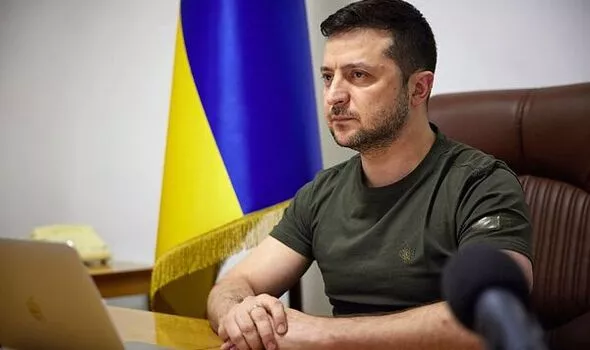
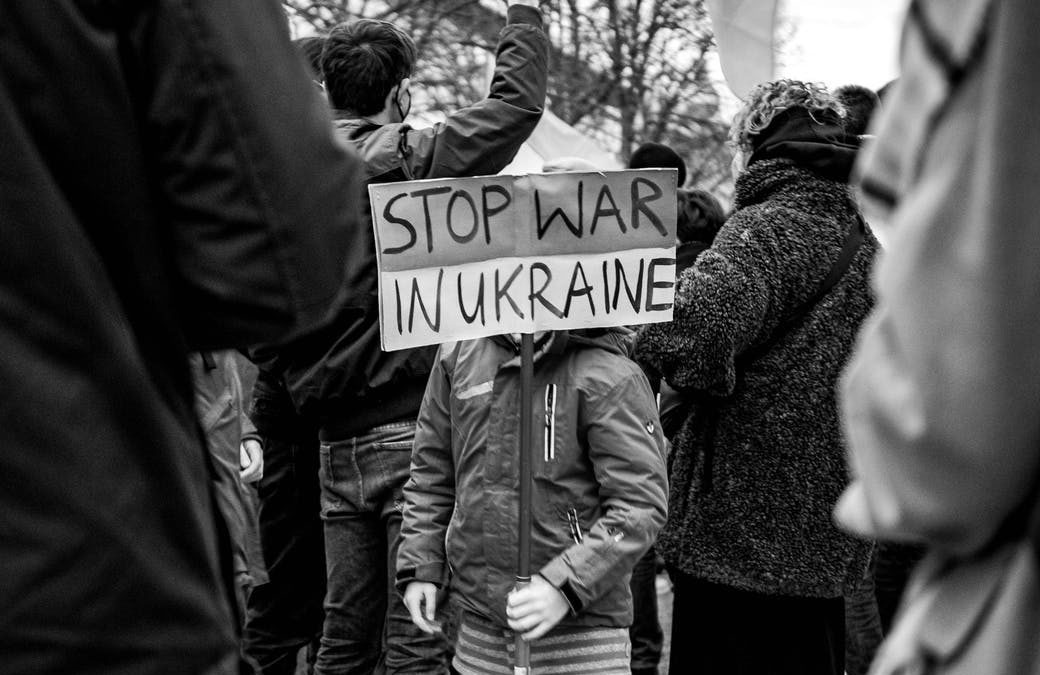
For Mearsheimer “freedom” and “prosperity” are simply weapons of great power politics rather than aspirations sought by the Ukrainian people.
I wrote the first draft of “What’s it Like to Be a State?” sometime in late 2017, during an unusual time in both my personal life and my research career. I was about halfway through my PhD at the University of Cambridge and was feeling both immensely homesick and quite bored—trapped in a small town that felt ripped from the Victorian era. I filled my free time watching large numbers of pre-recorded NBA games and, also, for some reason, reading philosophy of mind….